Agility on the Spot: A Platform to Help Businesses Meet Urgent Technology Needs

A large healthcare organization needed a life-saving solution to cope with Covid-19. A no-code platform helped deliver it in just a few days.
When Covid-19 stuck last year, businesses’ survival largely depended on how quickly and effectively they could adapt to radically new workplace, communications and safety protocols.
For many, like, Pennsylvania-based Geisinger Health, innovating rapidly was a matter of life and death. Due to the pandemic, the health system was forced to reassign more than 2,000 employees to critically needed areas to accommodate waves of new coronavirus patients.
Working together, Geisinger’s technology and HR teams rolled out a solution in a matter of days, using a technology platform from Quickbase, a Massachusetts company that offers a no-code operational agility platform. Quickbase helps clients respond to rapid change with an industry-leading approach to dual-track transformation—the process of tackling major infrastructure overhauls while simultaneously making incremental workflow improvements.
This means that IT can focus on big projects, like implementing a new enterprise resource management system or upgrading the network, while non-IT employees can use Quickbase to handle smaller problems that they often are best suited to solve — like workflow updates to improve sales operations or fixing supply chain inefficiencies.
Digital changes accelerate globally
According to the September 2020 report from the IBM Institute of Business Value, a survey of 3,500 executives in 20 countries found that 60% claimed to be accelerating the digital transformation of their organizations, and three-quarters said they planned on building more robust IT capabilities.
“Responsiveness has never been more important. Agility has never been more important,” says Jay Jamison, Chief Product and Technology Officer at Quickbase. “And if you are existing in a command-and-control environment where you’re just waiting for some central resources to give you what you need, you’re going to be too slow; you’re never going to be able to keep up.”
Quickbase’s platform is designed to deliver solutions when time is of the essence. By recognizing that non-IT employees often are best positioned to solve workflow issues—because they understand these problems best—Quickbase allows clients to create new digital solutions in just a few days while the roles and permissions maintain governance.
“What we talk about as the opportunity and the vision of QuickBase is really to provide powerful software tools that are easy enough to use, such that non-developers can build the software that they want to solve the problems that they need to solve,” Jamison says.
Bridge the coding divide
Most business leaders are eager to create more engines of innovation in their firms, but aren’t aware of how dual-track solutions can help, Jamison says.
Without such solutions, digital transformation can be delayed due to overreliance on software developers and other IT professionals that use complex coding tools. But with a no- and low-code application platform like Quickbase, companies can empower non-IT staff to create tools with one-step deployment and simple management.
Digital transformation also can be sluggish when employees feel left out in the cold. Corporate leaders often assume that employees are confident and comfortable with the skills needed to drive change. However, there’s a wide gap between perception and reality, according to the IBM report: An overwhelming 74% of managers believed they are helping their employees “learn the skills they need to work in a new way,” but only 38% of employees shared that same sentiment.
Change at the speed of necessity
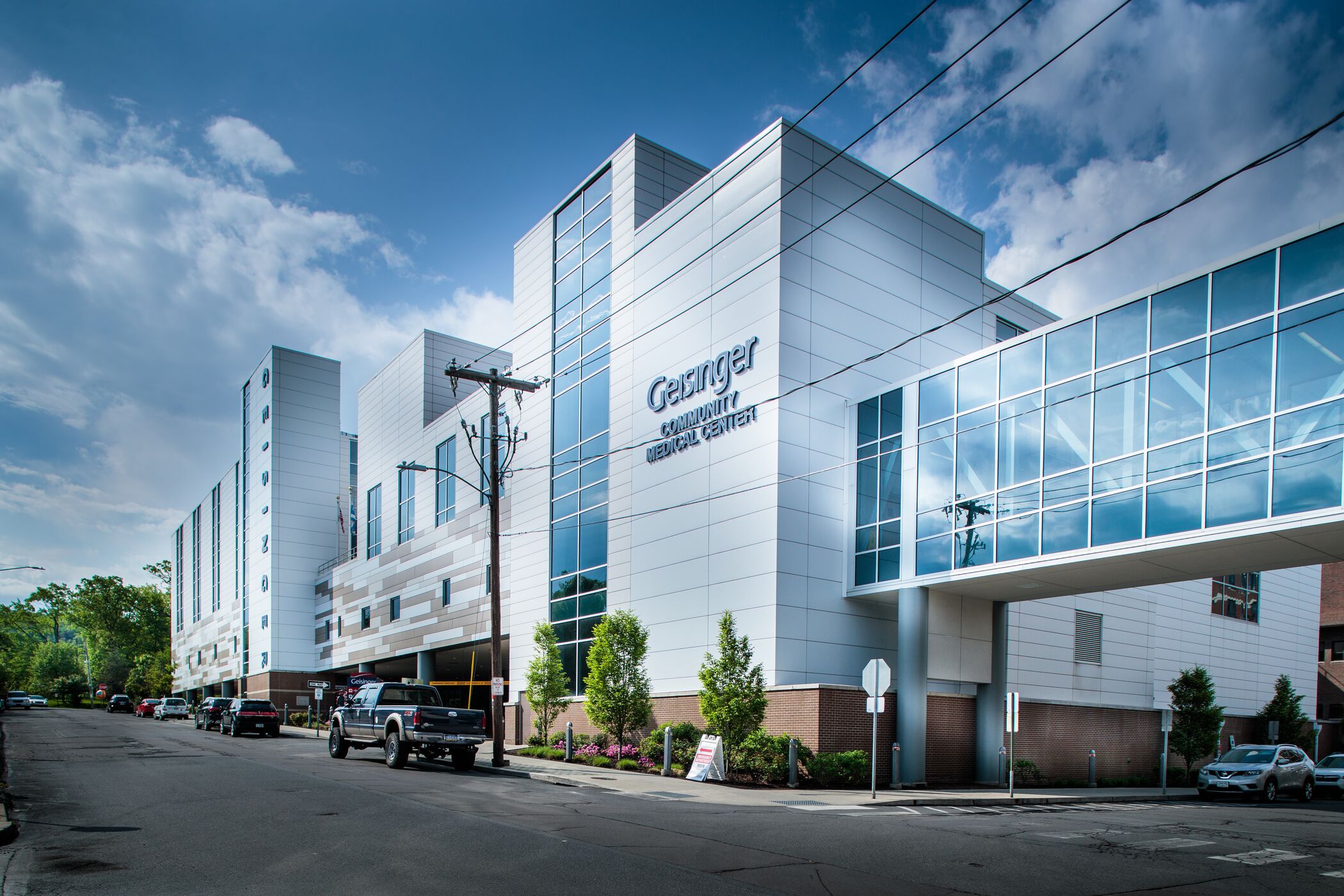
For Geisinger Health, the Quickbase experience was a key, and successful, way of adopting new work strategies.
Geisinger’s HR team had struggled to manage its enormous reshuffling project using Excel spreadsheets. It had to manage some 26,500 people working at its nine hospital campuses, two research facilities and two schools, says it has seen a 500% increase in telehealth visits, for which it quickly trained and equipped 1,000 additional clinicians to provide this care.
“My job changed literally overnight,” says Becky Miller, Associate Vice President of Human Resources at Geisinger. “As an HR leadership team, we had to come together to really figure out how we were going to meet the needs of our employees and the clinical needs of our organization.”
But to the company’s credit, Geisinger Health’s Steele Institute for Health Innovation had already established a role under the corporate umbrella to handle such problems.
“Our Digital Transformation Office provides digital tools, and creates digital tools to help focus on Covid,” says Emily LaFeir, Senior Director of Operations at the Steele Institute.
LaFeir says her team could have created a solution in a longer time frame, but Quickbase’s operational agility platform simplified the process of getting an app up and running in a week. Perhaps more impressive, just a one-day learning curve is all it took for staff to start using it.
“Emily’s team helped us at 1 p.m. on a Thursday, and we were utilizing Quickbase on a Friday,” Miller says.
Using Geisinger’s new app, their HR function can now manage department demands and track employee availability accurately. The Quickbase-powered app also has automation features that can recommend matches based on employee skill sets and security clearance levels.
Jamison says you don’t have to work in a health system like Geisinger to recognize the enormous digital changes underway, and the need to handle them rapidly.
“I don’t think we’ll go back to the new normal and people will say, ‘You know what? I really think we should start going a lot slower.’ I think fortune is going to favor the fast and the nimble,” Jamison says.