
Networks have long opened doors in business. But social capital today is broader than knowing the right people. It’s the trust, knowledge and access that move through relationships – and the ability to build connections that become more valuable over time.
That matters especially when leaders move beyond familiar territory, where the right network can reveal how a market really works, bring fresh context and lend credibility.
So what are the new rules of building enduring networks?
Across conversations with five global leaders, we explore four ways to strengthen social capital: letting relationships develop without immediate expectations, widening the perspectives you draw on, earning trust in new markets and protecting the reputation you've built.
Contributors
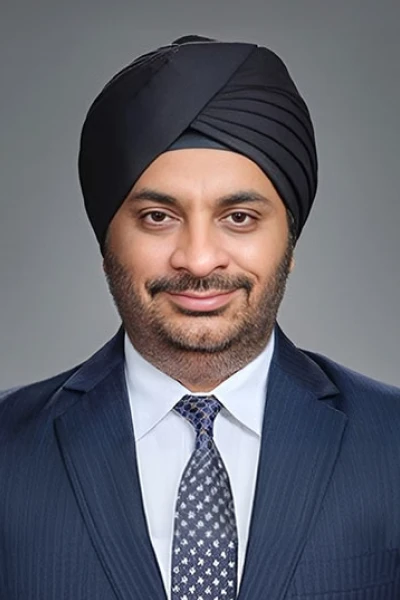
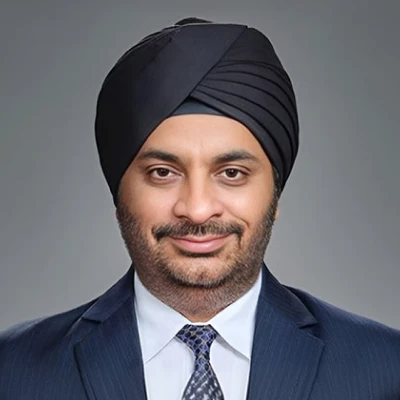
Sandeep Batra
Managing Director and Head, International Wealth and Premier Banking
HSBC India
Sandeep Batra is Managing Director and Head of Wealth and Personal Banking at HSBC India, with his career taking him through 12 cities, including 18 years spent outside India.
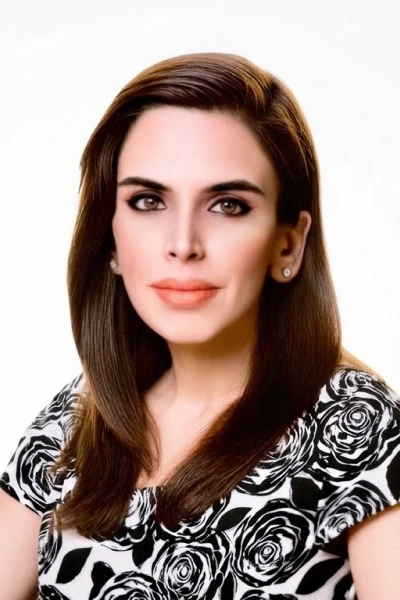
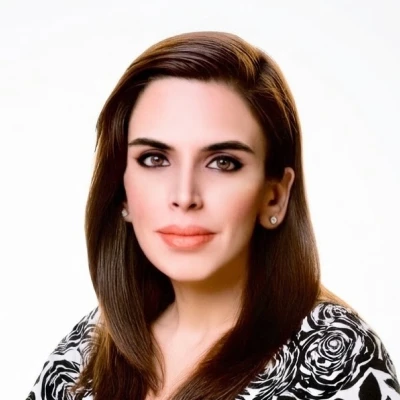
Bijna Kotak Dasani
Managing Director
ArthAum Group
Bijna Dasani is Managing Director of ArthAum Group, with a background spanning global banking, venture capital and entrepreneurship.
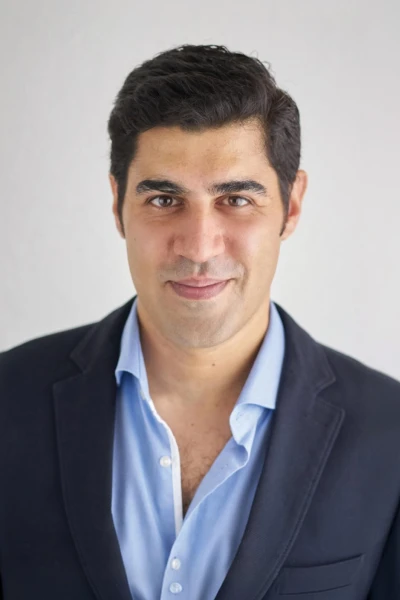
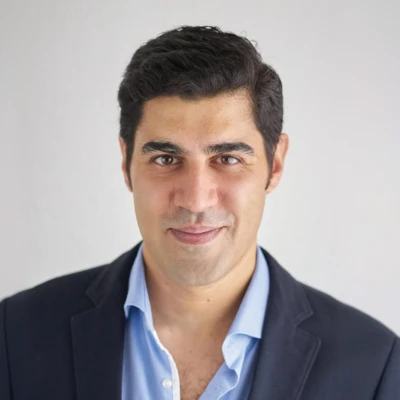
Parag Khanna
Founder and Chief Executive Officer
AlphaGeo
Parag Khanna is Founder and CEO of AlphaGeo, an AI-powered geospatial analytics company, and a global strategy advisor and author.
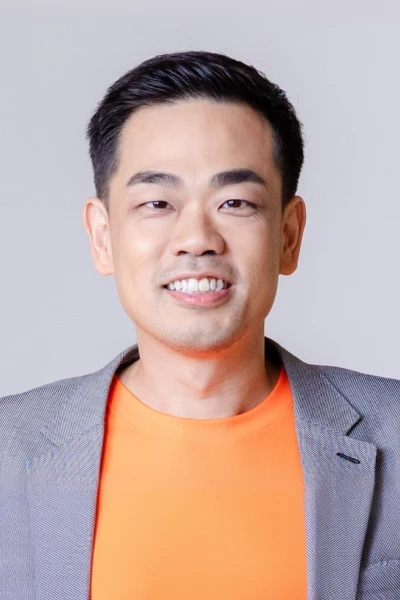
Aaron Tan
Co-Founder and Chief Executive Officer
Carro
Aaron Tan is Co-Founder and CEO of Carro, Southeast Asia’s leading automotive marketplace and mobility technology company.
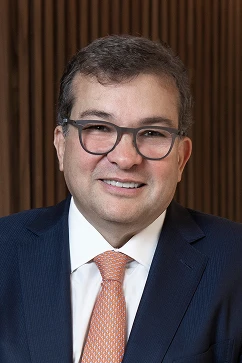
Jorge Arce
Chief Executive Officer
HSBC Mexico
Jorge Arce is CEO of HSBC Mexico, with additional responsibility for Brazil, Chile and Uruguay, drawing on more than three decades of experience across banking and financial markets.
Leave room for relationships to grow.
Some of the most consequential relationships begin without a predefined purpose. Their value may only become clear years later, so leave room for the relationship to grow in unexpected ways.
Let relationships serve no immediate purpose.
 Sandeep BatraManaging Director and Head, International Wealth and Premier Banking, HSBC India
The best relationships are often the ones without an agenda. During the Global Fintech Festival, I had a packed schedule, but I still made time to meet an old friend I no longer work with. I don't know whether we'll ever do business again, but that wasn't the point.
If you're constantly keeping score: I did this for someone, what did they do for me? you won't build deep relationships. Social capital is not the stock market, so instead of trying to win every trade, let relationships compound.

Social capital is not the stock market, so instead of trying to win every trade, let relationships compound.
Build trust in stages.
 Bijna Kotak DasaniManaging Director, ArthAum Group
I think about social capital in layers. The first is trust and influence, often through lower-risk activities such as philanthropy or working towards a shared cause. You can observe how people behave when their own P&L isn't at stake: what they say, what they don't say and how they treat others.
From there, relationships can move into diplomacy and heritage: higher-stakes settings involving policy, economic influence or something an institution or family considers important to preserve. You're learning whether someone can navigate sensitive interests with discretion, respect established relationships and understand the responsibilities that come with representing more than themselves.
Only then might I bring someone into a more private circle, where confidentiality and judgment are tested further. If that trust holds, the relationship can progress to execution: a business partnership, joint venture, impact investment or allocation of capital. Before capital changes hands, you've had multiple opportunities to see how somebody operates.
Make a habit of connecting people.
 Parag KhannaFounder and Chief Executive Officer, AlphaGeo
Some of the people who helped me early in my career simply took pleasure in making connections, even when they knew I had nothing to offer them in return. I find myself doing the same now.
I probably make five introductions by email a day. I also host brunches and dinners with people who may not otherwise meet. Sometimes there is an obvious reason to connect them; sometimes there isn't. The point is to create the conditions for useful relationships to emerge rather than trying to predict the outcome of every introduction.

Keep good people in your orbit.
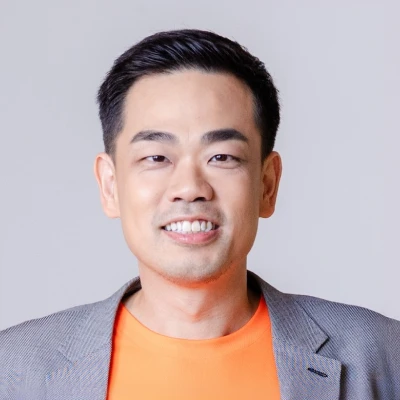 Aaron TanCo-Founder and Chief Executive Officer, Carro
I think social capital is more social than capital. Some of the people who eventually joined Carro were friends I'd known since I was 18 or 19. I didn't make friends with them because I thought they might be useful one day.
One entrepreneur I'd invested in stayed in my orbit long after his company was gone. For years, I'd tell him about the problems I was dealing with at Carro, from operational decisions to employment contracts. Eventually he got so tired of hearing about them that he said: I'll come and do it myself. He became our chief operating officer.
I didn't build that relationship for a future hire; I simply have a habit of keeping in touch with good people, particularly people who are smarter than me.
Use your network to gain fresh insights.
Your network is also an intelligence system. Used well, it can reveal informal hierarchies and firsthand context that conventional research may not fully capture.
Don't write off weak ties.
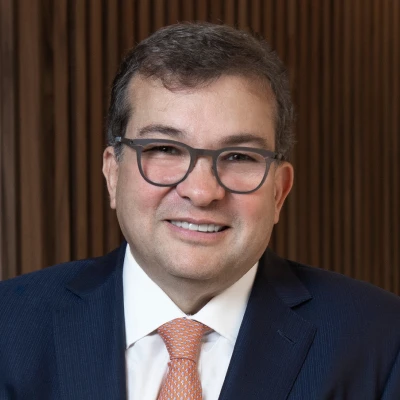 Jorge ArceChief Executive Officer, HSBC Mexico
Weak relationships can sometimes be more valuable than strong ones. These are the people across industries, businesses and countries who you may not speak to every day.
Precisely because they sit outside your immediate circle, they can give you access to information, opportunities and contacts you wouldn't encounter otherwise. Technology makes those relationships easier to maintain, but reciprocity and goodwill are what give them lasting value. Just recently, someone I hadn't spoken to in three years called me with a question because he trusted me to give him an honest answer. I know I could make the same call to people across my own network.

Map the market beyond its leaders.
Parag KhannaFounder and Chief Executive Officer, AlphaGeoIf I'm going to a country, it can't just be about the head of state or CEOs of the largest corporations. I should be meeting journalists, academics and civil society – a cross-section of the place – to understand how they interact.
When researching my first book, I would sometimes spend weeks or months in a country without booking my onward journey. I stayed until I felt another day wasn't teaching me much more. That immersion was crucial to really understanding the place and building trust.
Years later, one government put a stack of studies from major consultancies in front of me and asked me to distill what would actually be useful to them. They trusted me because I'd spent enough time there to understand their worldview.
Build across industries – and generations.
Sandeep BatraManaging Director and Head, International Wealth and Premier Banking, HSBC IndiaI'm a banker, but if I'm only meeting bankers, that's terrible networking. The same applies to age. If your network is only people your own age, you have no idea how younger people are thinking, and you also lose the experience of older people who have been through more cycles than you.
That range becomes useful in practical ways. When I wanted to understand India's property market, I could speak to a friend running a property company about development and property cycles rather than rely solely on a price index. Other people in my network have helped me think through questions around talent development and even city planning. The point isn't simply to know more people, but to have different lenses on the same challenge.

Learn how trust moves locally.
Bijna Kotak DasaniManaging Director, ArthAum GroupIn cross-border relationships, silence or delay doesn't necessarily mean a lack of interest. I've been in situations where one side assumed the other had disappeared, when in fact they were taking time to consult stakeholders and follow local protocols around hierarchy, respect and governance.
Understanding those rhythms can be the difference between a relationship progressing and stalling. Building social capital across markets means learning not only who to know, but how trust and decisions move within that culture.
Building social capital across markets means learning not only who to know, but how trust and decisions move within that culture.
Learn your way into a new market.
While a business model can travel across borders, familiarity and trust rarely do. Operating somewhere new means learning where credibility already sits, widening your sources of local knowledge and earning a reason for people to keep opening doors.
Don’t underestimate small talk.
Jorge ArceChief Executive Officer, HSBC MexicoIn Mexico, you might spend 45 minutes of a one-hour meeting talking before getting to business. If you've used those 45 minutes to understand how somebody is feeling and build a connection, the last 15 can be extremely fruitful.
You also need to understand how people communicate. Mexicans tend to sugarcoat certain things rather than confront or say no immediately. Ahorita literally means “right now,” but sometimes it effectively means “never.” You only learn those signals if you make the effort to understand the local conversation.

Treat local trust as part of the valuation.
Aaron TanCo-Founder and Chief Executive Officer, CarroWhen we enter a new market through a partnership or acquisition, we're not just gaining sites, people or infrastructure. A local business may have spent years building customer relationships and recognition, and that's part of the value we're paying for.
I try to put numbers around that. Organic visits to a company's website or app can be one proxy: how many people actively seek it out without being paid to do so? We can bring technology, systems and processes from Carro, but a local business can bring trust that would take us years to recreate. Social capital may not appear as a separate line in a valuation, but that doesn't mean you shouldn't try to measure it.
Social capital may not appear as a separate line in a valuation, but that doesn't mean you shouldn't try to measure it.
Break out of the expat bubble.
Sandeep BatraManaging Director and Head, International Wealth and Premier Banking, HSBC IndiaWhen I moved to Moscow, I could have lived near the school in an expat community. Instead, I chose a local building in the middle of the city. It was the less comfortable choice, but it put me closer to the place I was trying to understand.
In Bangkok, my son's school and the Royal Bangkok Sports Club introduced me to very different parts of the city, including local Thais, long-established Thai Indians and newer expatriates. The first introductions may come through people you already know, but the important part is what you do after them.
Ask questions, keep the commitments you make, and reconnect after acting on somebody’s advice. The aim is to give people an early sense of your curiosity, usefulness and reliability.

Step outside the meeting room.
Parag KhannaFounder and Chief Executive Officer, AlphaGeoBonding over sports or meals has been enormously helpful to me. In some countries, I've met senior figures where, once they discover I'm a serious tennis player, the whole contour of the conversation changes: let's get this interview over with and get on the court.
I now travel with my tennis rackets wherever I go. But tennis isn't a networking tactic; it works because it's something I genuinely enjoy. The more time you spend in a place, the more you find authentic commonalities with people who stop being entries in a CRM and become friends.
The more time you spend in a place, the more you find authentic commonalities with people who stop being entries in a CRM and become friends.
Safeguard your reputation.
Trust can travel through an introduction, investment or endorsement – and so can reputational risk. Knowing where to extend your credibility, and when to withdraw it, is key to maintaining social capital.
Know who you’re putting your trust in.
Bijna Kotak DasaniManaging Director, ArthAum GroupI maintain a risk register with my team for people and organizations we may work with, using a red, amber and green system.
Green means we haven't identified a material concern. Amber means there is something we need to understand or monitor. Red means we won't put our name or our network behind that person.
In one case, someone proposed for an event was already red on our register because of a history involving fraud and misappropriation of funds. We told the organizers that if they chose to proceed, we would remove ourselves rather than have our names appear together.
What you don't know, you don't know. But once you do know, you have a responsibility to act on it.

Remember that an investment is also an endorsement.
Aaron TanCo-Founder and Chief Executive Officer, CarroSocial capital can deplete if you're not careful. I've made angel investments where the company later used my involvement to establish credibility with other people – effectively saying, Aaron invested in us, so you should take us seriously too.
That taught me that even a small investment can carry reputational exposure beyond the capital itself. I'm much more selective now. If I invest, I need to believe in the business enough to be comfortable with somebody else treating my name as an endorsement.
Keep your word.
Jorge ArceChief Executive Officer, HSBC MexicoTechnical knowledge is extremely important; there are no shortcuts to it. But one of the biggest mistakes I've seen is putting technical knowledge above everything else.
I've seen brilliant people fail because they forget they need to motivate people, gain their trust, deliver and keep their word. Expertise can get you credibility. What sustains it is whether people know you'll do what you said you would do.
I cannot do everything, and sometimes the answer has to be no, but I make sure I respond to every request. Relationships are built not just by what you can offer, but by how consistently you show up.

Relationships are built not just by what you can offer, but by how consistently you show up.
The strongest networks aren't necessarily the largest. The real measure of social capital lies in the quality of what moves between people, from candid advice and local intelligence to an endorsement made without hesitation.
So instead of accumulating contacts, build a network with range and depth, and leave room for introductions to compound into trusted connections who can see what you don't – and remain worth calling years later.
Thinking Capital explores the modern pursuit of capital in all its forms: cultural, intellectual, social and financial.
Look out for more content across Bloomberg Video, podcasts, print, and online as we continue to decode modern capital.