New Challenges Accelerate Changes in the Professional Services Industry
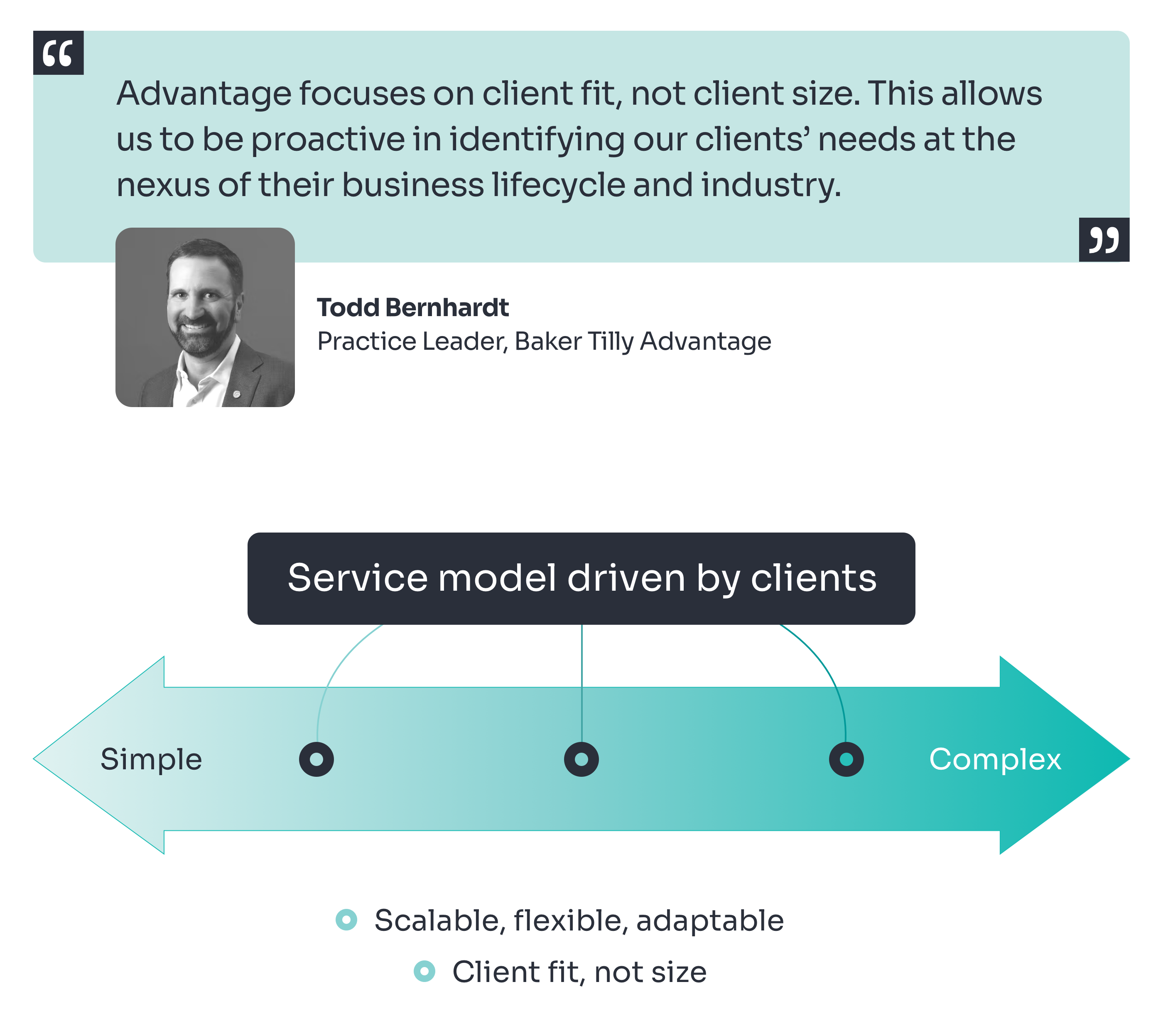
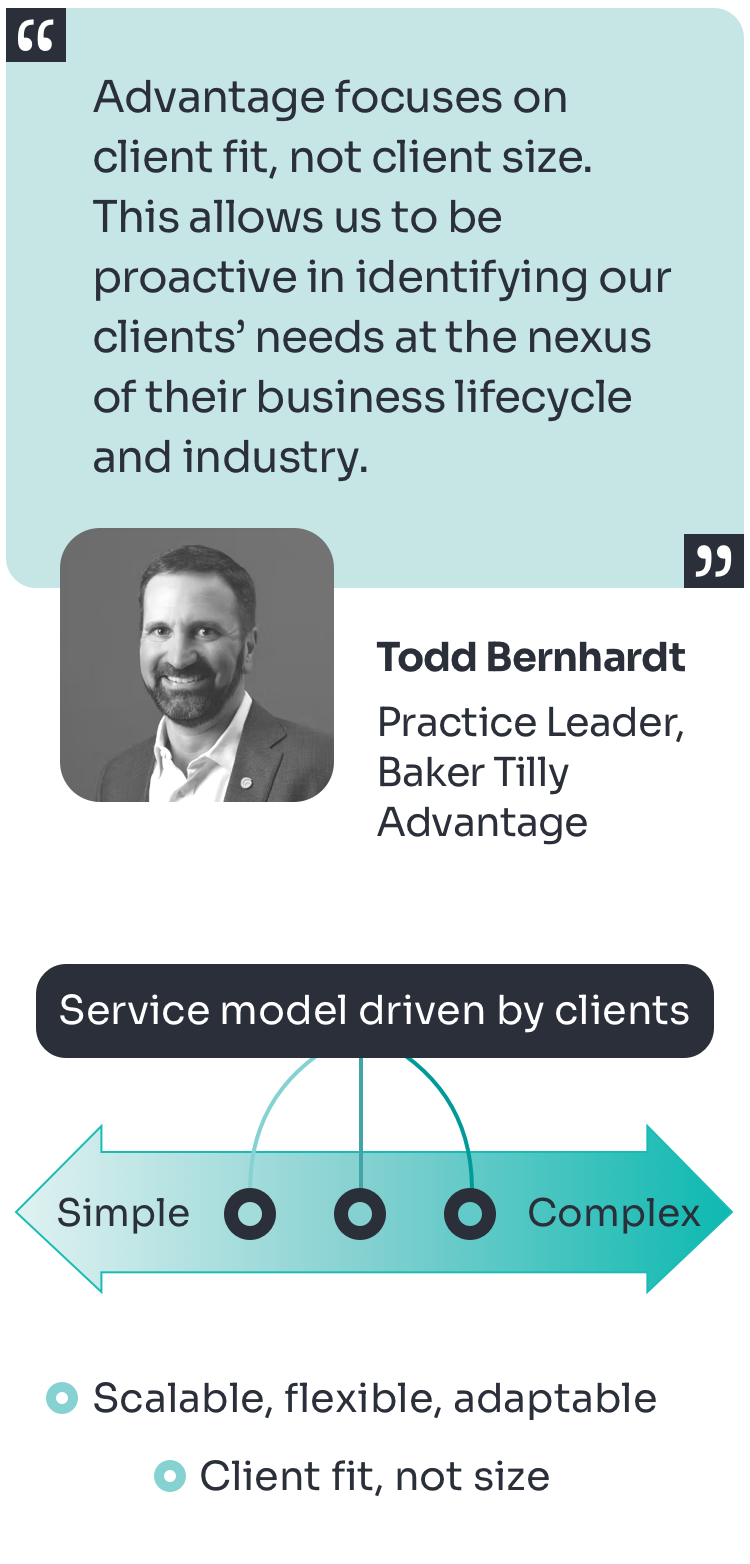
With a scalable service model driven by clients’ needs for essential tax, accounting and human resources services, Baker Tilly is on top of three business trends accelerated by the pandemic.
First, customer habits and preferences are changing for both B2C and B2B businesses as digital adoption takes hold.
Second, value is tied to access, quality and service—not ownership and price. Today’s new service models, which include subscriptions, set up recurring touchpoints with customers and brands and are built on relationships, not transactions.
Third, innovation isn’t just about creating new products; it also means tailoring services to meet customers’ needs and creating new levels of access and tiers of service.
Changing Perceptions About Outsourcing
As remote work has become more common in many industries, outsourcing, once considered primarily a cost-reduction tool, is now seen as an important element of business resilience and a smart way to enable growth and innovation. According to a Clutch survey of 1,003 small US businesses, 90% planned to outsource some business functions in 2022. More than a quarter (27%) of business owners surveyed said that they outsource critical operations, such as tax services, accounting and HR, to run their companies more efficiently and to give them more time to work on their core businesses.
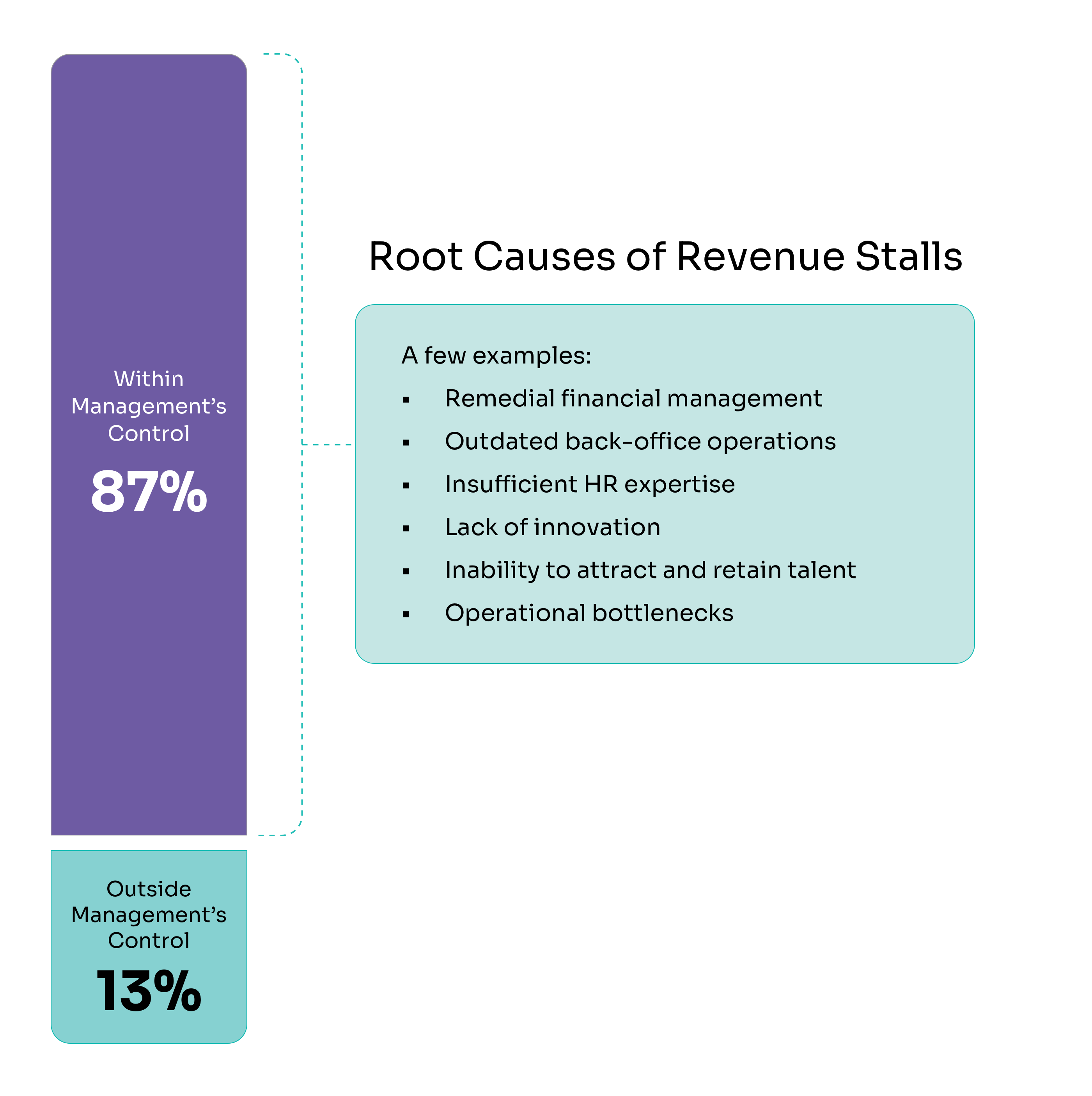
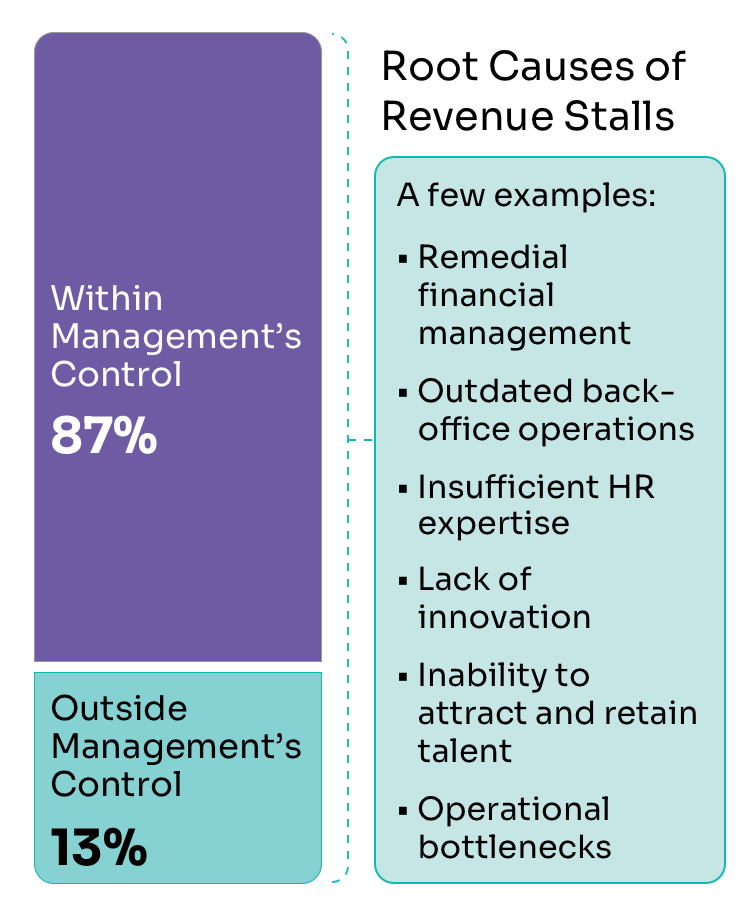
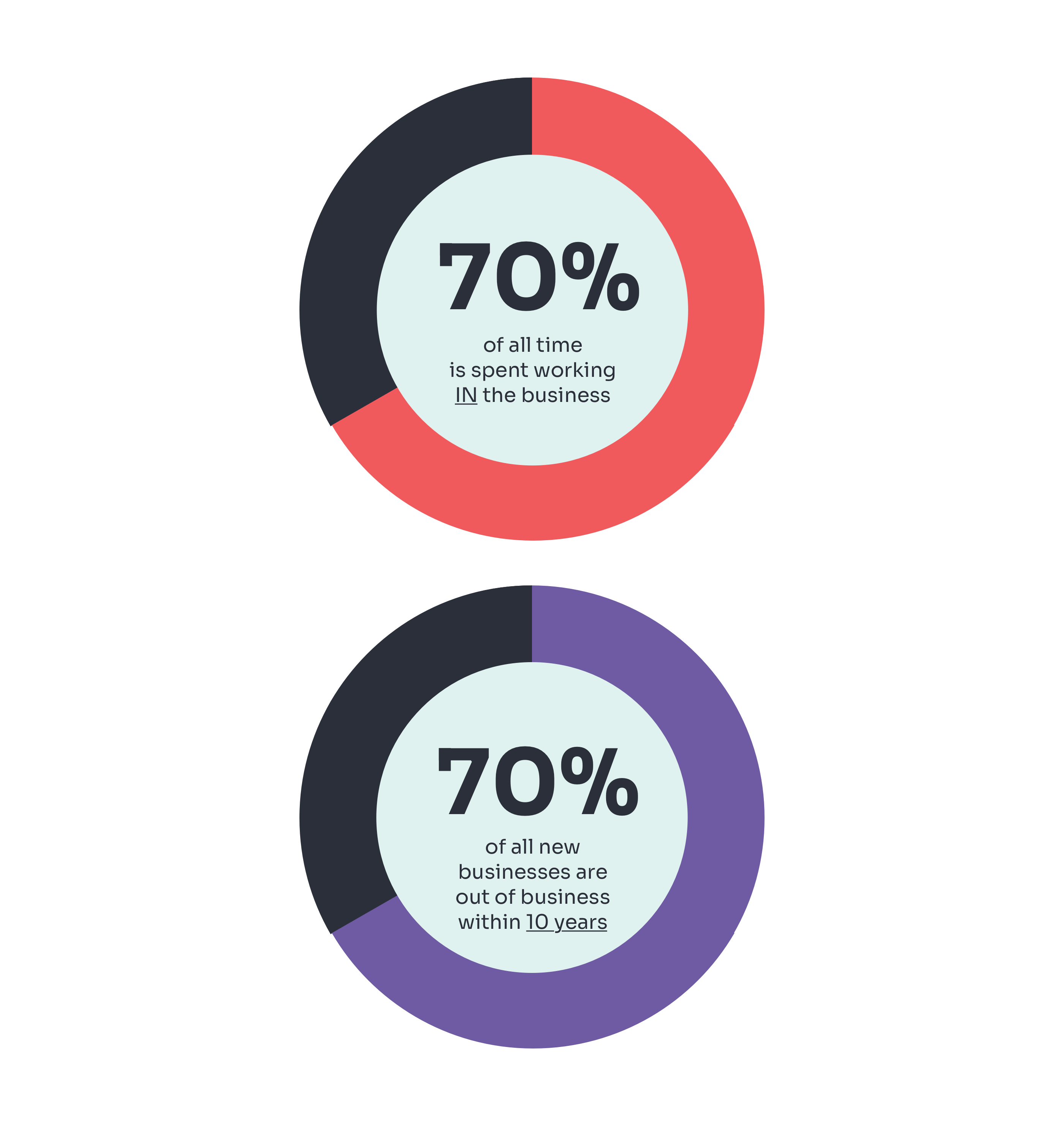
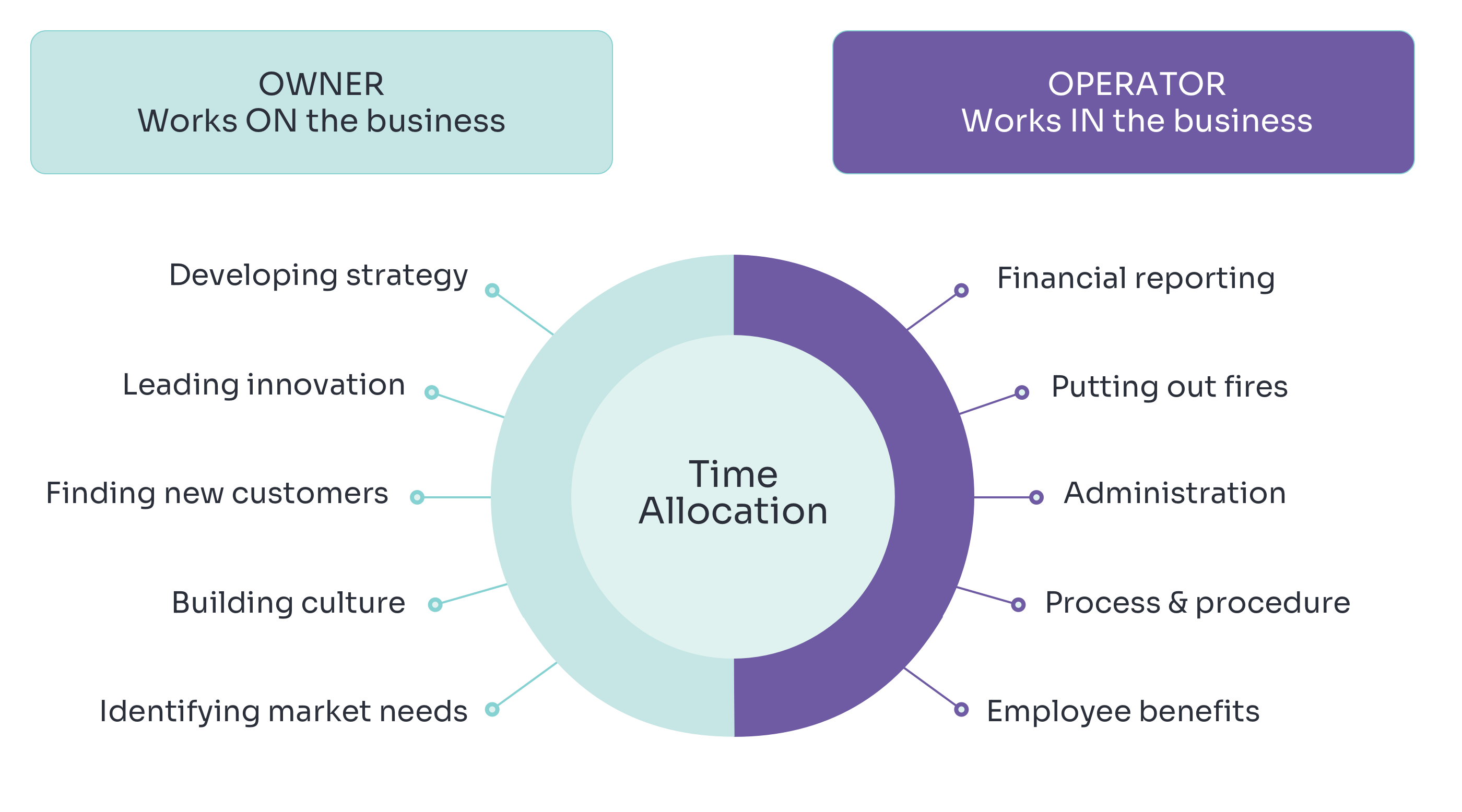
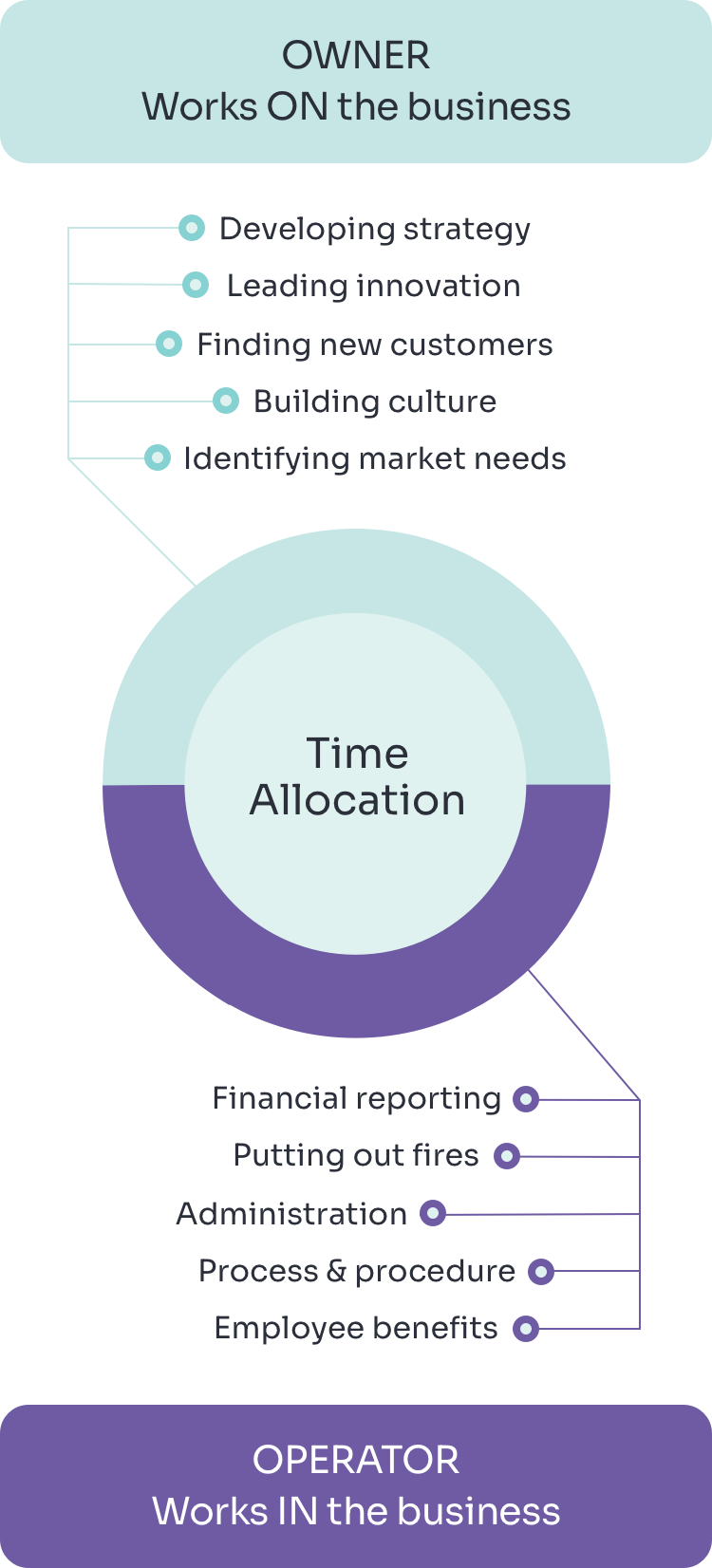
Studies show that, on average, 70% of the time spent by business owners on the business is spent on operational matters, and not on the revenue generators of the business. Nearly 90% of all root causes contributing to revenue stagnation and decline within companies resides within the management’s controls, according to the Harvard Business Review.
The Emergence of the Digital Subscription Economy
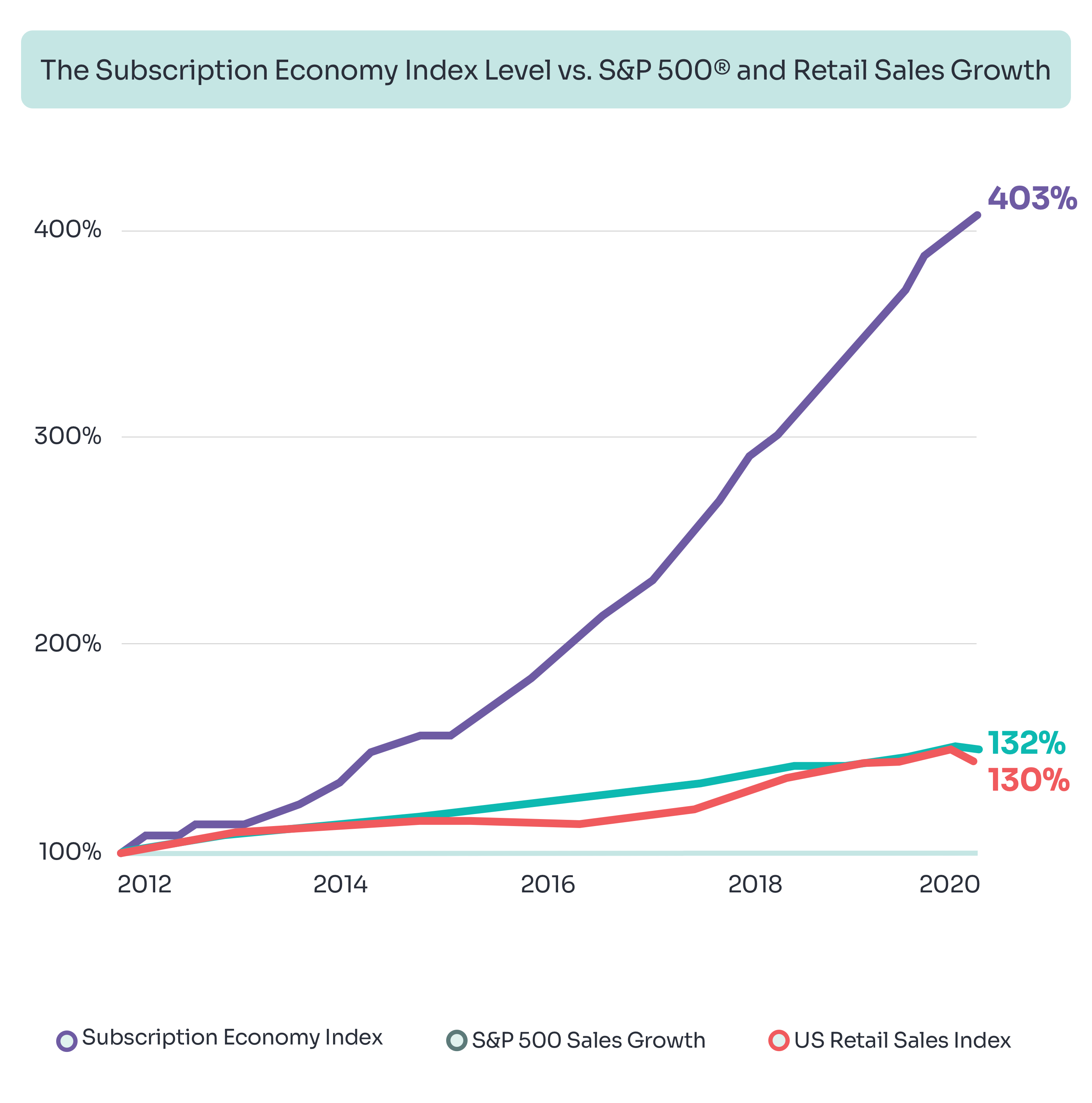
Subscription businesses grew nearly six times faster than firms on the S&P 500 index over the 2012–2020 period, according to subscription management platform Zuora. The digital subscription economy is a $650 billion market set to more than double to $1.5 trillion in value by 2025, according to estimates from UBS Wealth Management.
“For years, outsourcing was seen to reduce your costs, and you would only do it if it was cheaper than hiring a person for that role,” says Todd Bernhardt, Practice Leader of Baker Tilly Advantage. “People understand that in the remote work world, they can work with a company that’s not sitting in their office every day, and that outsourcing helps them operate more efficiently. Instead of continuous and costly investment in software, and staffing people to learn it, you’re paying a subscription to get access to experts and state-of-the-art technology.”
For CPA firms, outsourced accounting services will be the greatest driver of revenue for the next three to five years, according to the American Institute of CPAs (AICPA).
The Business Life Cycle of Client Companies
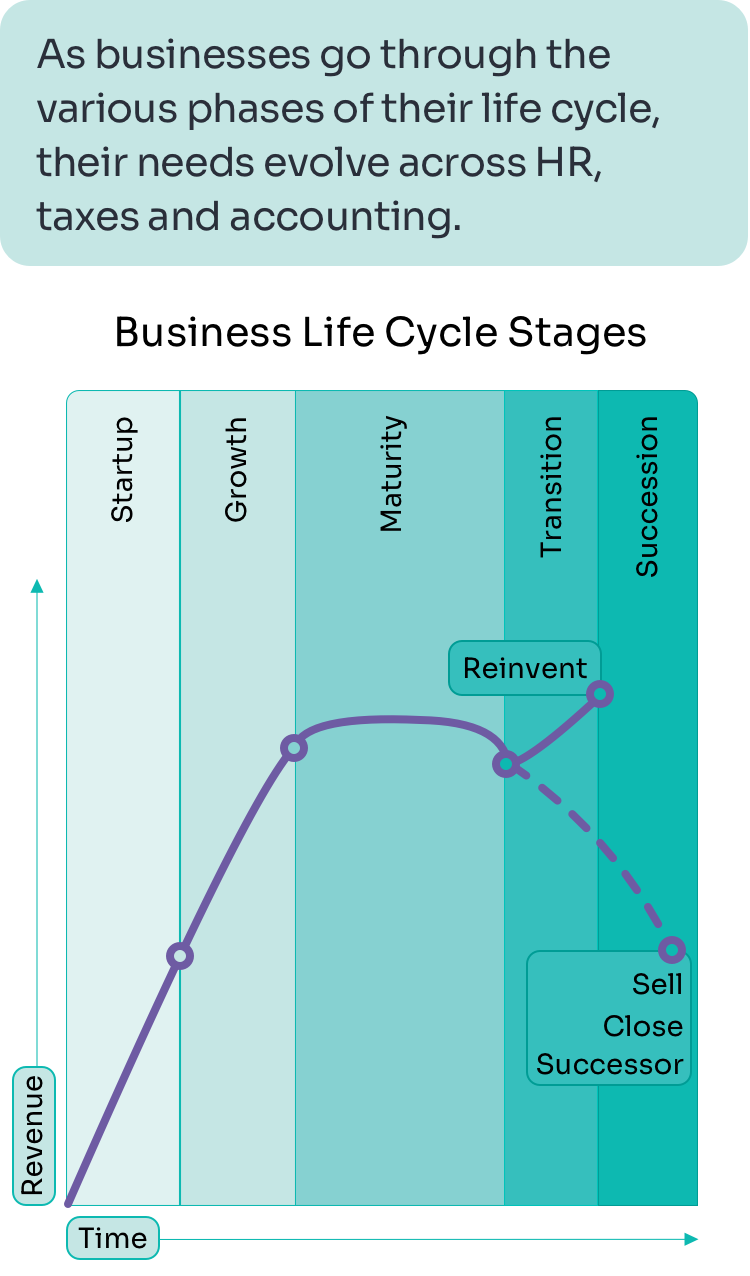
As client companies go through the various phases of the business life cycle—from startup to growth, maturity, transition, succession or exit—Baker Tilly develops a subscription model and suite of services to suit each client’s particular needs.
At startup companies, founders are implementing policies and formalizing their tax, accounting and human resources practices, often performing these critical tasks with a small internal team.
During the growth phase, they begin to hire more employees and expand their products or services and sometimes their footprint. This growth often comes with problems in essential functions like HR, taxes and accounting. Research shows that 34% of business owners reported payroll errors; 23% lost talent to a competitor because they couldn’t match their benefits and compensation; and 15% of respondents said their company lost money because of inadequately tracked expenses. Eventually, these problems can place companies at a competitive disadvantage and increase risk.
“Your competitors are not sitting at home doing the books,” says Bernhardt. “They are thinking of ways to grow their businesses.”


Go Beyond Transactions
Missy Thompson, Client Accounting Services Practice Leader for Baker Tilly, says that often, business owners have a wakeup call when they reach a stage in their business life cycle when they are trying to raise capital through an investor, or when a bank or a third party wants to examine their financials.
“Business owners are operating all these core platforms that you must have for a business—but it’s not their area of expertise nor should it be their focus in the growth stage of their business,” Thompson says. “We tell our clients, ‘You don’t have to do everything. Let us do the back-end part and you do your part.’ It’s a team.”
Baker Tilly is focused on supporting its clients’ business objectives. “This is not just a transactional relationship,” Thompson emphasizes. “There really is a relationship. Their business is our business because we are a team. We want them to feel comfortable with us and feel how tuned in we are to their needs, goals and dreams.”
How Business Owners Can Use Their Time More Wisely
Focused on ensuring that their clients stay in growth mode for the long run—leaving maturity and decline to their competitors—Baker Tilly Advantage is a smart, scalable continuum of solutions for all types and sizes of growing businesses, designed to meet their needs now and in the future. The firm works to thoroughly understand the goals of the organizations it supports, and how its services can drive value for those aspirations.
“It’s the understanding of where you want the business to go. It’s going be a different path if you want to sell your business, versus if you want to transition to the next generation,” says Thompson. “With Advantage, it’s about embracing how our services impact your business, and why it’s so necessary and not a necessary evil.”
Thompson and her coast-to-coast team help business owners scale their businesses by handling the critical finance and accounting functions for them—so they can spend more time on strategy, innovation, growth and client relationships.
Know Your Score to Build Confidence
Baker Tilly Advantage leads an annual business review with each of its clients to help them reach their goals. Additionally, Baker Tilly offers a free Business Confidence Survey, available on its website. In the survey, organizations are measured on five areas: business planning, business risks, HR, tax and financial reporting. Business owners are scored on each area, and they receive an overall score on a 100-point scale. Bernhardt says that most companies score in the 60-point range.
“We don’t expect them to be perfect in all of these areas,” he says. “Sometimes, we see a section where a company scores a 100, and then they will score a 20 on another section. Big swings in scores pinpoint which operational areas need attention, and how we can jump-start improvements.”

Essentials for Success and Growth
Tax, accounting and human resources are three essentials for every business. Each Baker Tilly Advantage client has an assigned client success manager guiding them through the different stages of their business and the services they need. “Baker Tilly Advantage begins with the orchestration of tax, accounting and HR in a seamless way for our clients, and continues as our clients’ needs change,” Bernhardt says.
A monthly subscription fee makes Advantage convenient and affordable. Next up, Baker Tilly is adding robust benchmarking reports for its clients. Such innovations are positioning Baker Tilly to dominate the financial and accounting advisory space.
“It’s a new frontier,” says Bernhardt. “By combining financial, operational and people metrics along with industry insights, we help our clients see the whole picture and the big picture. That’s the difference with Advantage. What drives us is that we get to sit alongside these remarkable companies and incredible business leaders, and help them do what they do best and reach their dreams.”