Hydrogen has been hailed as the fuel of the future—a clean energy solution for hard-to-decarbonize sectors. But in 2025, costs remain high, infrastructure is lagging and new estimates show green hydrogen will stay expensive for decades.
So why not walk away?
Because the climate clock is ticking.
As global emissions hit record highs and Paris Agreement targets slip out of reach, the need for deep decarbonization has never been more urgent. We can’t get to net zero without hydrogen and we can’t afford to delay.
This isn’t just about innovation. It’s about the future of our planet.
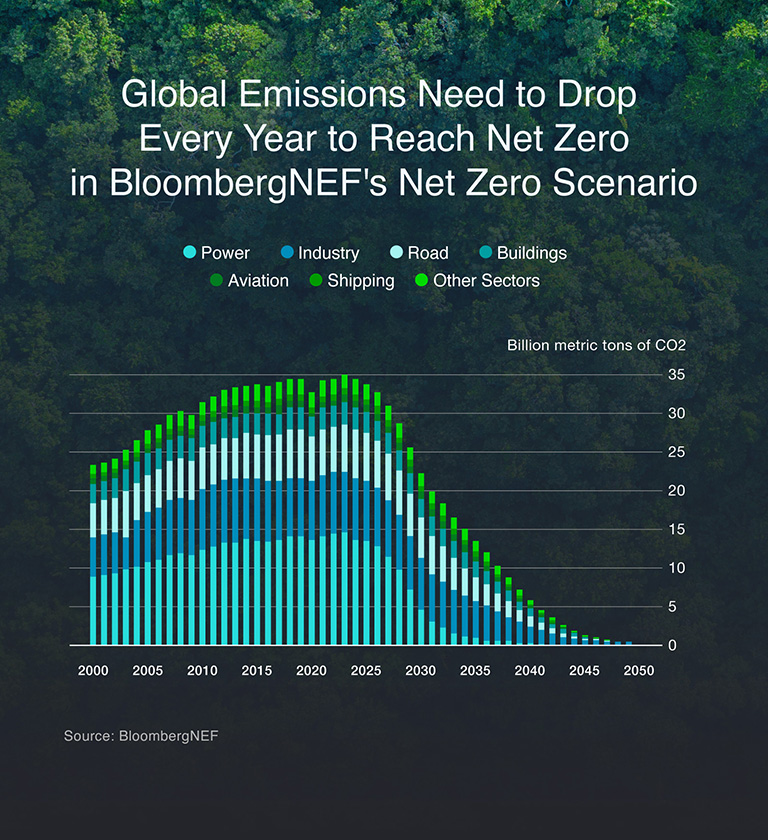
By 2030, the world faces its first major climate checkpoint—a deadline to hit key targets that could stave off the worst impacts of global warming. But instead of falling, CO₂ emissions broke records last year.
The path to net zero by 2050 continues to get steeper, costlier and more disruptive. Every year of inaction raises the stakes: more extreme weather, higher economic losses and greater human risk.
Source: NBER
Source: BloombergNEF
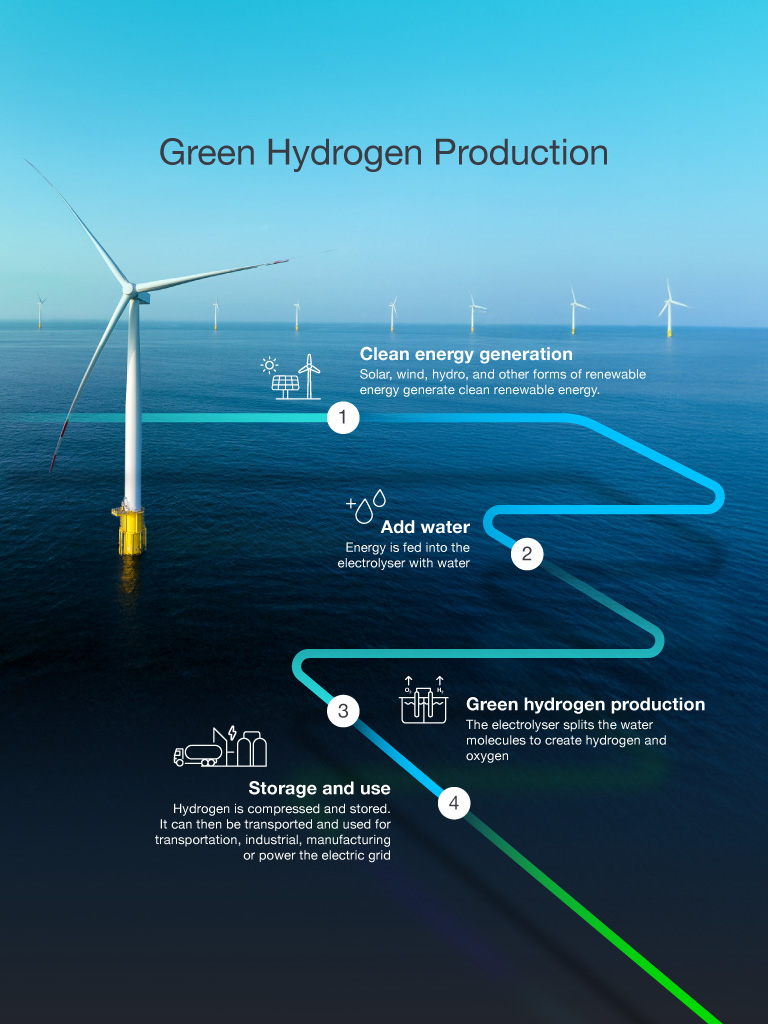
Hydrogen's Potential Role
Ninety-four million tons of hydrogen, made from fossil fuels, is consumed every year. This sector must go 'green' if we are to reach net-zero emissions. Hydrogen's role may also expand to meet other net-zero challenges.
To decarbonize heavy industry a substitute is required for the high temperatures that natural gas and coal currently deliver. Hydrogen could be that substitute.
These heavy industries, as well as heavy-duty transport, also require clean molecules. Hydrogen can also play a role here, either by itself or converted to ammonia, methanol, and e-fuels.
Today, clean hydrogen is gaining traction but it’s not scaling fast enough.
Source: Energy Transition Investment Trends Report, BloombergNEF
The good news? Supply isn’t the bottleneck. Shipments of electrolyzers—devices that split water into hydrogen and oxygen to produce low-emissions hydrogen—jumped 160% in 2024, showing the manufacturing muscle is ready. What’s missing is demand.
Some progress is coming. Hydrogen pipelines are finally under construction in Europe and China—an essential step to building demand, since buyers won’t commit without infrastructure in place.
The building blocks are falling into place. With the right policy push and commercial momentum, demand can catch up and the market can take off.
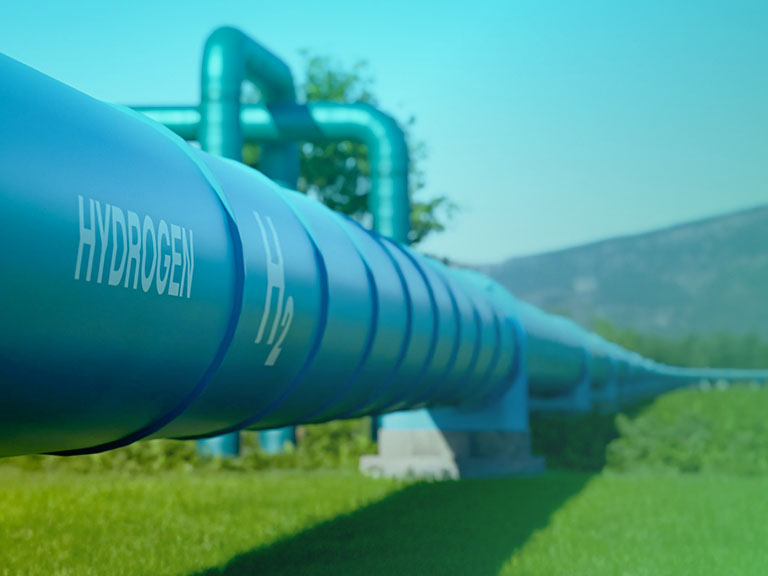
In the race to decarbonize industry, ammonia is emerging as one of clean hydrogen’s earliest proving grounds.
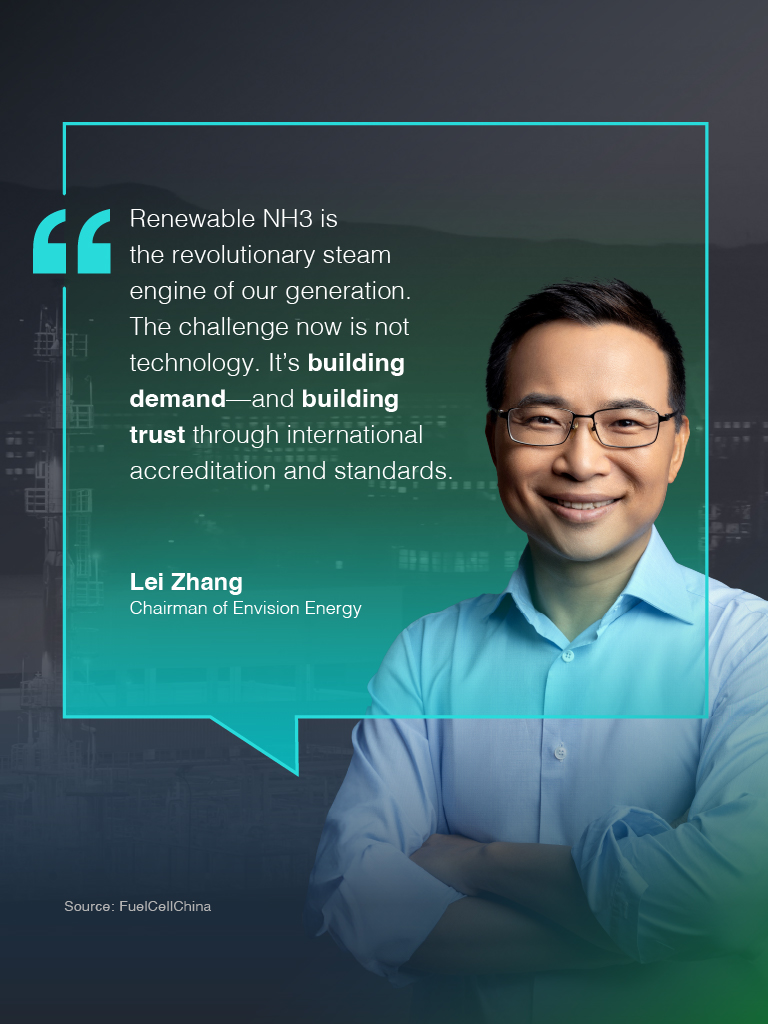
A cornerstone of global agriculture, shipping fuel and chemical production, ammonia is a $76 billion market and a major source of industrial emissions. Ammonia is also becoming the main carrier for international hydrogen trade.
The majority of ammonia is currently produced using natural gas or coal, and known as gray ammonia. Switching to green ammonia, made from clean hydrogen, could cut emissions across these sectors.
Today, green ammonia costs 2–3 times more than conventional gray ammonia, but that gap is expected to narrow. By 2050, green ammonia could be cheaper than both blue ammonia, produced using fossil fuels and carbon capture, and even gray ammonia in key markets like China and India.
Momentum is building. Europe’s green hydrogen quotas, corporate tenders and upcoming carbon tariffs, along with subsidies in Japan and South Korea, could open the door to clean ammonia trade by 2030.
Green ammonia could be hydrogen’s first big win if we move fast enough. With falling renewable and electrolyzer costs, its future looks bright.
Source: FuelCellChina
Heavy industry is one of the biggest challenges on the path to net-zero. It’s responsible for about 20% of global CO₂ emissions, with sectors like steel, concrete and chemicals the leading culprits. To align with the Paris Agreement, these emissions must fall by 20% by 2030 and by a staggering 90% by 2050.
The good news: the technologies needed to decarbonize these sectors exist. The bad news: most are still in early stages of commercialization. Green steel, low-carbon cement and sustainable fertilizers are beginning to emerge, but scaling them fast enough will require major investment and stronger policy support.
Global demand for green industrial products will be a decisive driver.
Without strong market signals, companies won’t invest in cleaner processes. And without clear policy, they won’t take the risk.
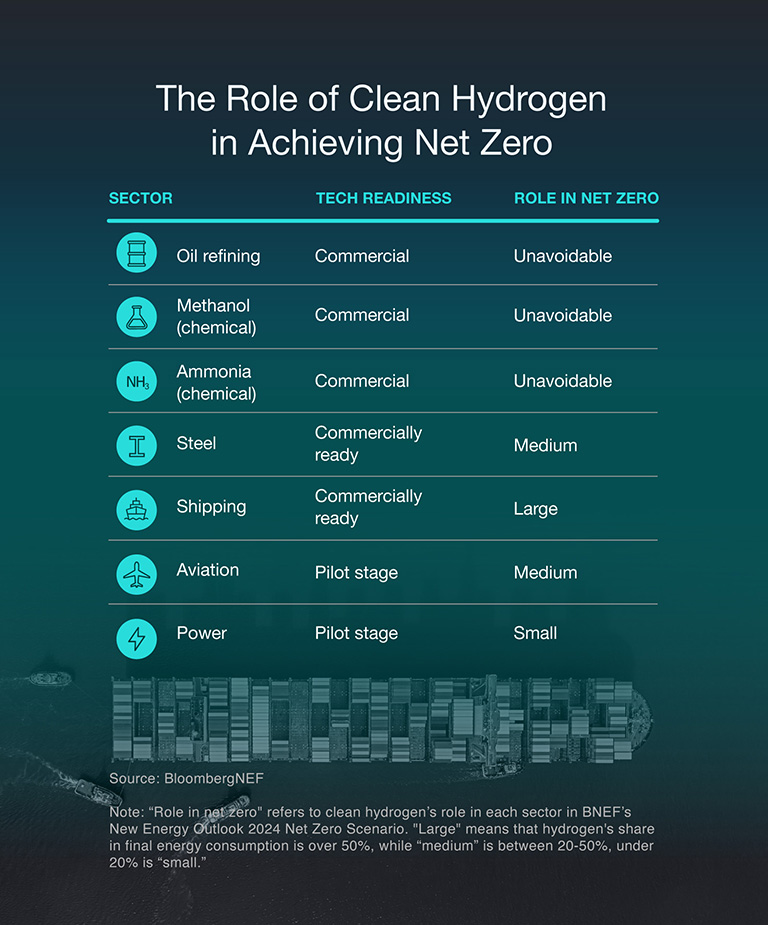
Source: BloombergNEF
Note: “Role in net zero" refers to clean hydrogen’s role in each sector in BNEF’s New Energy Outlook 2024 Net Zero Scenario. "Large" means that hydrogen's share in final energy consumption is over 50%, while “medium” is between 20-50%, under 20% is “small.”
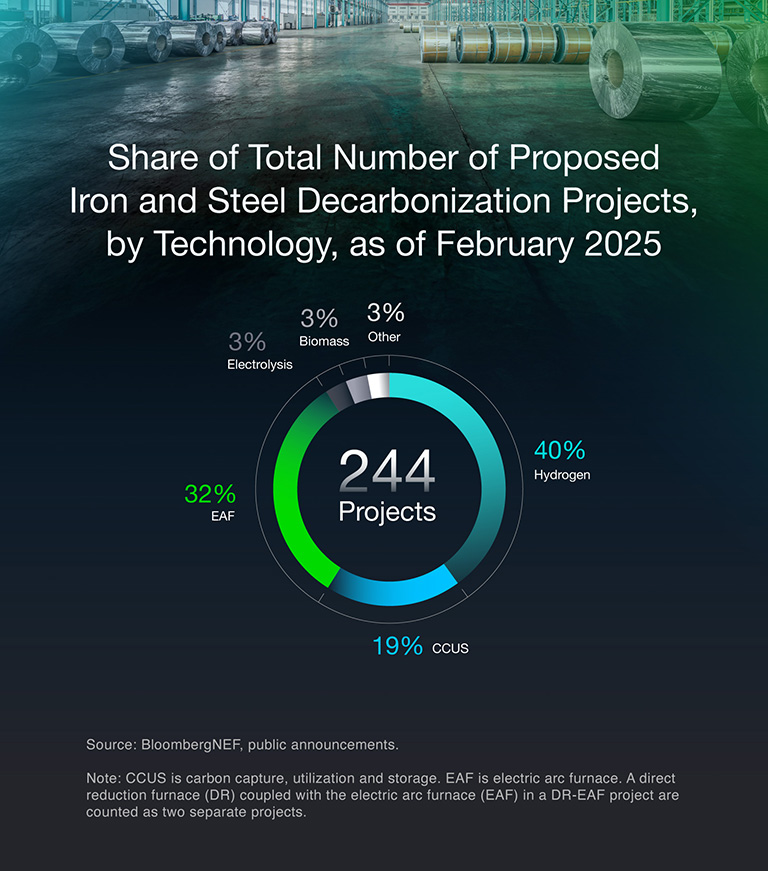
Source: BloombergNEF, public announcements.
Note: CCUS is carbon capture, utilization and storage. EAF is electric arc furnace. A direct reduction furnace (DR) coupled with the electric arc furnace (EAF) in a DR-EAF project are counted as two separate projects.
Steel accounts for 7% of global CO₂ emissions. The sector is shaping up to be a major driver of clean hydrogen demand.
Hydrogen-based steelmaking could decarbonize 28% of global production by 2050. That would require at least 98 million metric tons of hydrogen annually, according to BloombergNEF.
As of February 2025, more than 240 green steel projects are targeting startup by 2030. Many plan to use hydrogen as the primary abatement tool despite a slow pace of commercial deployment and concerns over clean hydrogen costs.
Steel buyers including automakers and construction firms are stepping up. As of April 2025, BloombergNEF has tracked 174 offtake deals for low-emissions steel, up nearly 20% since late 2024.
In the first half of 2025, new offtake deals for hydrogen-based iron and steel were signed by Benteler and Amazon, but the deployment of green steel projects is at risk of delays.
Automakers continue to lead demand, with their supply chains and manufacturing partners following suit. But slowing EV sales and fierce competition could put green steel purchases at risk of being sidelined in the short term.
Still, governments are moving to build long-term confidence in the green steel market. India is launching national standards to define what qualifies as “green,” aiming to bring clarity and scale. In Europe, the Clean Industrial Deal pushes for clear product labeling and public procurement as tools to drive early demand.
Despite short-term headwinds, green steel demand is growing and becoming more structured. Stronger policy, better transparency, and targeted public investment could help bridge the gap between ambition and action.
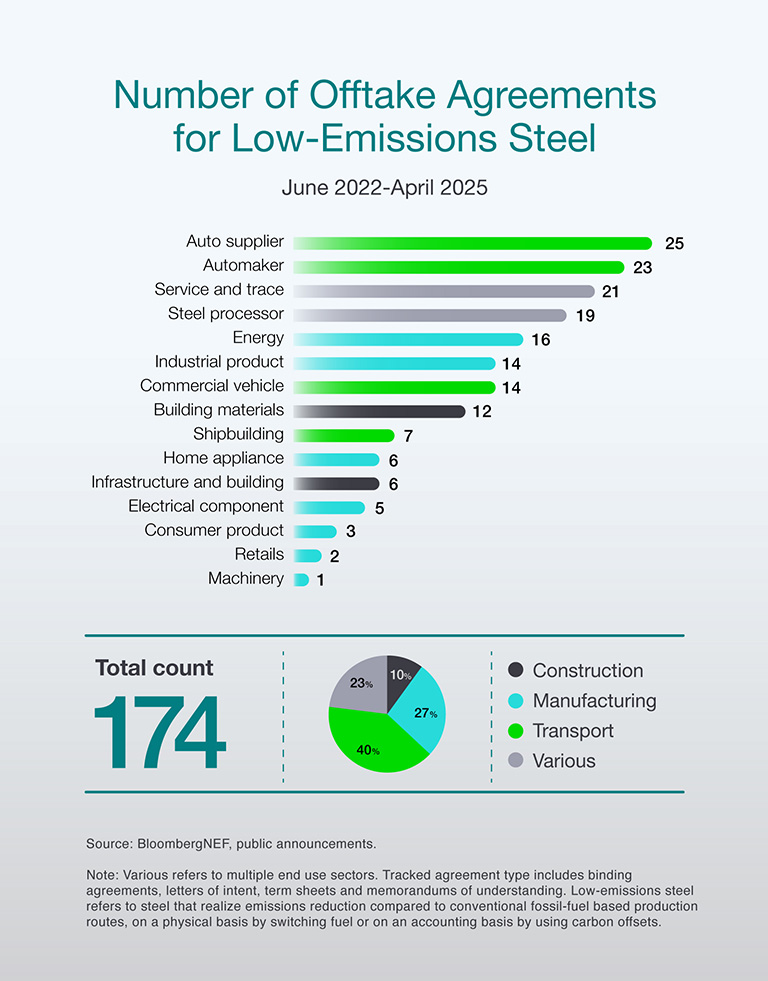
Source: BloombergNEF, public announcements.
Note: Various refers to multiple end use sectors. Tracked agreement type includes binding agreements, letters of intent, term sheets and memorandums of understanding. Low-emissions steel refers to steel that realize emissions reduction compared to conventional fossil-fuel based production routes, on a physical basis by switching fuel or on an accounting basis by using carbon offsets.
Source: ScienceDirect
Reducing that footprint is no simple task. Emissions span the entire value chain, from high-temperature processes to fossil-based feedstocks, each requiring different solutions.
In 2H24, clean power procurement and low-carbon hydrogen emerged as the most common strategies in decarbonizing chemicals. Producers are increasingly turning to offtake agreements and on-site hydrogen production to cut emissions. Europe is leading this shift with a flurry of early-stage initiatives announced since November 2024.
Still, most activity remains in the planning phase—feasibility studies, MOUs and supply contracts rather than full-scale deployment. Investment in carbon capture for crackers and refineries is notably low, and projects are just beginning to take shape.
Green feedstocks and carbon capture are on the radar, but progress is uneven. Scaling these solutions will require stronger policy support, clearer market signals, and sustained capital investment.
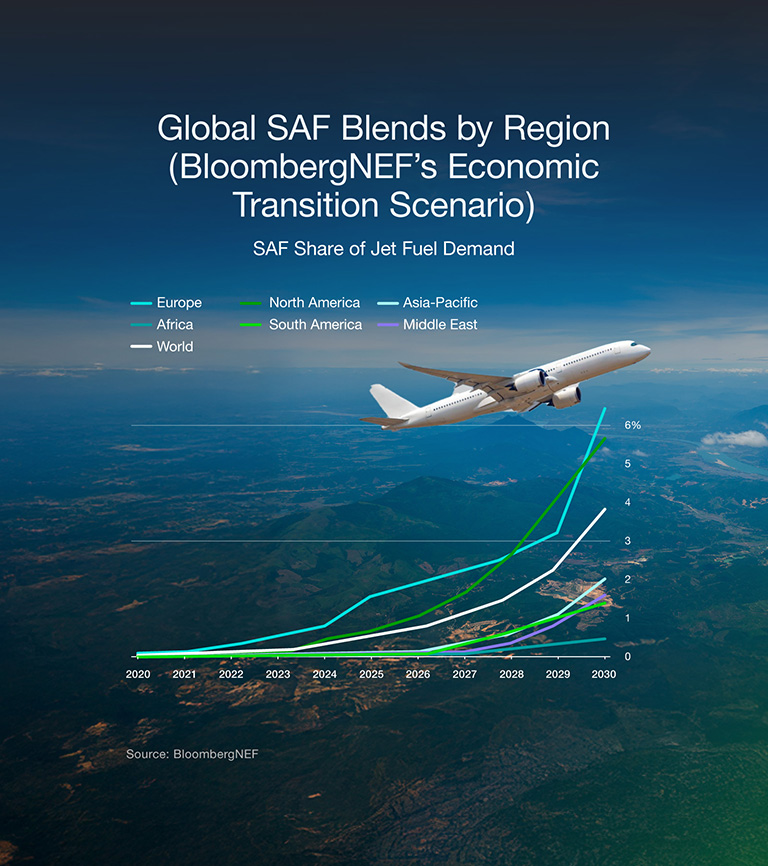
Transport—especially aviation—is a major decarbonization challenge. Like steel, hydrogen’s role hinges on clear policy and strong demand signals. Aviation makes up 2–3% of global emissions and is notoriously hard to decarbonize.
As incomes rise and global travel grows, aviation emissions are set to climb. More flights mean more fuel. Sustainable aviation fuel (SAF) is the best near-term fix. It’s one of the only ways to cut emissions without grounding planes. But today, SAF use is tiny and scaling it demands bold policy, major investment and clean hydrogen.
SAF must deliver 65% of aviation’s emissions cuts to hit net zero by 2050, per the International Air Transport Association. The rest will come from efficiencies (3%), offsets and carbon capture (19%), and new tech like hydrogen or electric planes (13%).
The catch? SAF relies heavily on hydrogen—and only low-carbon hydrogen brings climate benefits. Building a robust supply chain is essential. EU policies like ReFuelEU Aviation, which mandates increasing SAF blends at airports, could be key to accelerating the shift.
Source: BloombergNEF
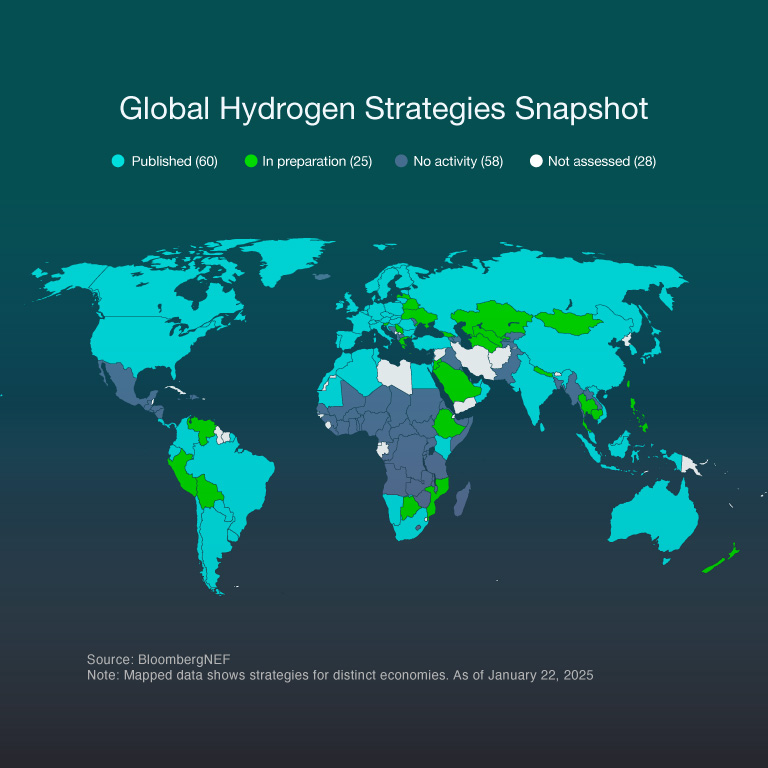
A national strategy signals a government's intent to back hydrogen.
As of January 2025, 60 countries had published hydrogen strategies, with 25 more in development.
But strategies vary widely. Some come packed with detailed plans, targets and funding. Others are little more than high-level frameworks.
The policy push is strongest in Europe, the Middle East and Africa, which account for 63% of all published strategies. The Americas follow with 20% and Asia Pacific with 17%.
Governments are backing these plans with big money but need to increase investment. As of March 2025, $277 billion had been earmarked for clean hydrogen globally. The EU and its member states lead the way, with $118 billion committed.
Source: BloombergNEF
Note: Mapped data show strategies for distinct economies. As of January 22, 2025.
Twelve major auctions in 2025 alone could channel up to $28 billion to clean hydrogen producers. But here’s the bottleneck: Government funding for hydrogen has focused heavily on supply. But without stronger demand signals, clean hydrogen won't scale.
Matching demand with supply is crucial to hydrogen’s role in decarbonizing hard-to-abate sectors. Producers need buyers. Supporting hydrogen users is just as important as supporting producers. Enforceable use quotas—especially in industries like steel, chemicals and heavy transport—could anchor demand and unlock growth.
Infrastructure is another missing piece. Midstream policies that enable pipeline and storage buildout are essential to connect supply with demand. In some EU countries, support is already strong enough to get projects moving.
If hydrogen is to fulfill its promise, governments must close the gap between policy ambition and market reality.
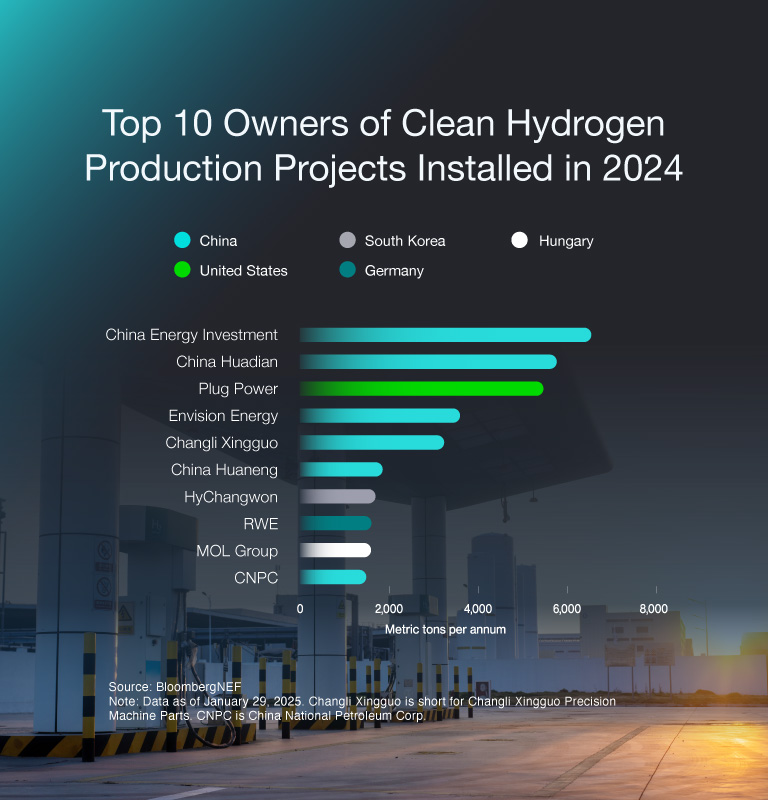
While Western markets debate incentives, China is emerging as a leader in green hydrogen through its Green Low-carbon Advanced Technology Demonstration (GLATD) program. This state-driven initiative is central to China’s plan to peak CO₂ emissions by 2030.
Unlike Western approaches that rely on subsidies and market incentives, GLATD directs state-owned enterprises (SOEs) to take the lead even if that means operating at a loss. These implicit subsidies are shifting hydrogen from pilot to practice.
Twelve technology categories are prioritized under GLATD. Green hydrogen made the list, blue hydrogen did not.
Major SOEs involved include: China Petroleum & Chemical Corporation, China Energy Engineering Corporation, China Baowu Steel Group and China COSCO Shipping Corporation.
These giants are now tasked with producing and using green hydrogen or its derivatives in real-world industrial applications, helping scale the technology while supporting national climate goals.
Source: BloombergNEF
Note: Data as of January 29, 2025. Changli Xingguo is short for Changli Xingguo Precision Machine Parts. CNPC is China National Petroleum Corp.
The GLATD program isn’t just a blueprint—it’s already deploying hydrogen across sectors. Batch 2 of the program expands the scope of applications, showcasing large-scale, real-world use cases:
Fertilizers: A project producing 1.3 million tons of low-carbon fertilizers using 62,000 tons of green H₂ and CO₂ capture.
Iron & Steel: A new plant using H₂-based direct reduction will yield 1.8 million tons of green steel. Its shaft furnace is running; the electric arc furnace is due by late 2025.
Shipping: Two methanol-powered ships are under construction, including a 35,000m³ dredger and an 11,000m³ container ship.
Power: Two solid-oxide fuel cell plants totaling 11 MW will provide flexible power generation for grid peaking.
Ammonia Cracking: A lab-scale project aims for 80% energy efficiency, matching current global benchmarks.
China aims to push green hydrogen from concept to deployment at national scale and industrial depth.
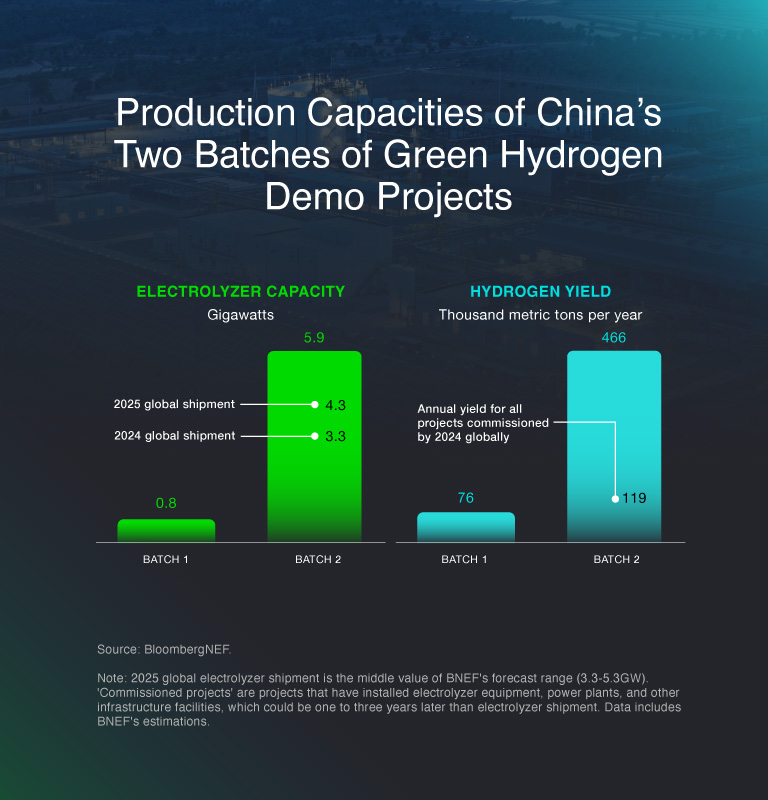
Source: BloombergNEF
Note: 2025 global electrolyzer shipment is the middle value of BNEF's forecast range (3.3-5.3GW). 'Commissioned projects' are projects that have installed electrolyzer equipment, power plants, and other infrastructure facilities, which could be one to three years later than electrolyzer shipment. Data includes BNEF's estimations.
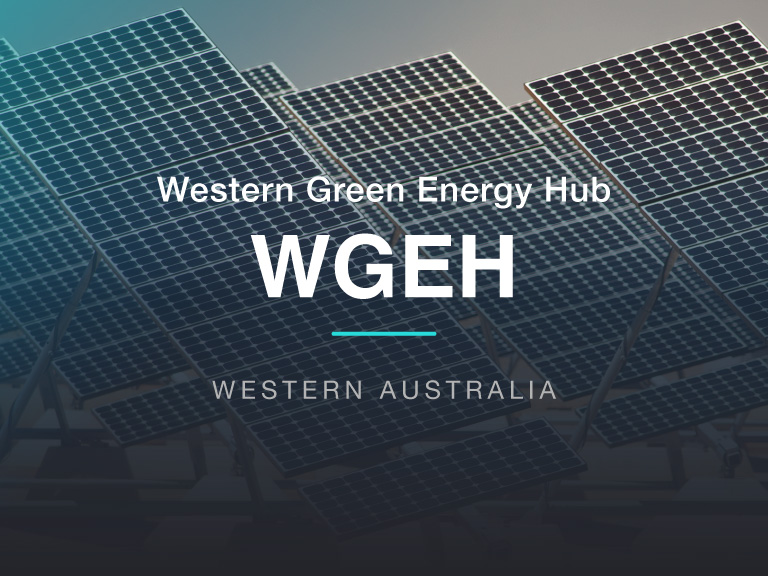
Several projects around the world show what’s possible when policy, capital and ambition align.
In Western Australia, the Western Green Energy Hub (WGEH) is a landmark proposal aiming to harness up to 70 GW of wind and solar power to produce green hydrogen and e-fuels, primarily for export. Spearheaded by InterContinental Energy, CWP Global, and Mirning Green Energy Limited, the project spans over 22,000 km² and could produce up to 4 million tonnes of green hydrogen and 22 million tonnes of ammonia annually.
Stage 1 targets 6–8 GW of renewables and 330,000 tonnes of hydrogen production per year. A collaboration with Korea Electric Power Corporation is underway, with a full feasibility study in progress and a financial close anticipated by 2029.
Key infrastructure includes 3,000 wind turbines, 35 solar farms, central electrolysers, desalination, and a marine export terminal. With potential for other e-fuels, WGEH is designed to scale with evolving technologies and markets. Backed by both state and federal governments, the hub is set to become a cornerstone of Australia’s green export economy by the 2030s.
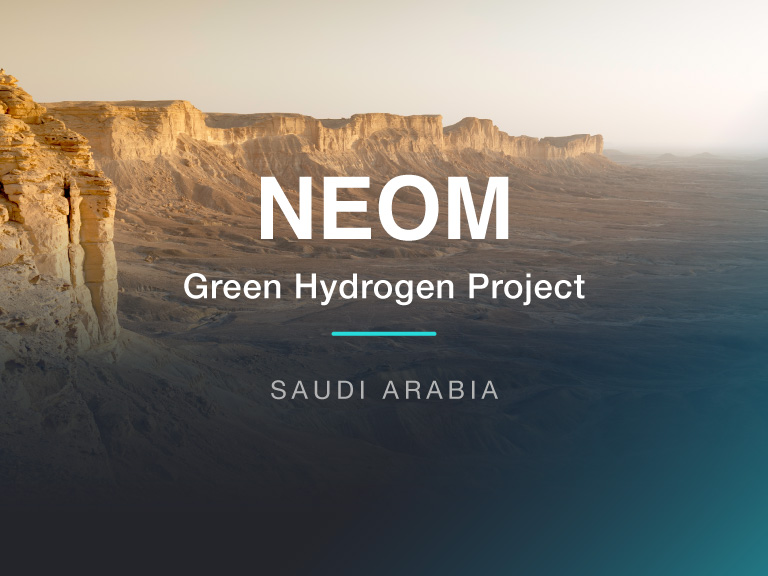
The NEOM Green Hydrogen Project in Saudi Arabia is set to become the world’s largest utility-scale green hydrogen plant powered entirely by renewable energy. A joint venture between ACWA Power, Air Products, and NEOM, the project aims to lead the global shift to carbon-free fuels.
Located in Oxagon, NEOM’s industrial hub, the plant will produce up to 600 tonnes of green hydrogen per day—enough to prevent up to 5 million tonnes of CO₂ emissions annually. The hydrogen will be converted into green ammonia for global export, supporting decarbonisation in transport, heavy industry, and other sectors.
Construction is well underway, with full operations expected by the end of 2026. Once operational, the facility will create 300 direct jobs and stand as a cornerstone of Saudi Arabia’s Vision 2030, reinforcing its commitment to sustainability and economic diversification.
With global impact and scale, the NEOM project marks a major milestone in clean energy innovation and the transition to a net-zero future.
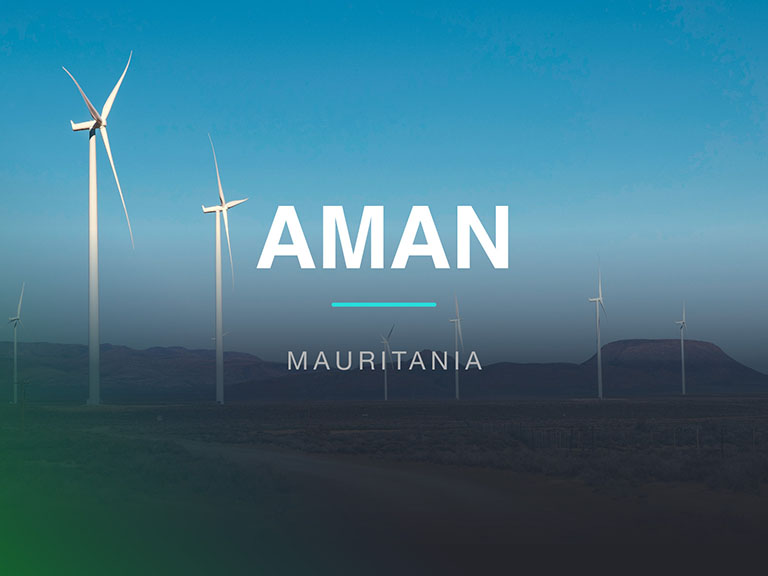
The AMAN Project, led by CWP Global, is Africa’s pioneering green hydrogen initiative, located in Mauritania. With a projected 30 GW of renewable energy capacity across 850,000 hectares, the project is designed to produce up to 15 GW of hydrogen via electrolysis and approximately 13 million tonnes of green ammonia per year.
Strategically positioned near Europe, AMAN targets global markets for green ammonia, liquid hydrogen, and green steel, leveraging proximity to iron ore deposits and export ports like Nouadhibou. Hydrogen produced at distributed upstream nodes will be transported to centralized facilities for conversion and export—an approach that enhances efficiency, scalability, and cost-effectiveness.
Environmental and social assessments, market studies, and infrastructure planning are well underway, supporting a phased development model.
With cutting-edge technology and a robust project execution framework, AMAN is set to become a cornerstone of the global green energy transition—and a transformative force for Mauritania’s economy.
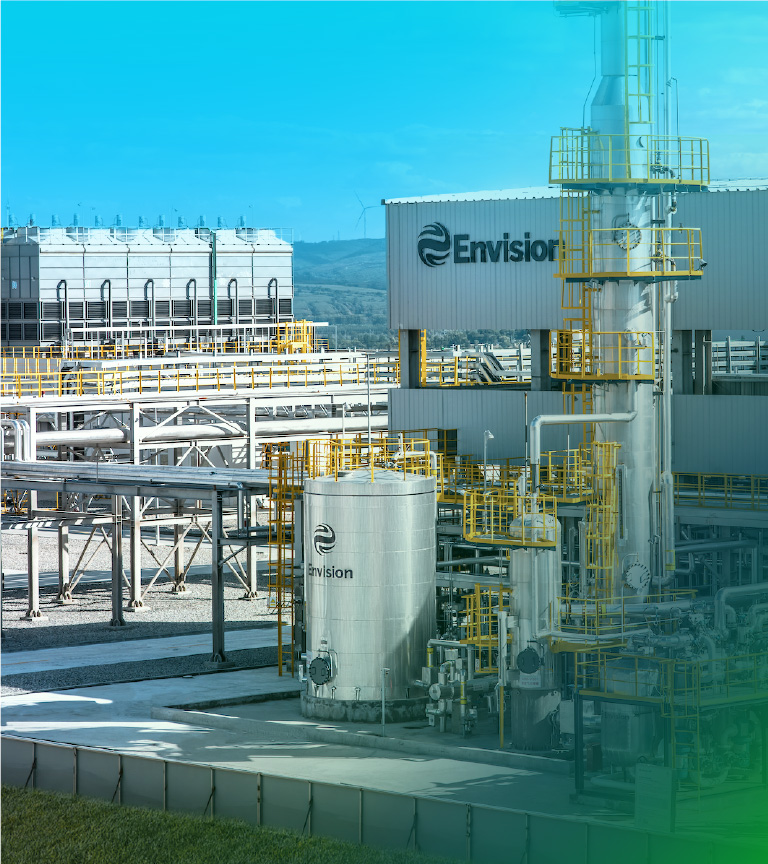
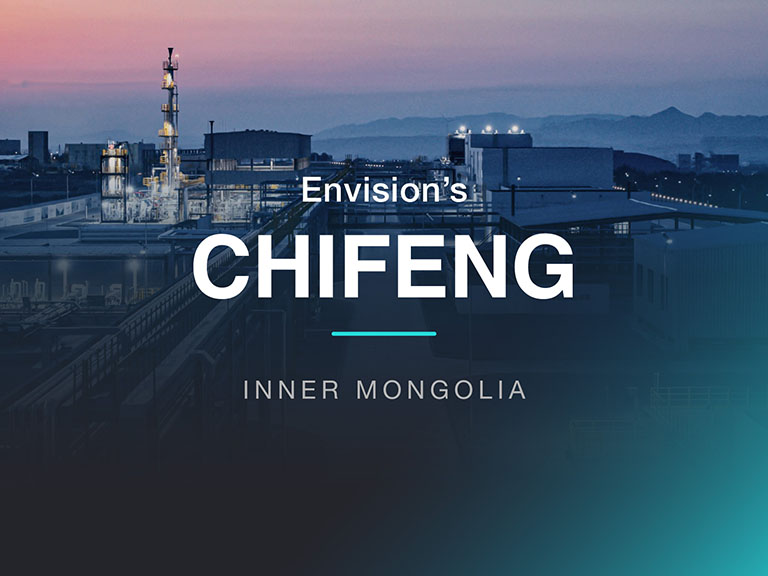
Envision’s Chifeng project in Inner Mongolia, China, is setting a new global standard in green hydrogen and ammonia production.
Powered entirely by renewable energy, the facility will produce 1,520 kilotonnes of green ammonia in total. The project’s first stage of Phase 1 was successfully commissioned in March 2024. Moving forward, the plant will produce green methanol and sustainable aviation fuel (SAF) from green hydrogen, cutting costs and accelerating the sector’s commercialization. This will help decarbonize hard-to-abate industries such as shipping, aviation, steel, and chemicals—part of Envision's vision for turning hydrogen into the “new oil”.
Envision’s proprietary full-stack technology underpins the park, which recently became the first green ammonia facility globally to earn Bureau Veritas’ Renewable Ammonia Certification. Envision is also pursuing China’s first ISCC Plus certification for green liquid ammonia, along with the RFNBO compliance statement.
Recognized globally, Envision took home two awards at COP28 for its leadership in green hydrogen and was named one of the top three transformative hydrogen projects at ADIPEC 2023.
With massive production capacity, pioneering certification, and global acclaim, Envision Chifeng is a cornerstone of the clean energy transition.
Green Hydrogen can help decarbonize heavy industry, but it’s hard to move. Watch the video to find out how Envision is mobilizing a solution.