Tracking the Impact of Covid
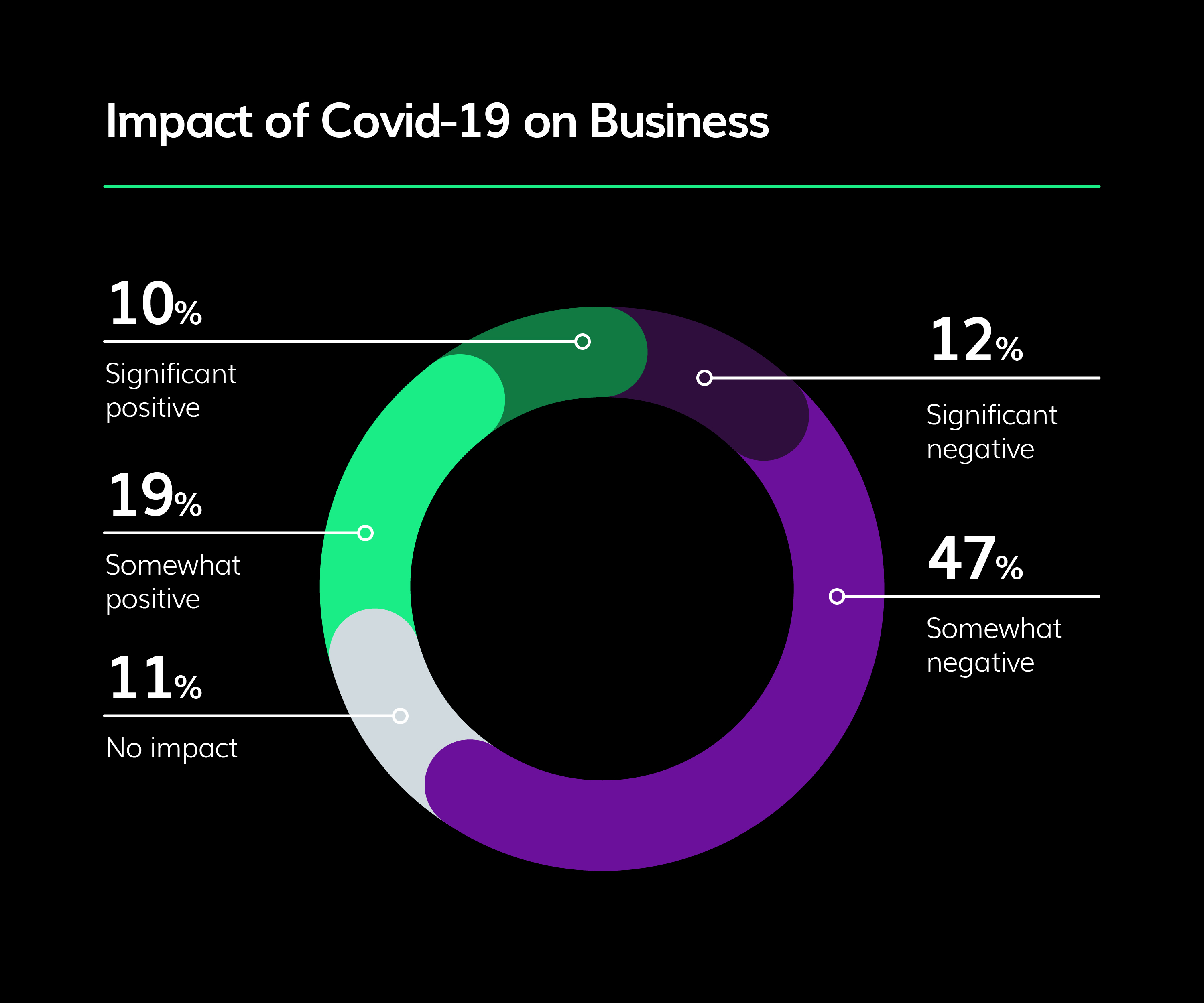
Covid-19 has kickstarted a K-shaped recovery across most major economies. Some sectors have been directly and unavoidably impacted, and this is reflected in 59% of respondents in our survey who are considering investing in Ireland over the next 1-3 years stating their business has been negatively impacted by the pandemic.
However, some sectors have been well-placed to benefit, and this has been reflected in 30% of potential investors considering Ireland during the same period reporting a positive impact from the pandemic. This is notably higher than the 22% global average for investors, suggesting Ireland’s open, stable and dynamic economy attracts more future-proofed investors.
Navigating New Challenges
The pandemic did introduce a series of challenges for potential investors over the short to mid-term.
Unsurprisingly, the most common concern expressed among potential investors (45%) during the Covid-19 pandemic have been around health and safety in the workplace. This is followed by concerns around the pandemic’s impact on global prices of components and raw materials required for production (41%), and how people will transition to working back in the office (41%).
Reasons for Optimism
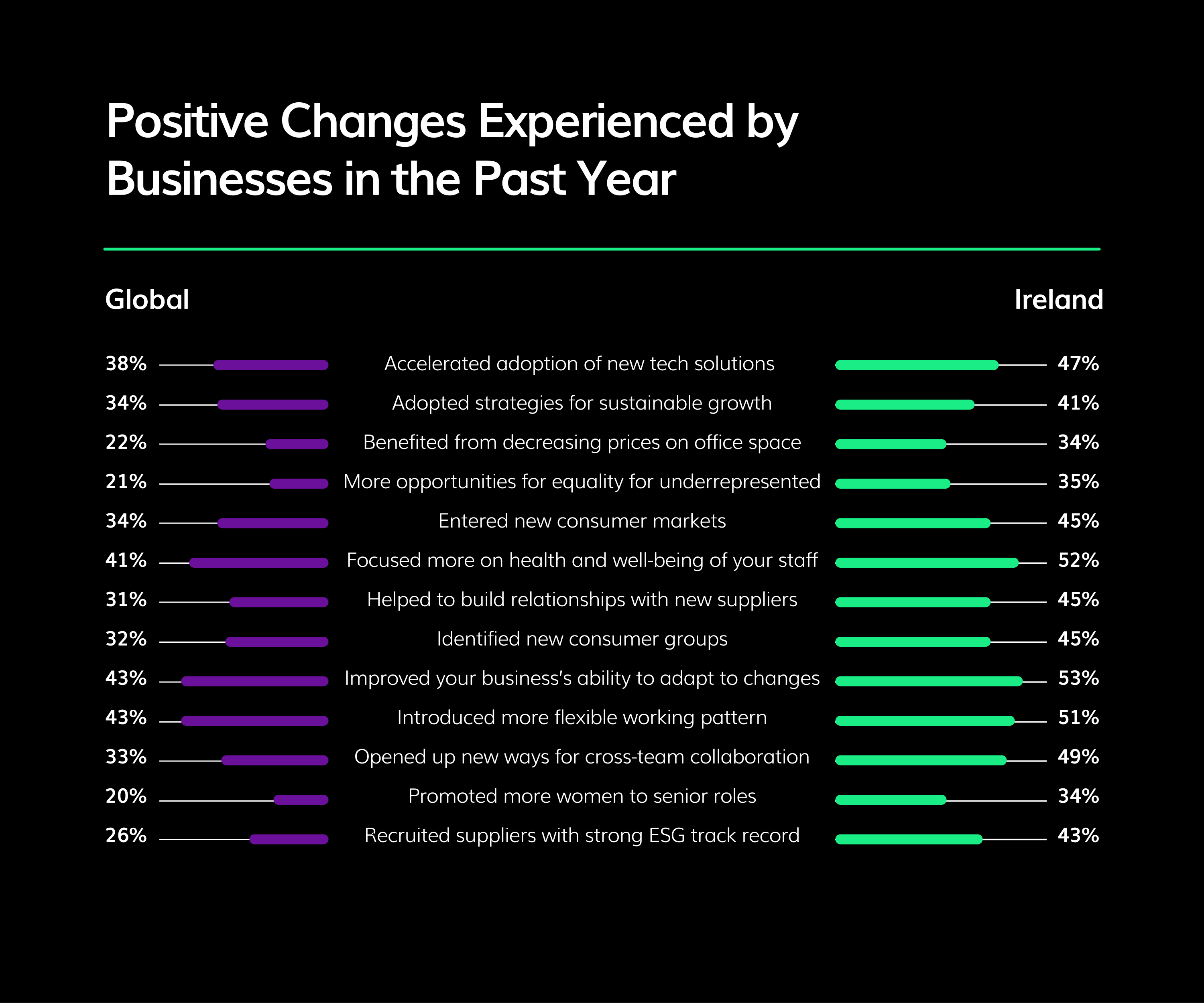
Our survey found 53% of potential investors state that dealing with the consequences of the pandemic has improved their business’s ability to adapt to changes. In fact, in every major metric we tested against, companies looking at investing in Ireland had more reason to be optimistic than the global average.
There is a major focus on new ways of working, with 51% introducing more flexible working patterns. Linked to this, the health and wellibeing of employees (52%) and new methods of cross team collaboration (49%) were also highlighted by investors as reasons for optimism.
Industries & Sectors
Our survey found that 50% of potential investors have budgets in excess of $50 million.
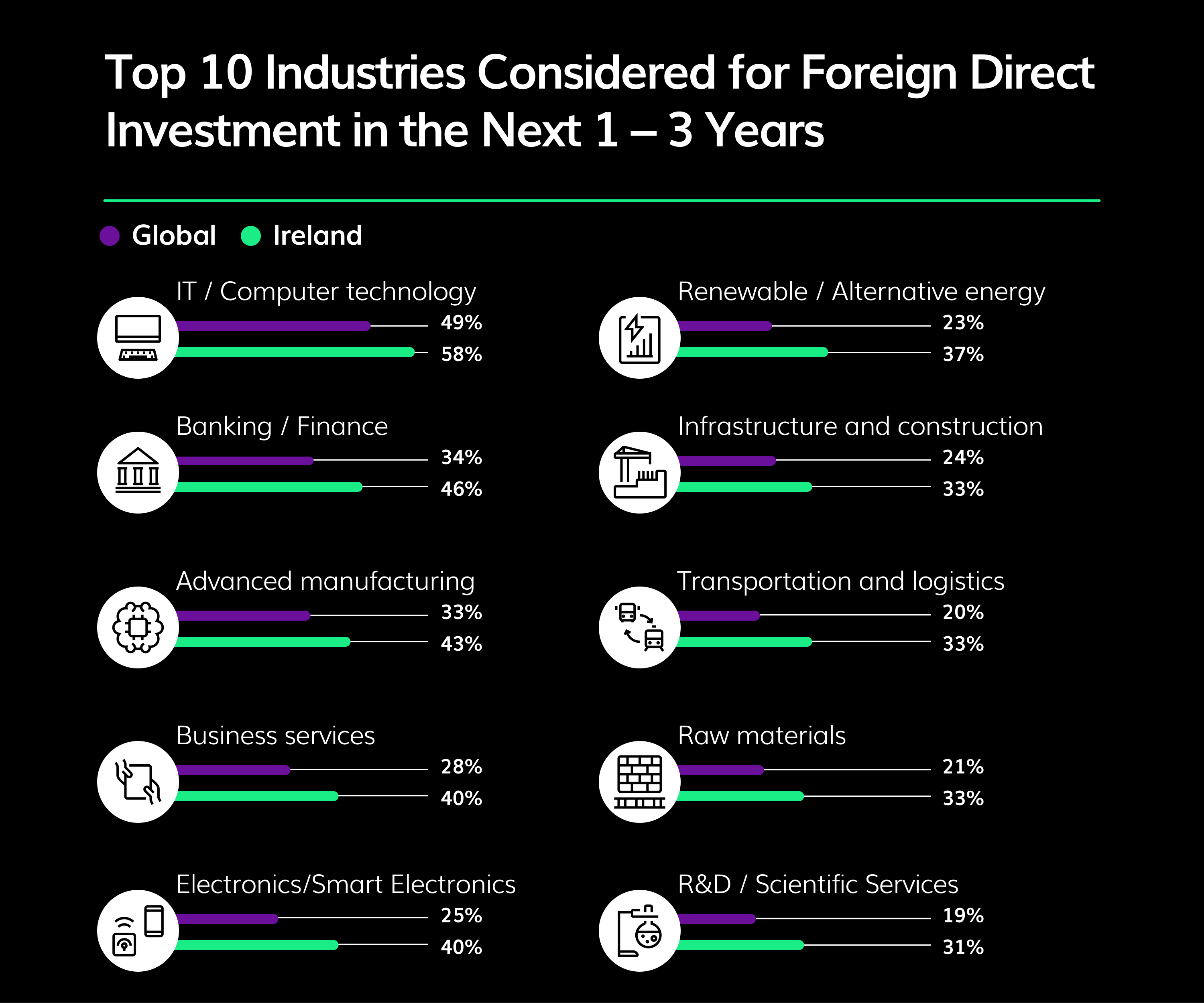
In terms of motivations behind FDI projects, 54% of respondents are eyeing up business support services, similarly, 54% are looking at long-term investment in infrastructure, 50% in manufacturing and 43% in R&D.
In terms of most attractive sectors, IT and Computer technology top the list, followed by banking and finance, and advanced manufacturing.
Key Drivers for Investment
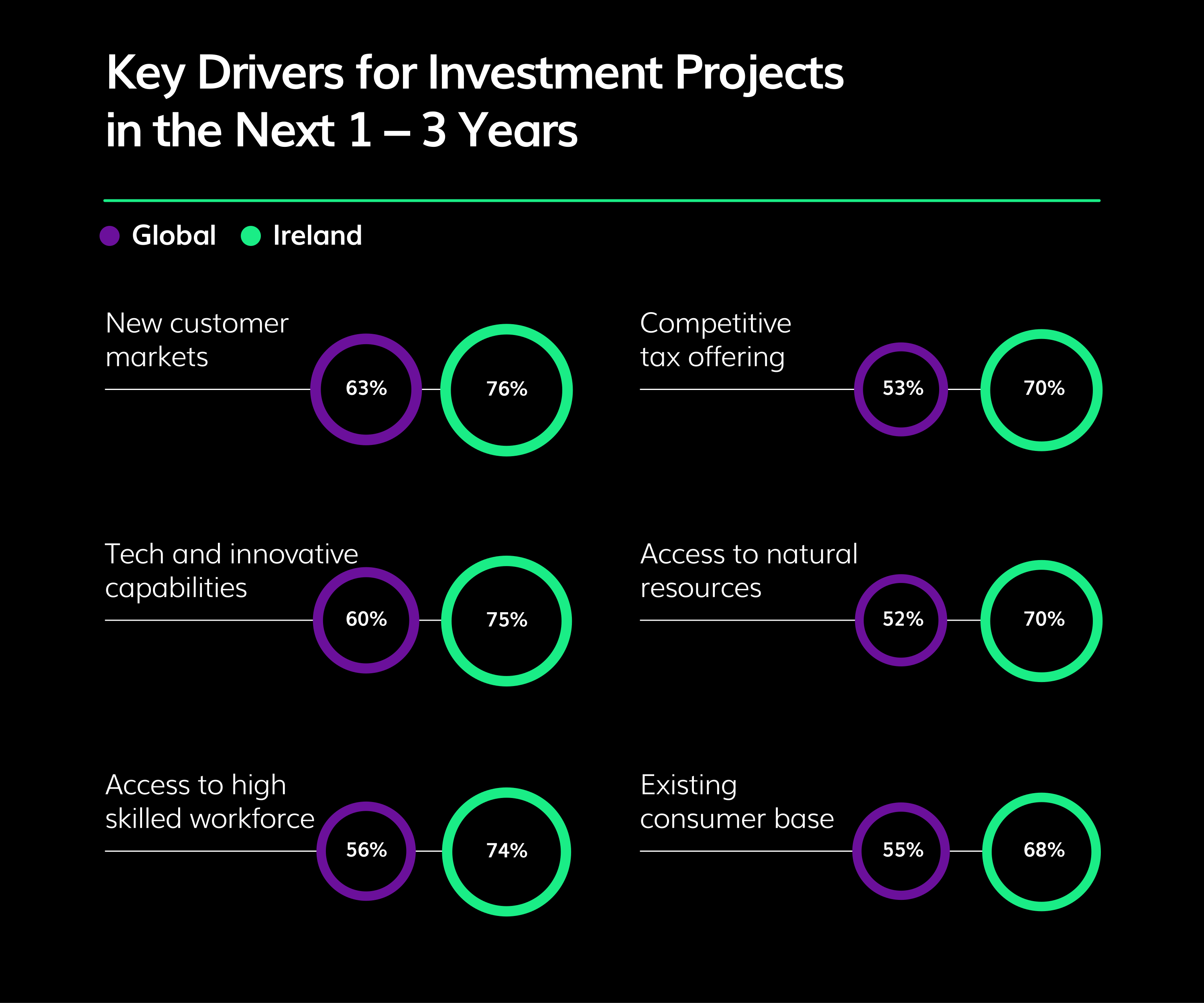
For potential investors, the opportunity to enter new customer markets is a big attraction of Ireland, which serves as a gateway from which companies can enjoy frictionless access to the EU Single Market. Investors surveyed also valued Ireland’s technological and innovative capabilities, access to a highly skilled workforce and natural resources.
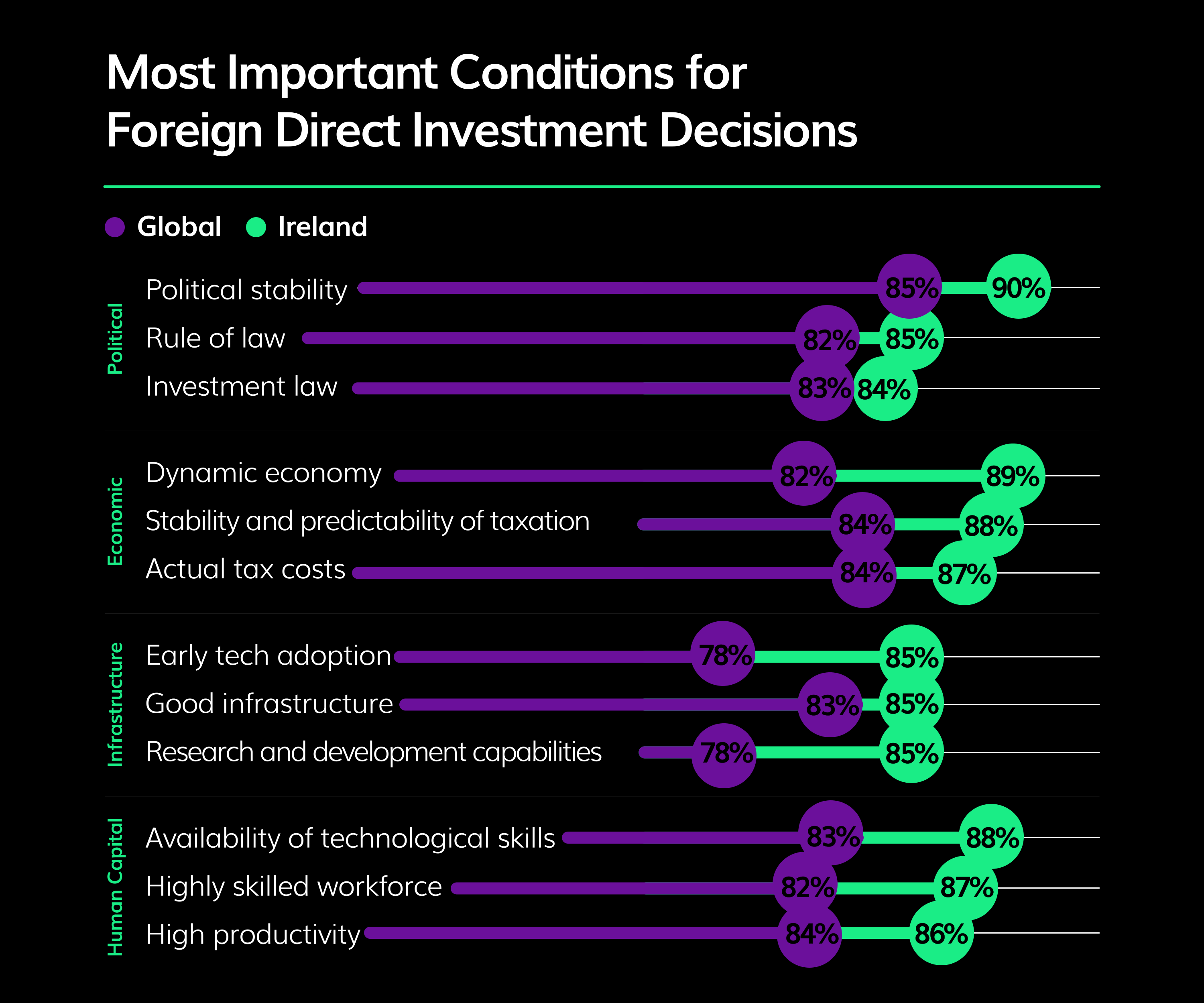
Most Important Conditions
The most important conditions for those interested in investing in Ireland over the next three years.
The Rise of ESG Factors
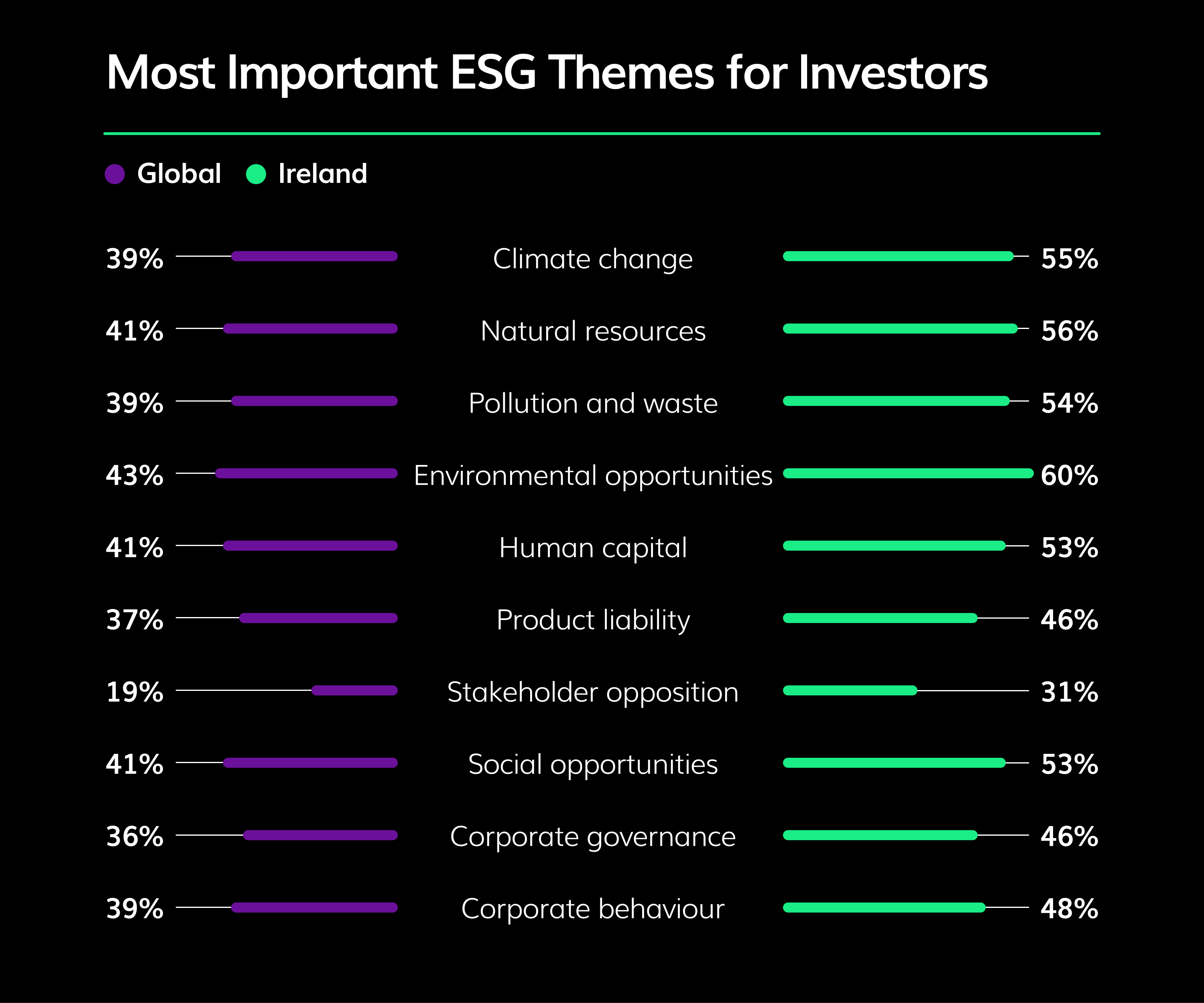
There is a clear and growing trend among all investors to focus on Environmental, Social and Governance (ESG) factors as part of the decision-making process, and for potential investors in Ireland it continues to resonate.
Ireland is a location where the opportunities arising from the green economy can be realised. Two-thirds (67%) of investors currently integrate ESG into their strategies, with a further 27% looking to do so in the future. Some 60% of companies considering investing in Ireland cited environmental opportunities among the most important themes.
Aligning with the UN’s Sustainable Development Goals
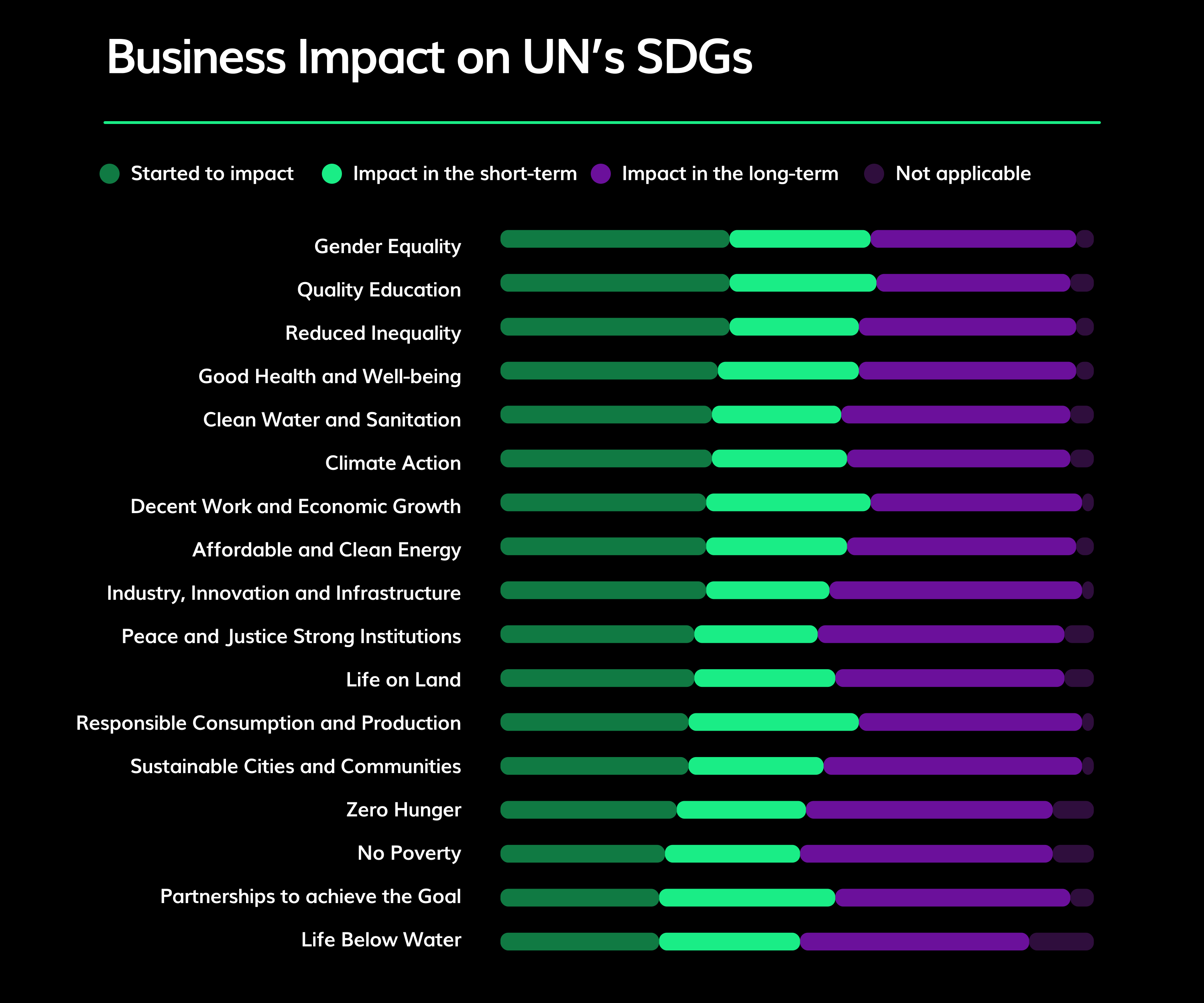
As investors’ ethical consciousness continues to grow, progress and development is being increasingly driven by the United Nations’ Sustainable Development Goals as the framework of activities and action.
Of those who currently integrate ESG into their investment strategy, 85%, said their foreign direct investment strategy aligns with the UN’s Sustainable Development Goals (SDG).
The Valuable Role of IPAs
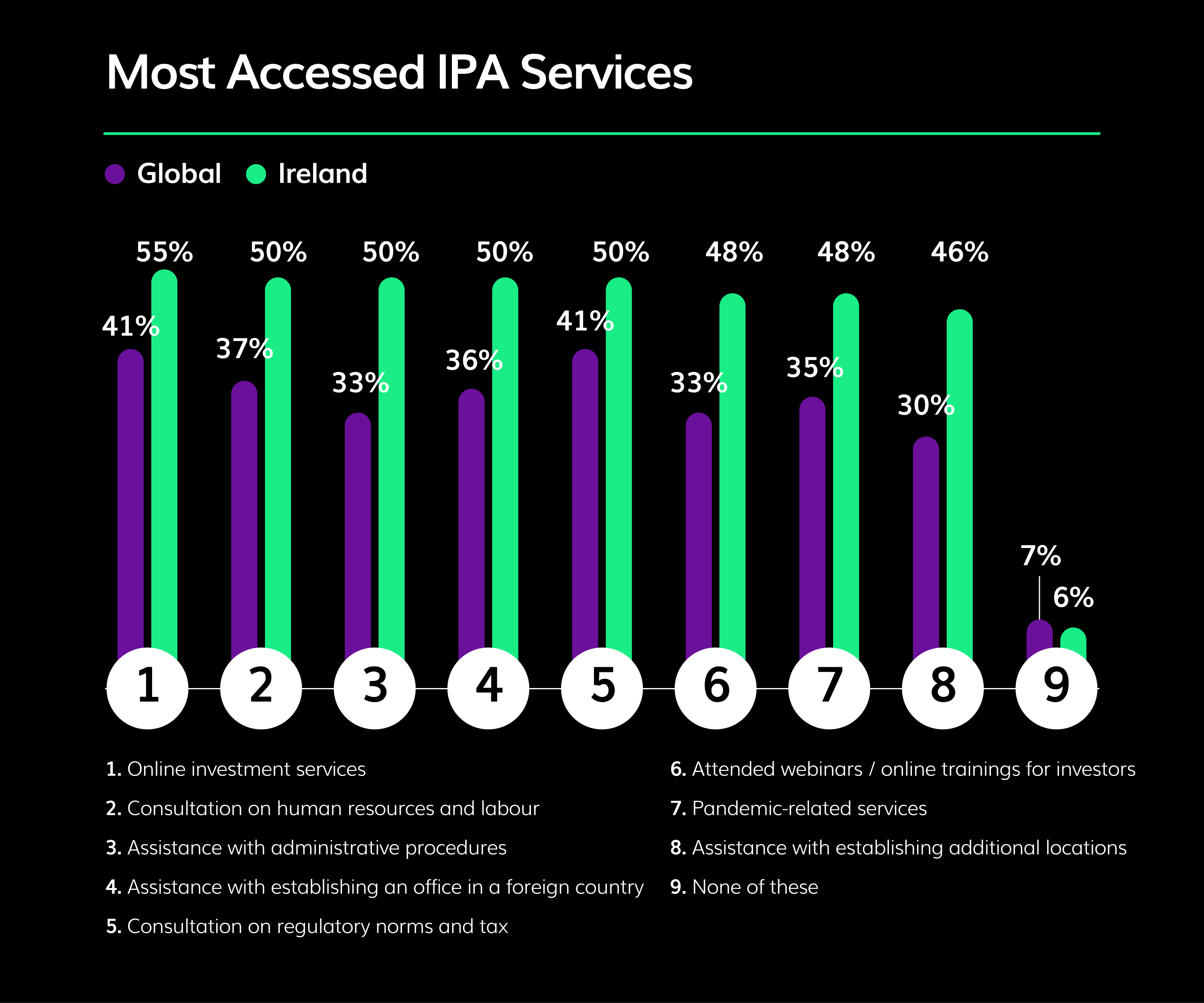
The Covid crisis has underlined the vital role of investment promotion agencies (IPAs). The best IPAs have been able to show agility and reactiveness in supporting the evolving needs of investors during the pandemic and have been instrumental as intermediaries between the public and private sector.
UNCTAD notes how the focus of IPAs has shifted from providing retention and aftercare support to existing investors to promoting investment help to restart economies. This new direction places emphasis on traditional as well as emerging opportunity areas linked to renewed national priorities. There is a growing demand in sectors such as health, food and agriculture, and tech-related sectors.
Some 75% of potential investors in Ireland are aware of IPAs, and most (51%) are considering using investment services provided by IPAs.
Ireland Among Europe’s Top 10 Most Attractive Destinations for FDI
IDA Ireland has reported significant investment growth in the first half of 2021, returning FDI employment creation plans to near 2019 record levels, despite the continued business uncertainty caused by the pandemic.
Some 142 investments have been won (62 of which are new names), resulting in associated employment potential of more than 12,530 jobs.
Martin Shanahan, CEO of IDA Ireland, said: “These very strong results show that foreign direct investment continued to grow, demonstrating further endurance and strength even as the pandemic entered a second year.
Shanahan added: “Ireland remains a smart destination for ambitious, future-focused investors. Companies need talent, they need ease of access to Europe. They want stability and consistency, and they want the pro-enterprise policies which a country like Ireland has operated for many years.
- “In the context of the Covid-19 global pandemic, Ireland’s FDI performance is remarkable. It is encouraging that Ireland has been able to secure such a significant number of investments and create jobs through 2020 and 2021. This has been achieved through a focus on our existing client base and on stronger than anticipated new name performance.”