The sustainability imperative
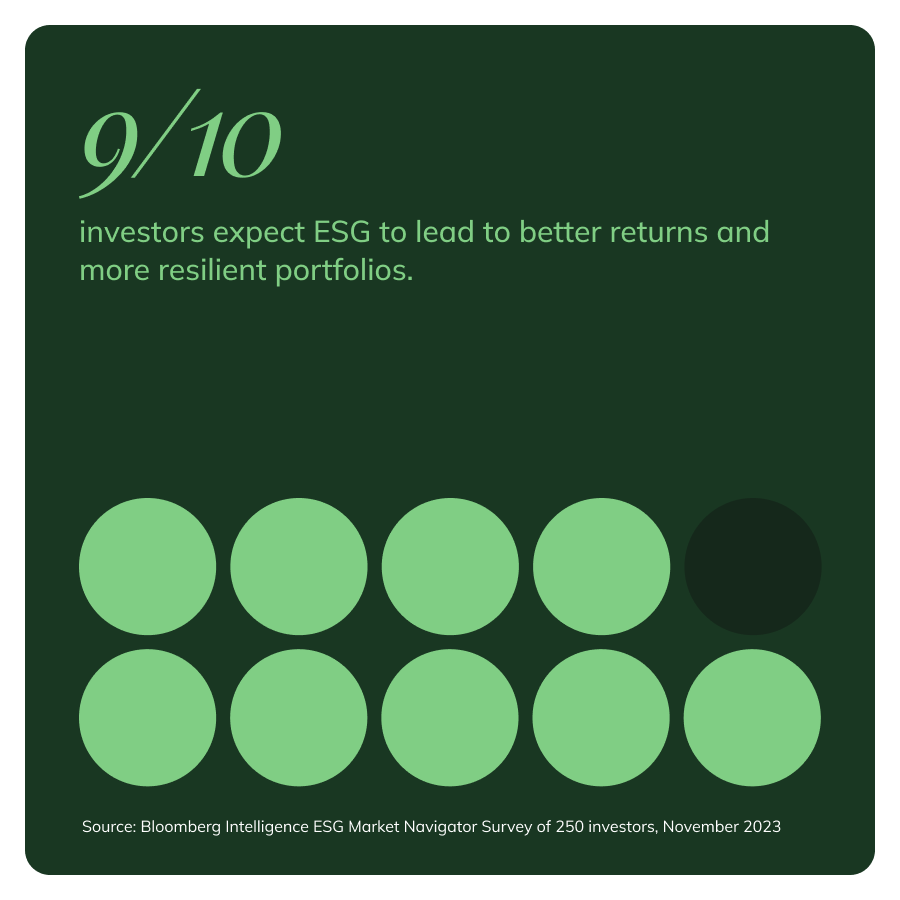
For mid-market companies ($10 million–$3 billion in revenue) looking to grow, incorporating sustainability initiatives into their strategies can be a path toward growth and enhanced resilience. A recent Bloomberg Intelligence analysis found that 90% of investors surveyed expect ESG to lead to better returns and more resilient portfolios. Furthermore, McKinsey research shows that chemical companies with low-carbon product portfolios and high exposure to end markets supporting sustainability tailwinds such as EVs, energy storage etc. grew their shareholder returns at more than double the rate of those that did not have such product and exposure profiles between 2016 and 2019.
For some companies, environmental or social causes already sit at the core of their business model (sustainability disruptors). However, for others, this growth is spurred by shifting into new market areas as the energy transition scales and drives companies to prioritize sustainable transition.
Source: Bloomberg Intelligence ESG Market Navigator Survey of 250 investors, November 2023
The business imperative
Mid-market companies are also under growing pressure from customers, investors and regulators to report on sustainability performance as larger companies look more closely at the environmental attributes of their suppliers. However, reporting can be challenging. In one survey, 90% of private equity firms and their portfolio companies said that they were unsure how to fulfill their ESG reporting obligations.
The pressure to act sustainably and disclose environmental metrics, which has long been applied to large public companies, is being increasingly felt by the mid-market. Major customers of mid-market companies are asking companies across their supply chains to consider their own supplier diversity and to contribute to Scope 3* emission reductions and other sustainability goals.
*Scope 3 emissions are a consequence of the activities of the company, but occur from sources not owned or controlled by the company (GHGprotocol.org).
The gap between intent and execution
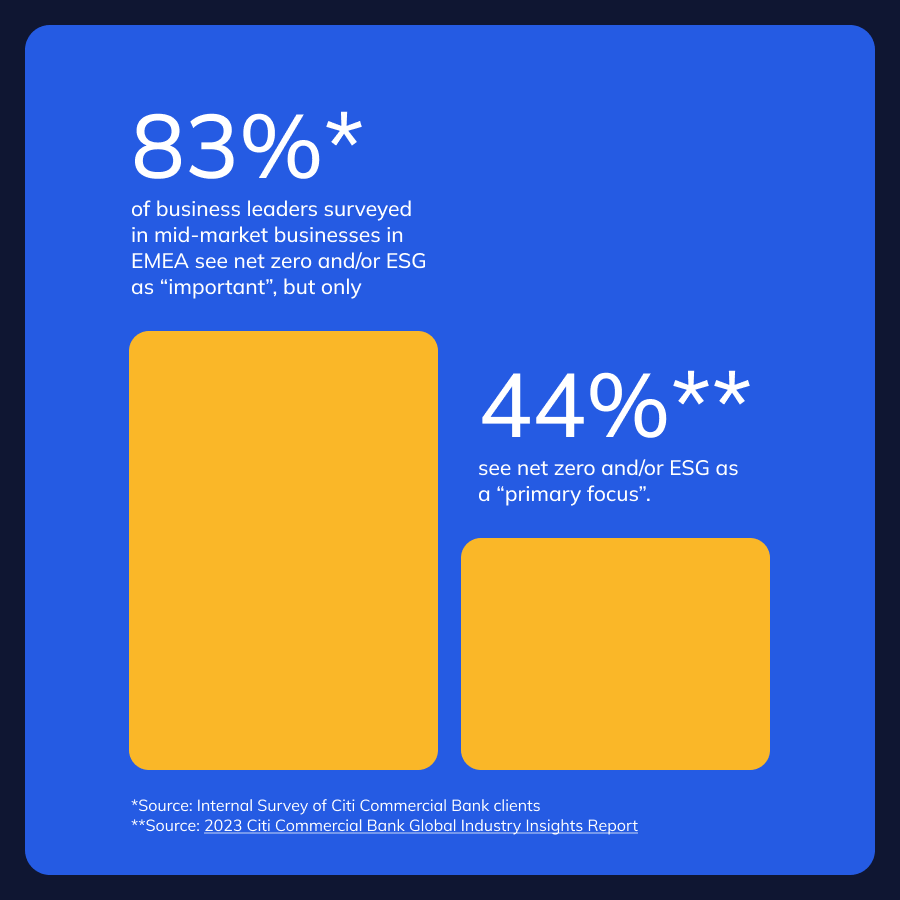
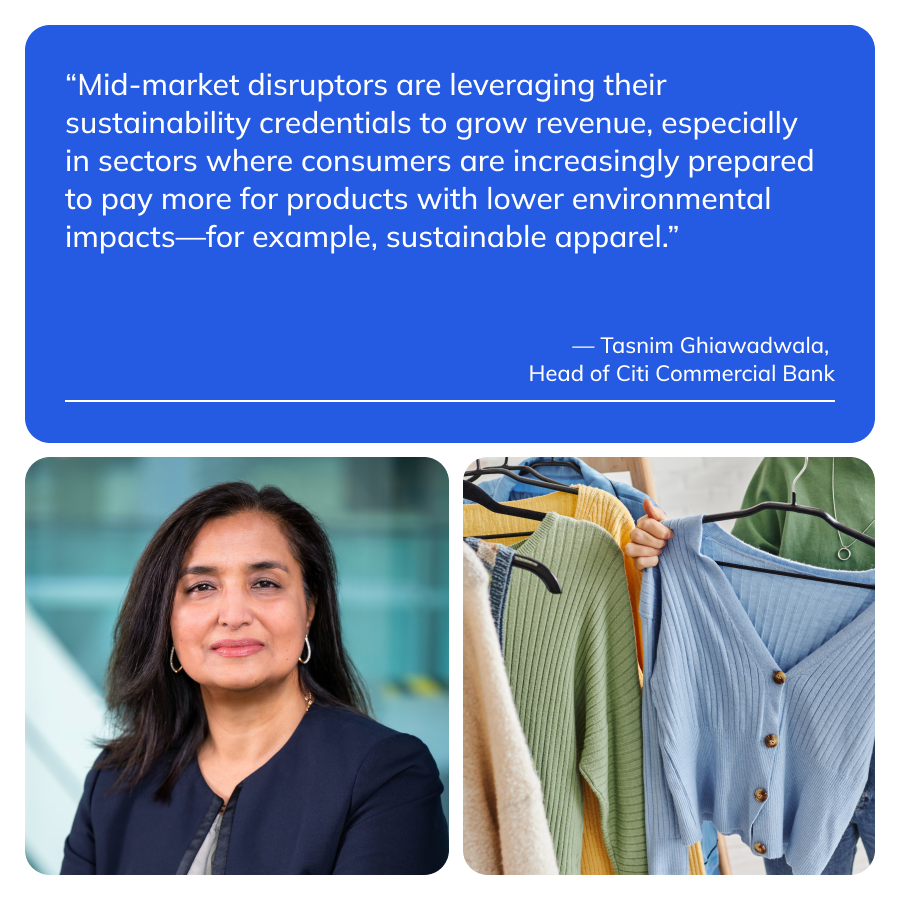
“Mid-market businesses face competing priorities, which include the impact of inflation, interest rates, supply chain dislocations, changing consumer demands and an evolving geopolitical landscape,” says Tasnim Ghiawadwala, Head of Citi Commercial Bank. These complexities may make it difficult to focus on the potential benefits of incorporating ESG priorities within a business strategy.
Companies in this market segment that are prioritizing sustainability still approach it with a degree of caution, keeping in mind regional policy and regulatory differences. The variance in maturity, cost and efficiency of available decarbonization technologies may also be a factor that companies need to manage, often because it requires expertise outside of their core businesses.
An enabling public policy and regulatory environment is also essential to support decarbonization, and government policies on ESG and sustainability are shifting rapidly.
Obtaining actionable climate data from suppliers and partners remains a challenge as efforts to harmonize and standardize ESG reporting regulations are just beginning to gain momentum. Growing support for standardized, uniform, comparable and reliable disclosures focused on climate-related risks and opportunities can be helpful to investors and other stakeholders.
Adopting transition principles
What technologies might mid-market businesses invest in to reduce their cost base? Optimizing the exchange of information is how one such organization is answering this question. Eurowag, a leading supplier of fuel and toll services in Europe, is helping shippers and truck drivers optimize their routes and improve driving behaviours to maximise efficiency, reduce fuel consumption and associated emissions.
Eurowag is building an integrated platform for an industry that is still largely paper-based, by prioritizing digitization investments.
“Together, our driving efficiency solutions and growing alternative fuels offering will help customers reduce cost and manage the net zero transition” says Carla Bloom, Head of Investor Relations and Communications at Eurowag.
The aim of these innovations is to help Eurowag’s customers respond to market expectations and become more sustainable. “Increasingly, large shipping companies are asking truckers to report their emissions, and this data is being used to measure environmental impact and comply with sustainability reporting requirements,” says Bloom. These requirements may seem overwhelming for a small company, but Eurowag can automate the compliance process.
By adopting ESG objectives into its corporate strategy, Eurowag is not only helping its customers reduce their carbon footprint, but also prepare its own business for the future.
The making of a sustainability disruptor
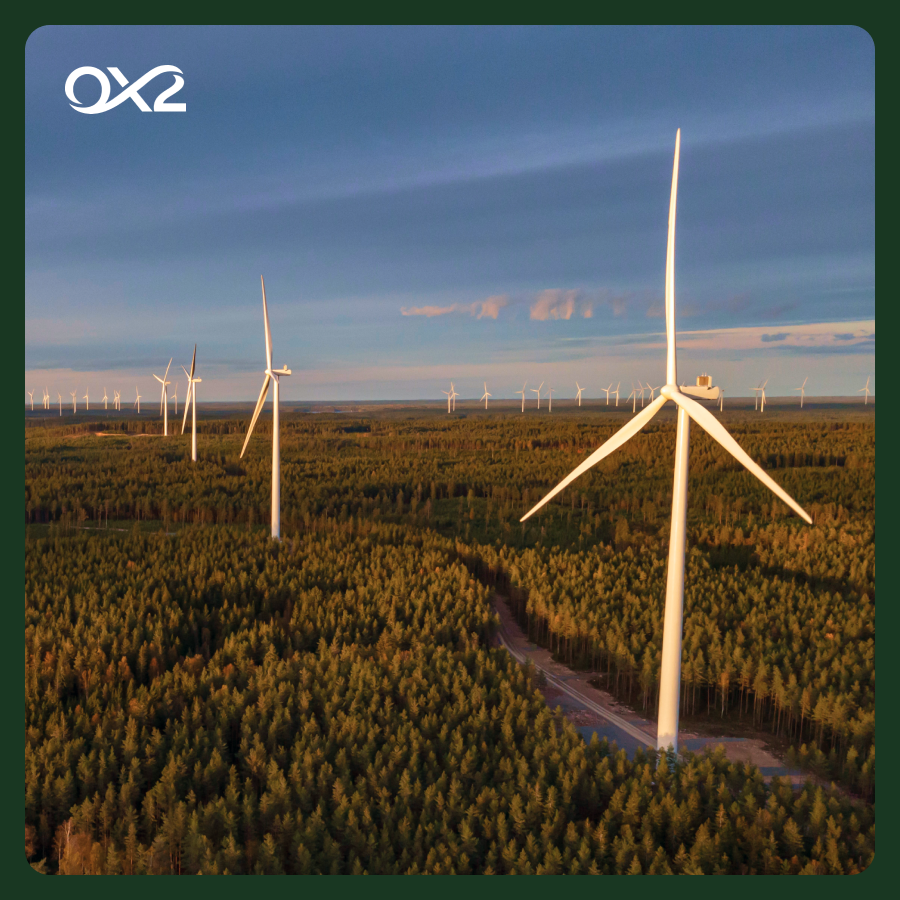
The demand for renewable energy is increasing, due to growing recognition of the need to transition to low-carbon alternatives and the electrification of the global economy. With extensive industry experience and a profitable business model, OX2, based in Sweden, is one of Europe’s developers of renewable energy projects. OX2 provides renewable energy solutions at scale, including wind and solar energy generation, hydrogen production and energy storage projects, and offers fully customized solutions.
Citi, through its global network, has helped OX2 consolidate its access to finance. This relationship was initiated across six European countries (France, Greece, Italy, Romania, Spain and Sweden), and aims to streamline OX2’s treasury and payment operations by automating reconciliation and achieving cash concentration through cash pooling solutions to optimize liquidity.
These capabilities have been replicated in Australia, enabling OX2 to quickly launch in new markets. Citi has also supported OX2 with commercial cards and a trade finance program, boosting OX2 as it aims to scale its impact through its trade and market capabilities.
Sustainable capital flows are rising
Doing business abroad can be complicated, costly and daunting, especially at the start of an international expansion. Through its sustainable finance solutions, Citi is helping mid-market clients incorporate ESG considerations into their supply chains as they enter new markets. This support extends to helping clients find the optimum ways to manage their liquidity as well as pay, collect and hold foreign currencies.
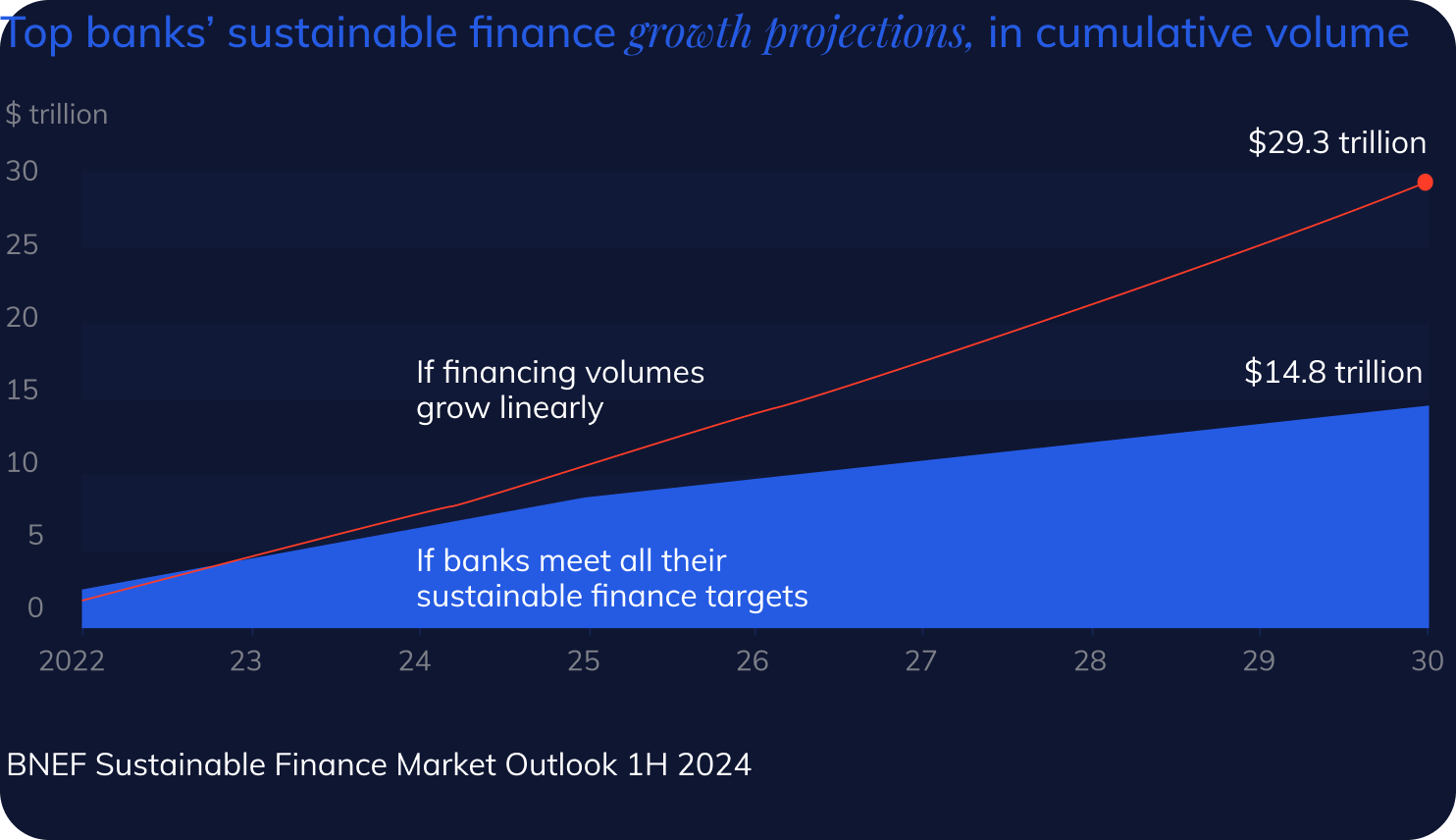
Citi has committed to financing and facilitating $1 trillion in sustainable finance by 2030, and offers sustainability-related solutions across its businesses.
While sustainable finance volumes have grown globally, these solutions can still be leveraged more consistently across the mid-market. We anticipate continued growth in sustainable capital flows over the next decade and expect this to primarily benefit sustainability disruptors in this market segment.
Some of the solutions offered to support clients in accelerating growth while meeting their sustainability goals include:
• Green and Social Bonds and Loans for specific use of proceeds.
• Sustainability-Linked Bonds and Loans to align corporate ESG targets with financing frameworks.
• Sustainable Trade and Working Capital Loans, short-term financing to help improve focus and performance against specified environmental and social criteria.
• Sustainable Supply Chain Finance, can support companies with large supply chains as they integrate their sustainability goals with the working capital support they provide to their suppliers, with the aim of incentivizing positive change.
Rethinking priorities
Citi has been engaged in sustainability and environmental initiatives for more than 20 years, providing insights and solutions that help clients seeking to transition toward a more sustainable business model. A critical part of this effort is understanding the role of mid-sized companies in the economy’s value chains, and sharing best practices to solve their most pressing ESG challenges.
90% of businesses across the global economy, and even on national levels, are SMEs, according to the World Bank.
As companies grow and expand into new markets, they can face many challenges. How these companies set up their banking and treasury operations can be a good indication of how they think about sustainable practices. People in these markets are increasingly observant of how corporations, regardless of size, are thinking about and acting to secure a more sustainable future.
What’s ahead for sustainability disruptors
Global investment in the low-carbon energy transition surged 17% in 2023, reaching $1.77 trillion, according to BloombergNEF. This new record level of annual investment demonstrates the resilience of the energy transition in a period of geopolitical turbulence, high interest rates and inflation. Whatever complex sustainability challenge that disruptors seek to solve, there is now ample momentum—and liquidity support—for them to scale.
With countries around the globe setting nationally determined contributions to cut emissions, and increasing mandatory reporting requirements for businesses to disclose their progress and efforts, mid-market players that offer solutions—like OX2—are poised for growth.
"The energy transition is key to addressing climate change. In a new era where we all need to rethink and re-power everything, from industries to everyday life, we see ourselves as powering this great shift and enabling the sustainable electrification of societies," says Linda Strindevall, Environment and Climate Change Manager, OX2.

Citi Commercial Bank provides global banking solutions to mid-sized companies that are looking to grow rapidly and expand internationally. With Citi's global network, comprehensive solutions, and industry expertise, Citi Commercial Bank helps these businesses succeed across a wide variety of industries and at most stages of their growth.