More Investor Optimism in 2022
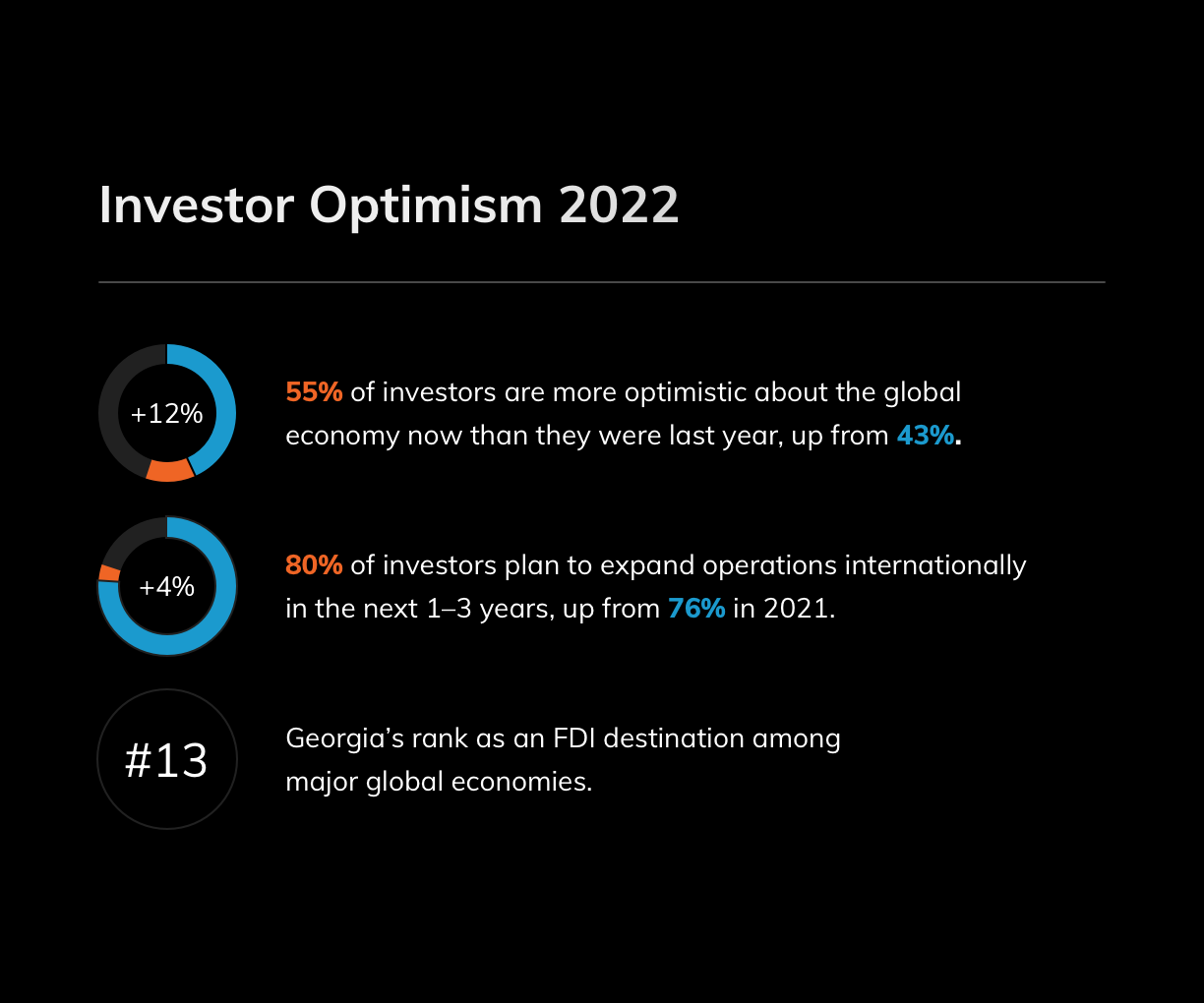
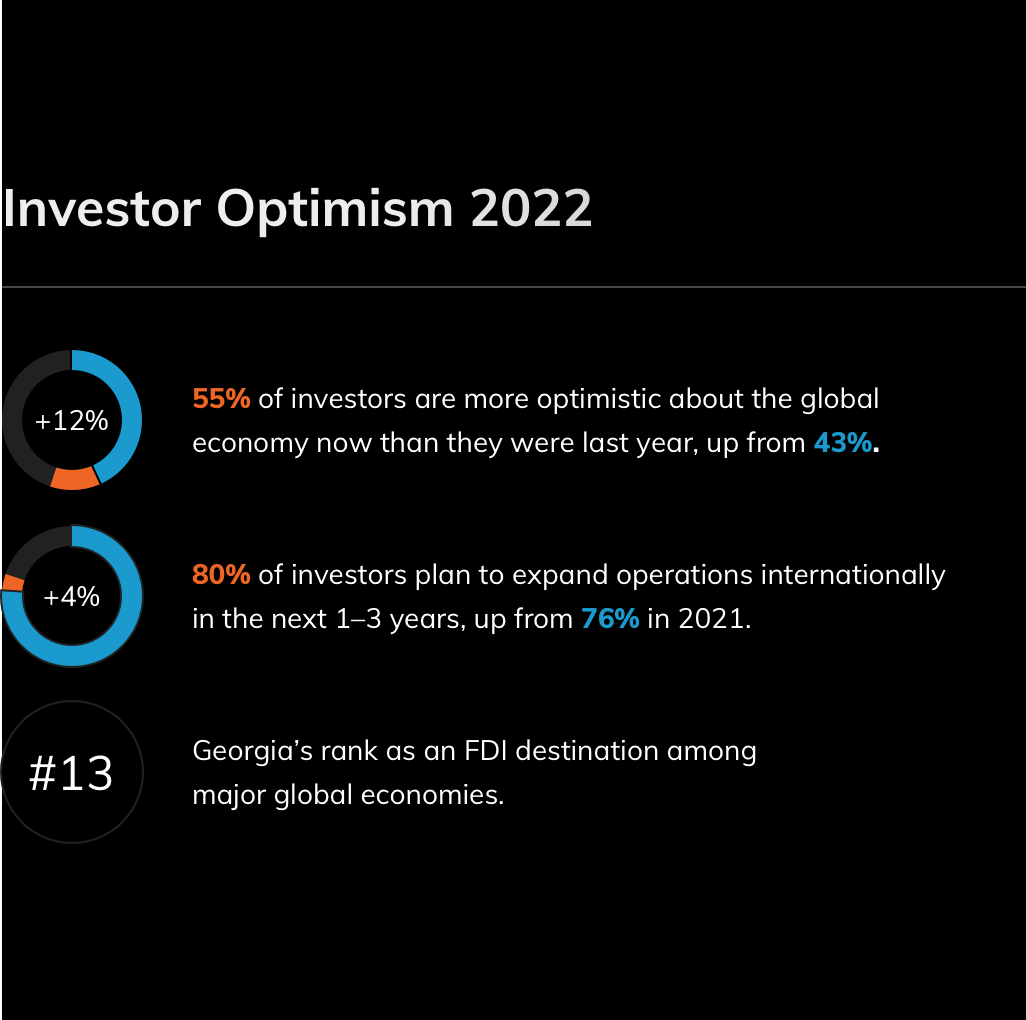
Global headlines are dominated by rising energy costs, inflation, geopolitical instability and supply chain disruptions. Despite this uncertain outlook, Bloomberg Media Studios’ global FDI study reveals that 55% of investors are more optimistic about the economy in 2022 than in 2021, and 80% of them plan to expand operations internationally in the next three years.
Georgia stands out as a popular investment destination, ranking 13th for investment among major global economies, including the US, China and the UK. The country has consistently enjoyed a steady stream of FDI in recent years, and inflows totaled more than $1.3 billion in Georgia in 2019, against a GDP of $17.5 billion. After the pandemic, the economy rebounded in 2021, with FDI totaling close to $1.2 billion as GDP reached $18.7 billion. In the first quarter of 2022, FDI inflows hit the highest figure on record—$568.19 million—4.3 times higher than in the first quarter of 2021.
The data shows that 70% of investors interested in Georgia are optimistic about the economy—significantly higher than the global average of 55%—which suggests a greater understanding among senior decision makers of the country’s investment opportunities.
FDI Budgets Remain Healthy
FDI budgets remain healthy for 2022, with 57% of global investors allocating an average of over $50 million each for investment projects. This figure is higher for investors interested in Georgia, with 23% of them allocating between $100 million–$200 million each.
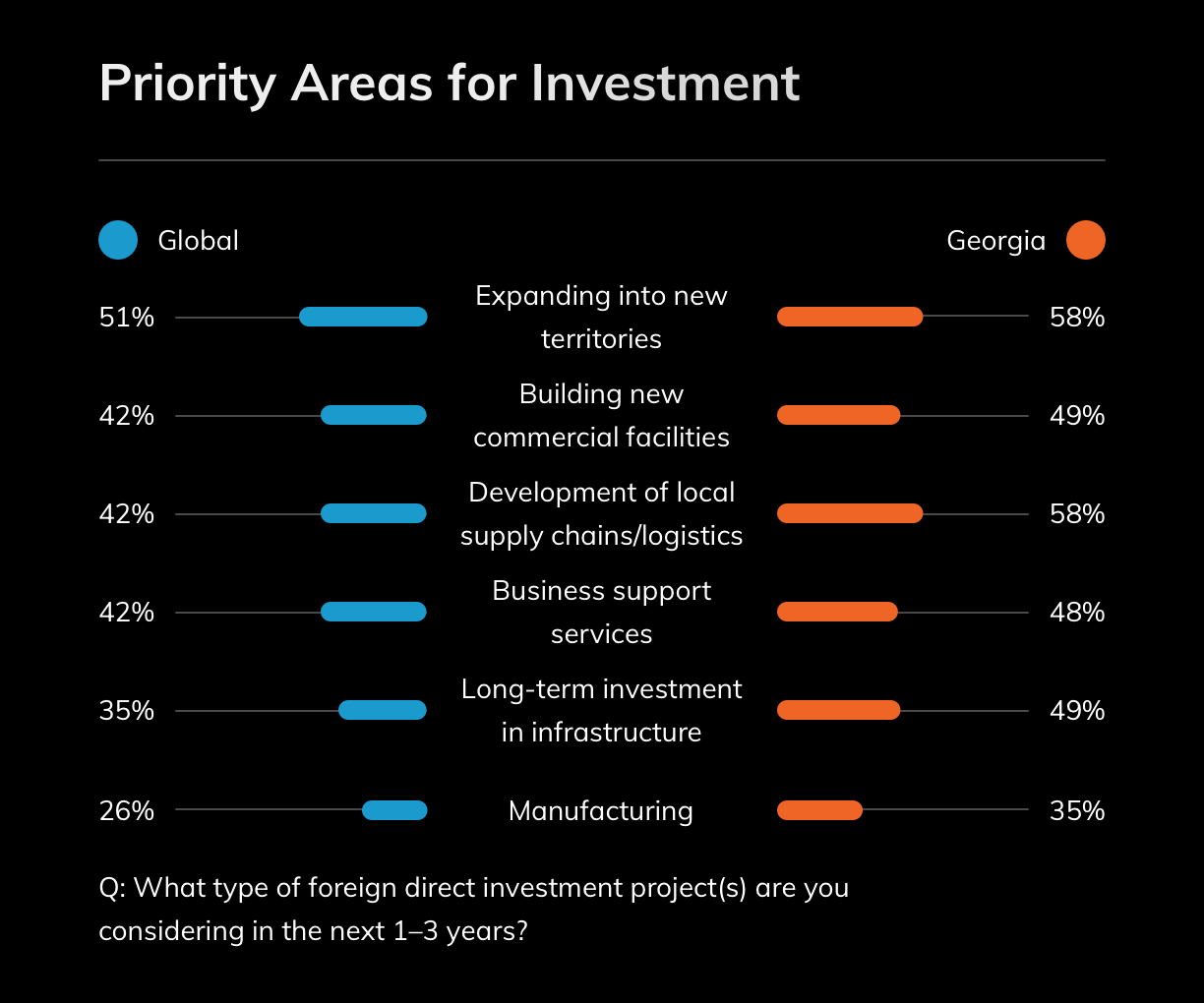
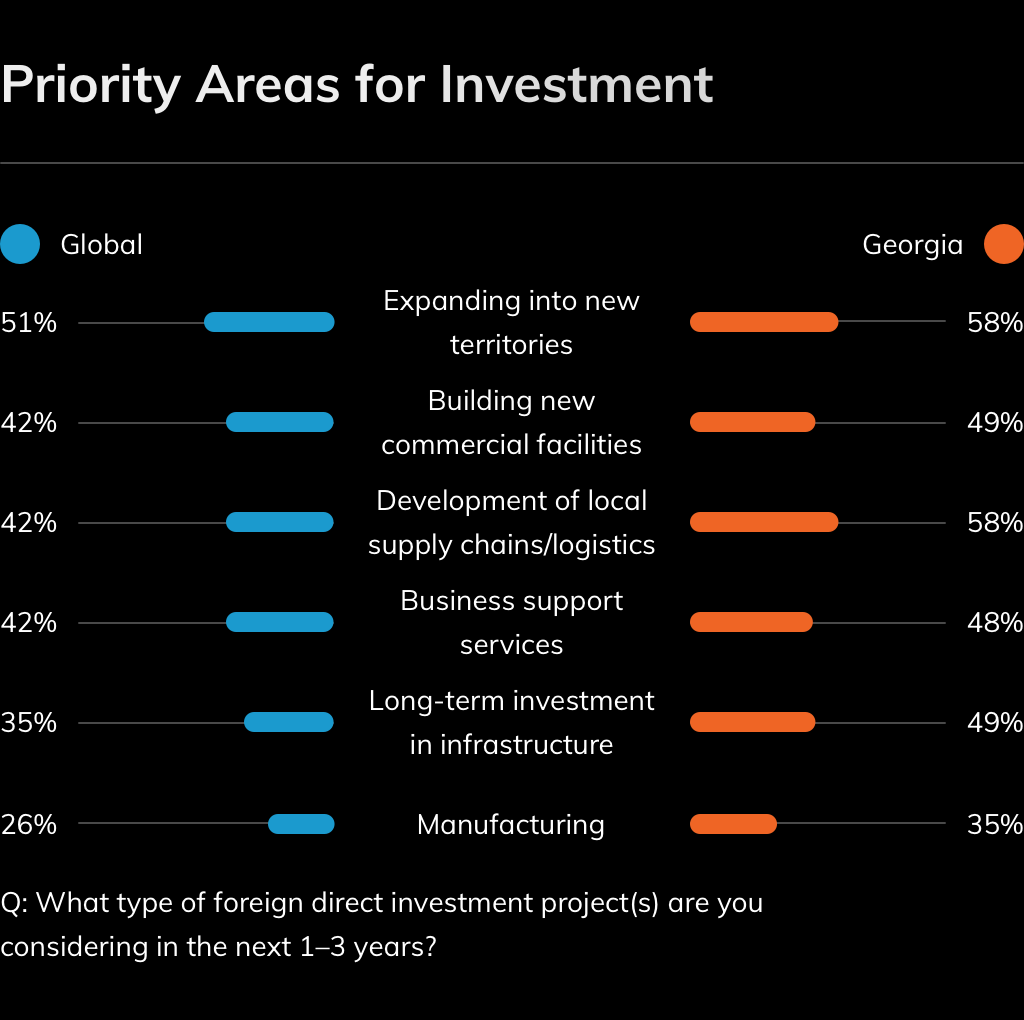
For investors interested in Georgia, key areas for investment include expanding into new markets, developing local supply chains and business support services and building new commercial facilities and long-term infrastructure. Globally, investors have identified supply chain disruptions (29%) as the second-biggest short-term concern, and the need to build resilient supply chains (27%) as a long-term concern.
Georgia’s strategic location makes it a gateway for investors looking to secure supply chains between Europe and Asia. Transit cargo comprises 50% of Georgia’s trade flows, which are tax-free. Georgia also offers access to a combined market of 2.3 billion consumers through a network of free-trade agreements with the EU, China (including Hong Kong), the UK, EFTA countries, CIS countries, Turkey and several other nations.
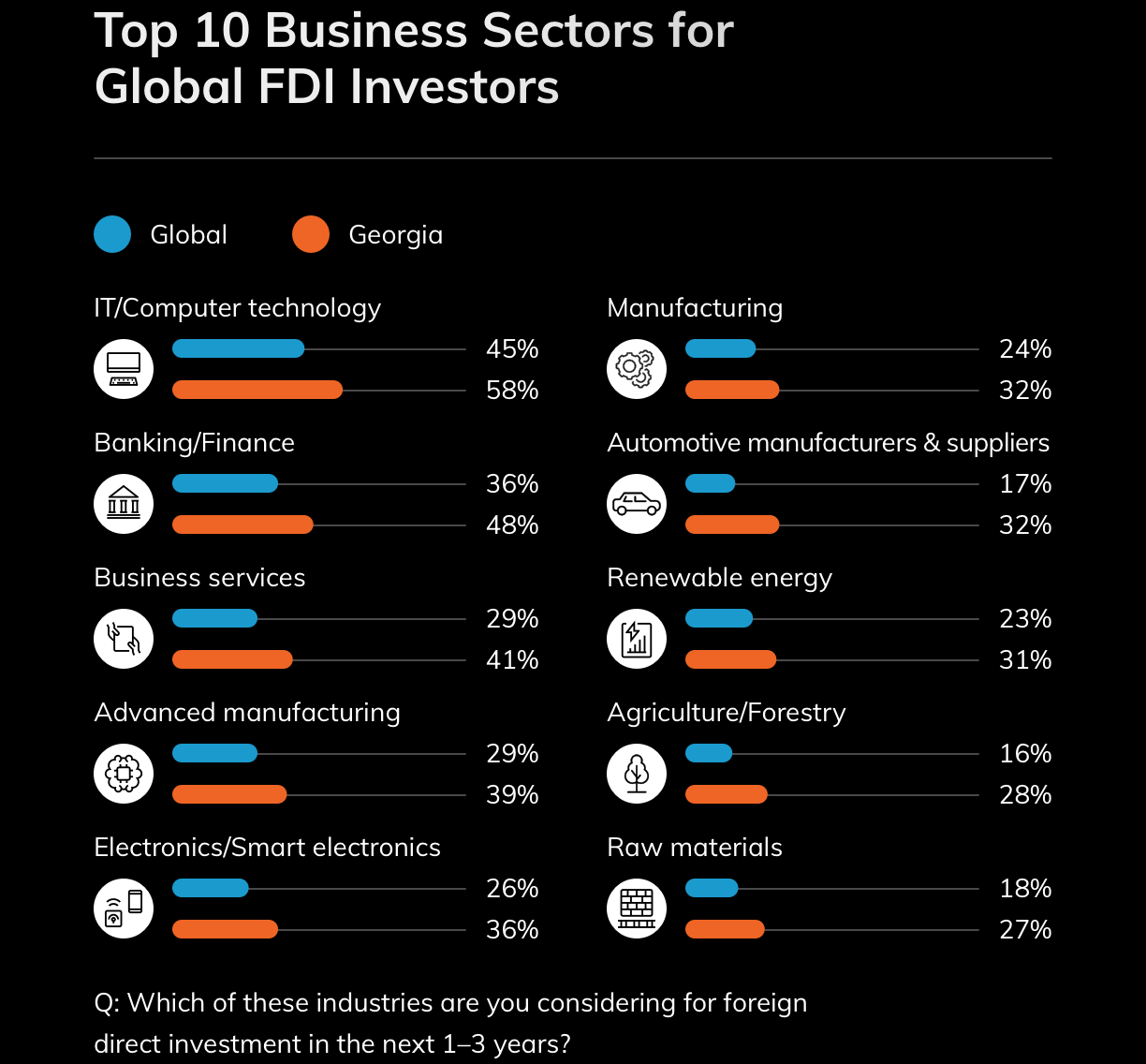
IT the Hottest Business Sector for Investment
Annual revenue for the IT and business services sectors in Georgia reached $120 million in 2021, with exports totaling $114 million, and about 15,000 employees are engaged in IT and business process outsourcing services. Many international businesses have established a presence in Georgia to take advantage of the opportunities, including several Fortune 500 brands as well as small- and medium-sized businesses including Concentrix, Majorel, CMX Solutions, Evolution Gaming, EPAM, Viber and Godel Technologies.
The Georgian government incentivizes IT and business services companies through cash-back policies for investments. IT companies can also enjoy an “International Company Status” tax code that reduces rates of personal income tax and profit tax to 5% each for exporters.
Advanced manufacturing, automotive manufacturing, and electronics are also vital sectors. Supporting investment in these sectors, the country offers incentives and co-investment opportunities to companies interested in developing in Georgia, including 15% cash back through an FDI grant.
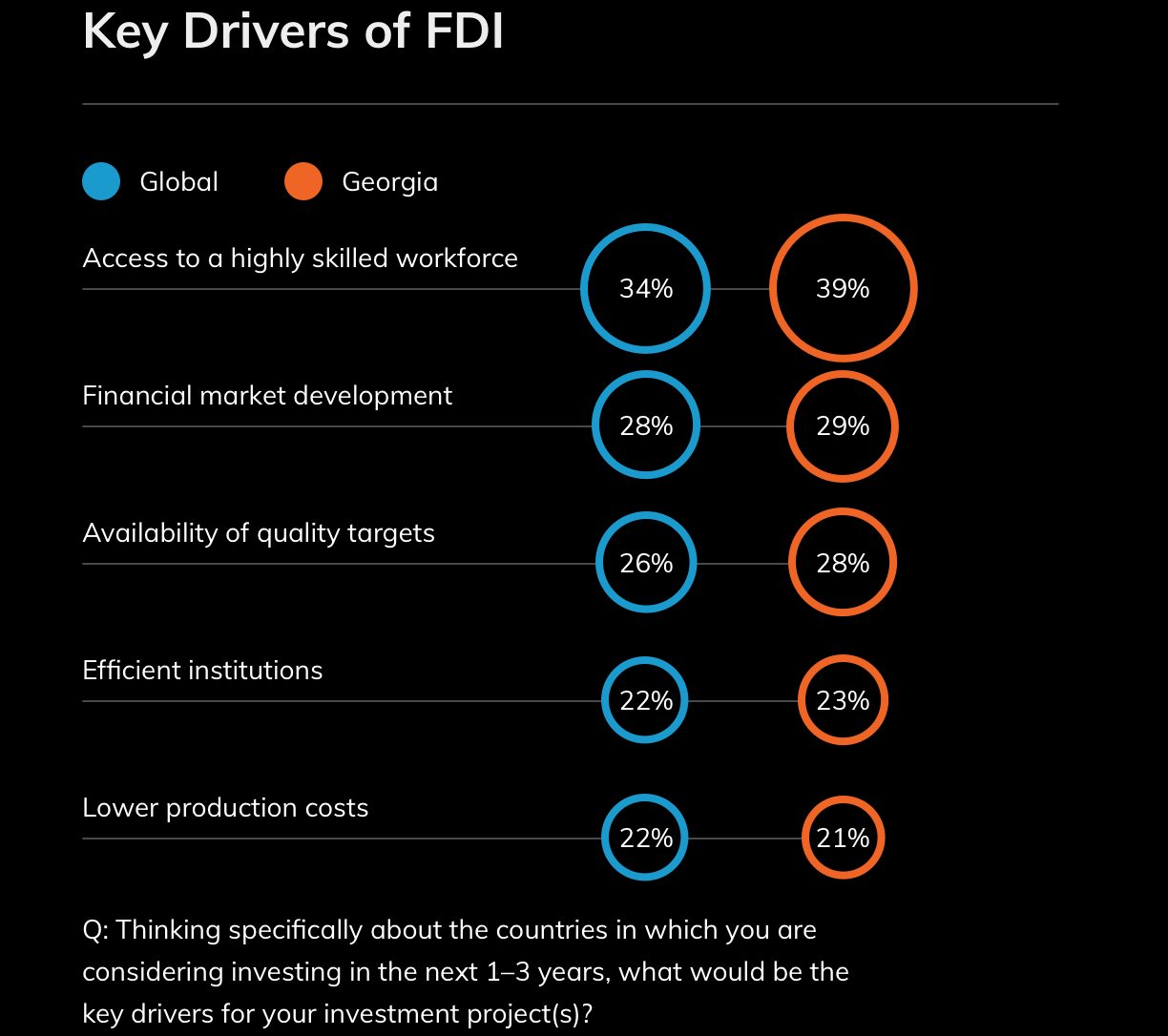
A Highly Skilled Workforce a Key Condition for FDI
Employment in Georgia is projected to increase by 11.8% by 2028, based on 2018 employment levels.
Georgia has a young, educated, competitively priced workforce. The unemployment rate has been steadily falling from 23% in 2014 to 17.6% in 2019. After a slight increase during the pandemic, reaching 20.6% in 2021, unemployment declined in the first half of 2022 to 18.1%.
55% of Georgia’s working population is under 45 years of age. More than 45% of the total population are fluent in English and a number of other European languages are also widely spoken, including German, the third most widely spoken language in Georgia.
Political Stability and Security Risks Remain
Among global investment risks, political stability is the number-one factor, at 41%, followed by safety and security risks (34%). Georgia performs well against the global scale as only 34% of investors interested in the country rank political stability as a key concern. Georgia’s economic performance over the past 18 months, increased exports and currency appreciation point to strong policies and an economic structure that promote sustainable growth.
Georgia’s GDP growth rate has consistently been around 5% a year from 2017 up until 2020. After falling in 2020 during the pandemic, Georgia’s economy bounced back, growing 10.4% in 2021, and growth was sustained through the first half of 2022. Georgia’s favorable taxation policies and liberal free-trade agreements with the EU, China and other countries add to its attraction for investors.
44% of investors who plan to invest in Georgia are “very familiar” with its strengths, such as its strategic location, skilled and competitively priced labor and affordable green energy.

ESG a Priority
Environmental, social and governance (ESG) considerations are crucial factors in the investment process for global FDIs. While 61% of global investors integrate ESG into their investment strategy, ESG plays a significantly greater role for investors interested in Georgia, as 79% consider these factors when investing.
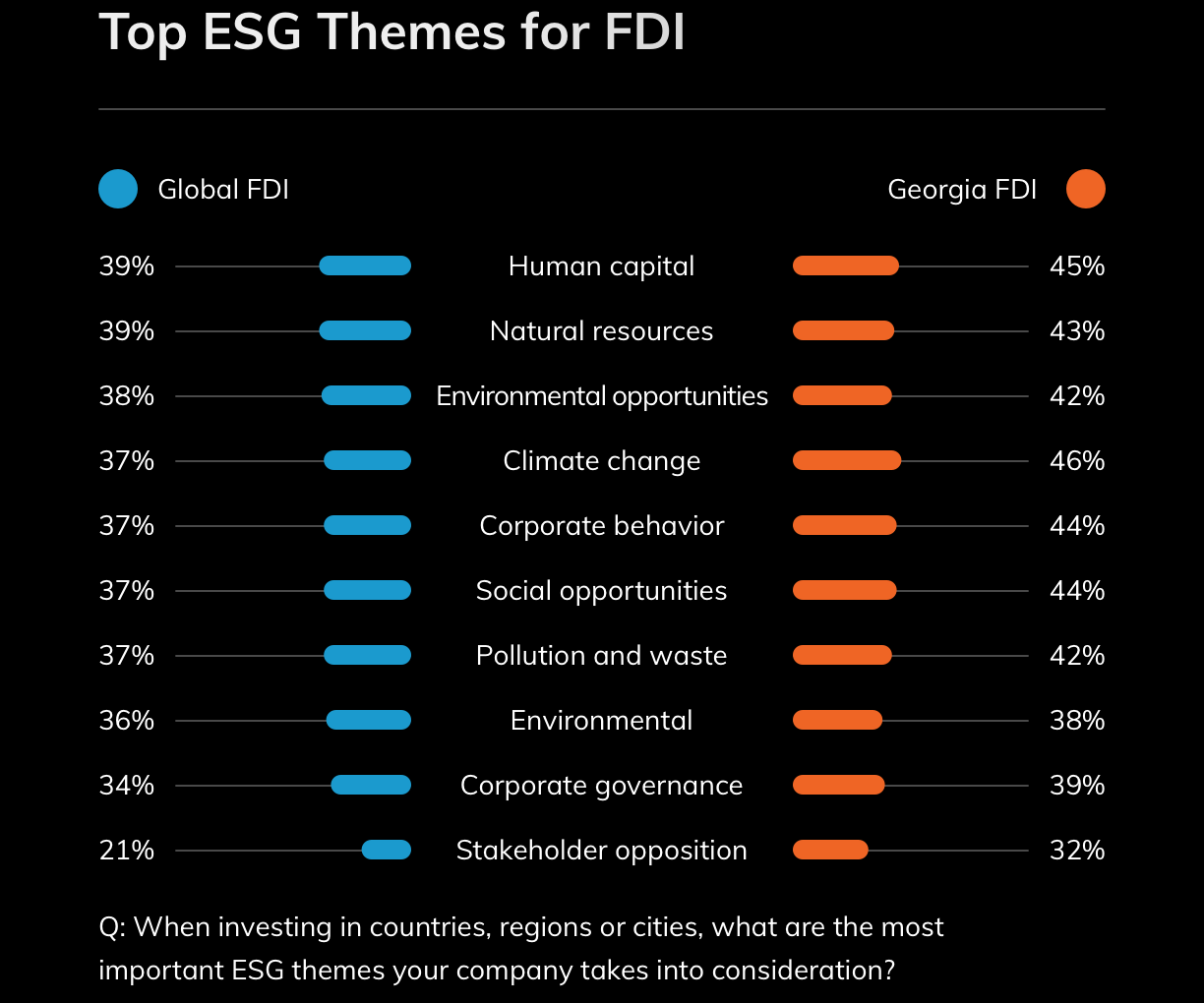
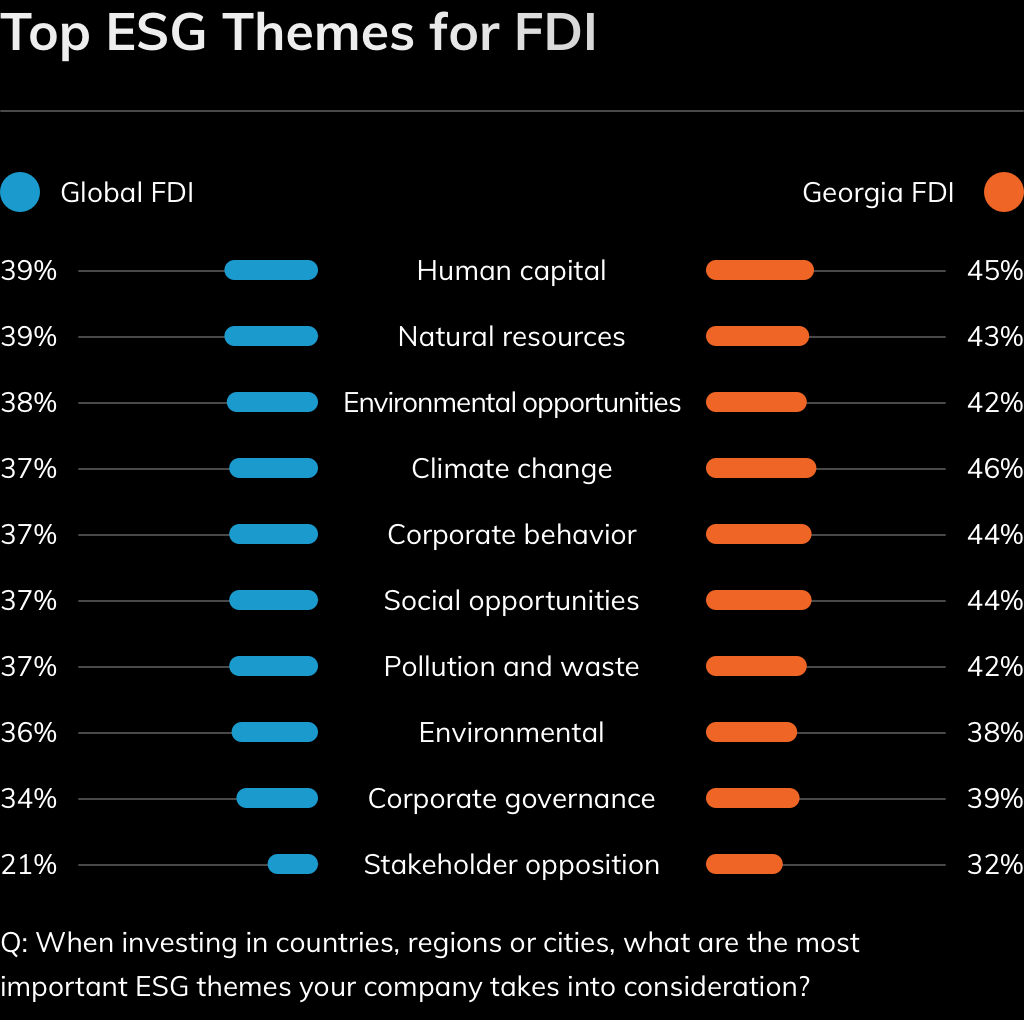
For the first time, human capital has been propelled to the forefront of ESG priorities, alongside environmental issues, in the study. It is the most important ESG factor for investors globally (39%) and ranks second for those interested in Georgia (45%). In Georgia, workforce well-being is an increasing priority. Labor laws passed in 2020 set specific limits for the workweek (40 hours for most workers, 48 in special cases) and rest time, and require negotiated overtime rates to be paid. The government has also introduced measures against worker discrimination and significantly increased the powers of the Labor Inspectorate, a body tasked with enforcing labor laws.
Climate Change Remains Important
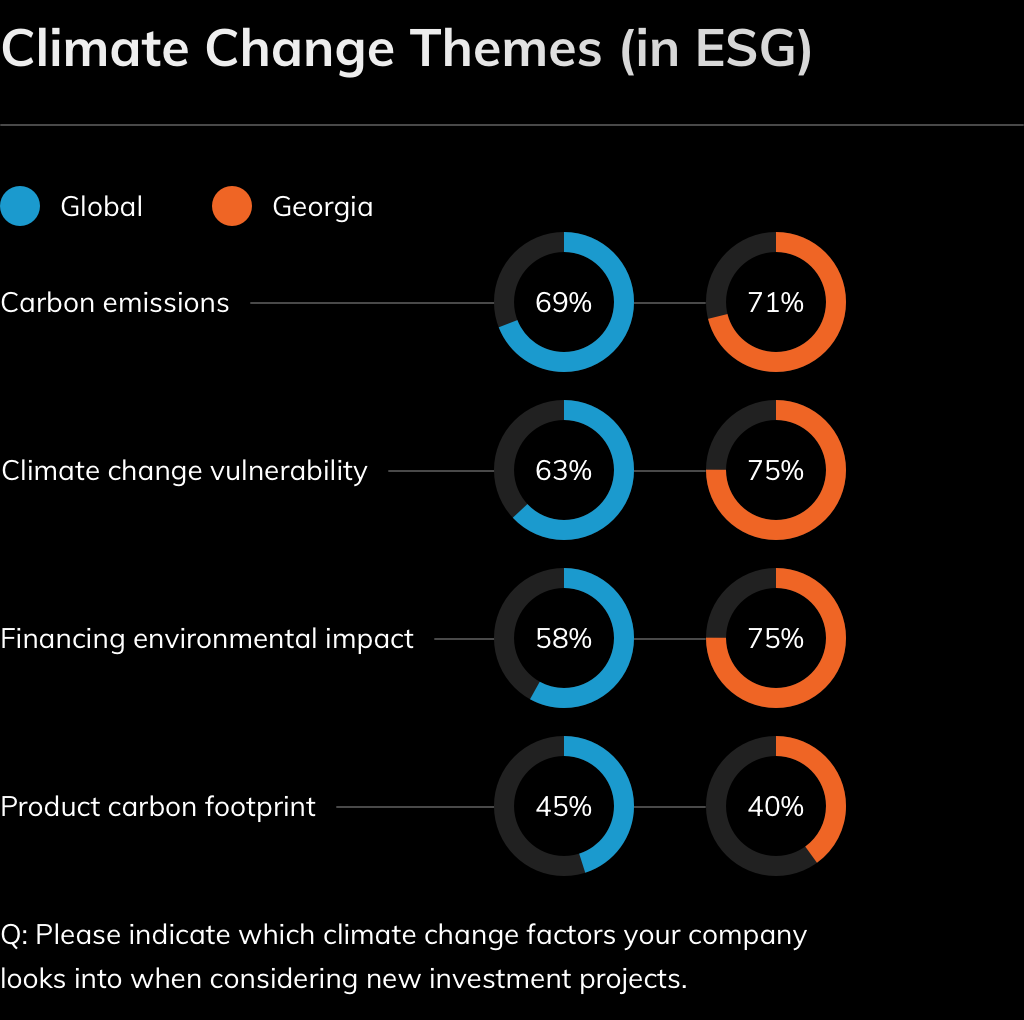
Georgia’s higher scores on ESG metrics reflects the sophistication and topical knowledge of investors interested in this market. Climate change is the most important ESG factor for investors in Georgia (46%). Georgia has developed an energy sector based largely on hydropower, which currently comprises 70% of its energy mix. The government has committed to reducing the country’s GHG emissions to 35% below its 1990 baseline level by 2030, through a climate change strategy that includes: diversifying its energy mix, greening transportation, buildings, infrastructure, and key industries including agriculture.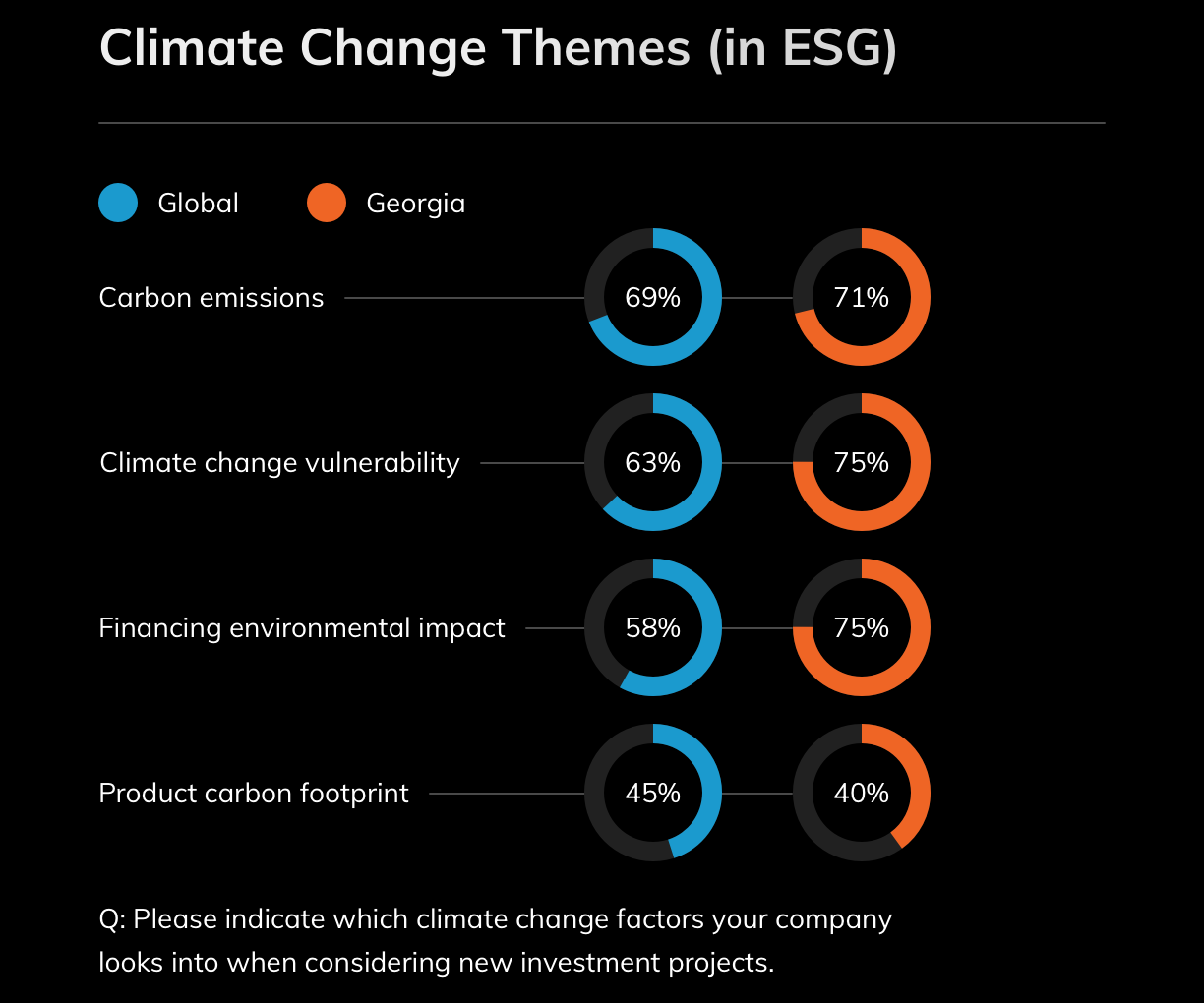
IPAs Influence FDI Decisions
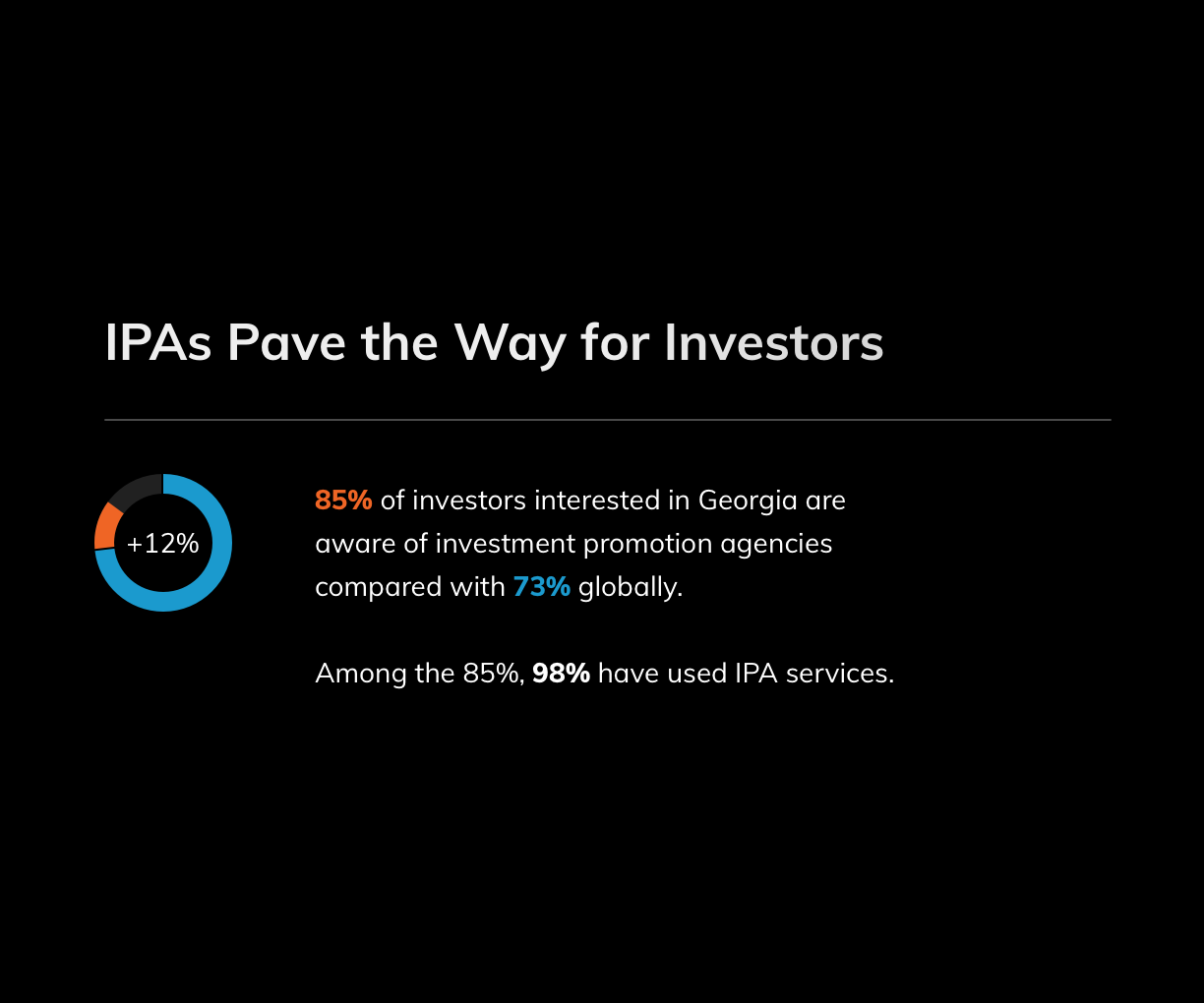
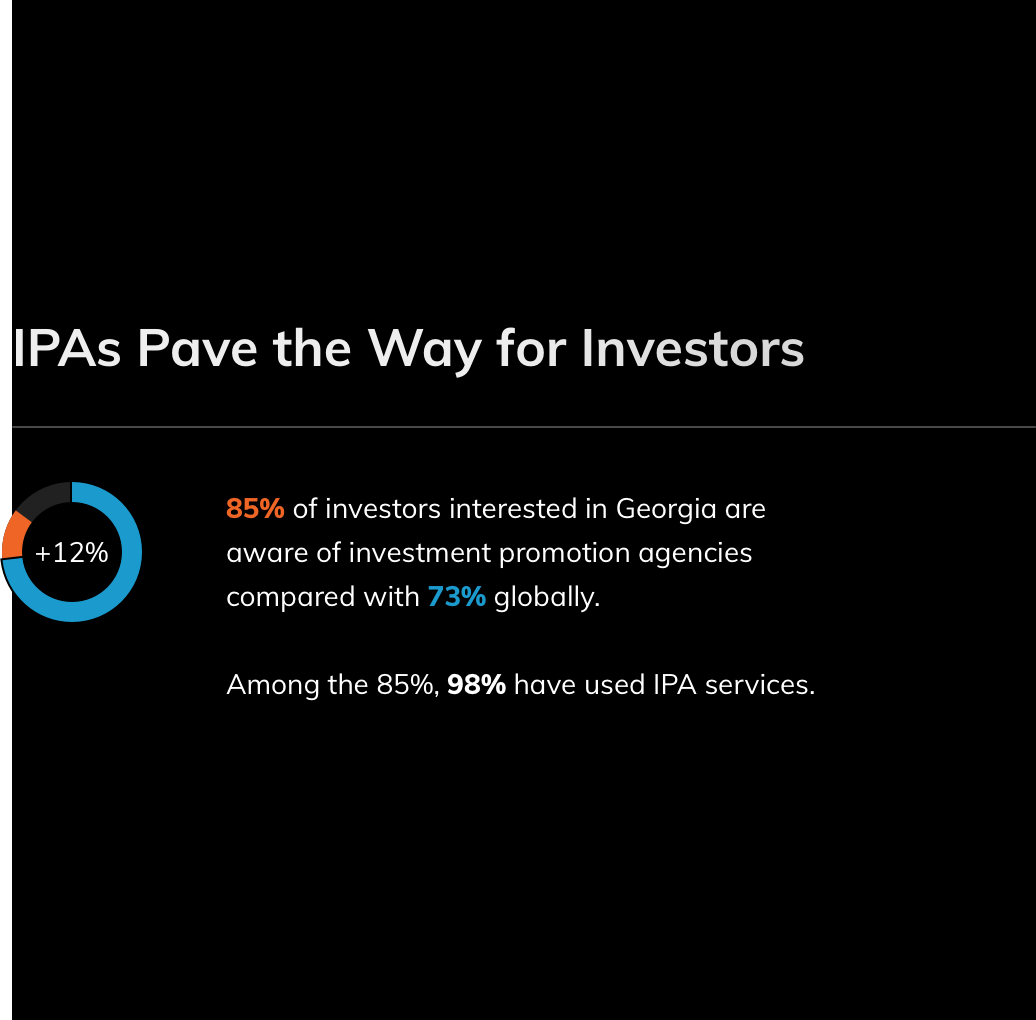
In 2022, investment promotion agencies (IPAs) play an increasingly important role in influencing FDI decisions. IPAs can provide much-needed guidance for investors who value business facilitation and support services. The most popular IPA services for investors in Georgia are online investment services (48%) and training programs (45%).
Invest in Georgia provides a wide array of services to help facilitate investment. Support mechanisms include its most recently updated FDI grant, which offers investors a refund of 15% of capital expenditure. The FDI grant incentive applies to investors in manufacturing and production, export of business services and the development of warehouses and logistics centers.
Georgia has demonstrated remarkable resilience in the face of global challenges, and has emerged as an important regional hub for international business. Georgia is an investment destination where lower costs are matched with reduced risks, an unrivaled business environment, the availability of green energy, and free trade access to markets with more than two billion people.
The country has managed to achieve double-digit economic growth in 2021 and 2022, attracted a record-breaking amount of foreign direct investment within the first quarter of 2022 and has increased exports by over 35% so far.
We are committed to continuing this dynamic trend and have already launched new initiatives offering potential investors improved access to markets and business-oriented government services, as well as additional incentives.
Mr. Levan Davitashvili Vice Prime Minister, Minister of Economy and Sustainable Development of Georgia