How to invest in better ways of working to overcome economic uncertainty
A global survey conducted by IDC and sponsored by Alteryx identifies the organizational behaviors correlated with high returns on analytics investments1. It reveals that 73% of organizations indicate that analytics spend will outpace other software investments. Companies that demonstrate resilience at times of crisis invest in better ways of working that galvanize innovation by expanding access to data and analytical technologies.
1 IDC Infobrief sponsored by Alteryx, “4 Ways to Unlock Transformative Business Outcomes from Analytics Investments,” US49458122, August 2022
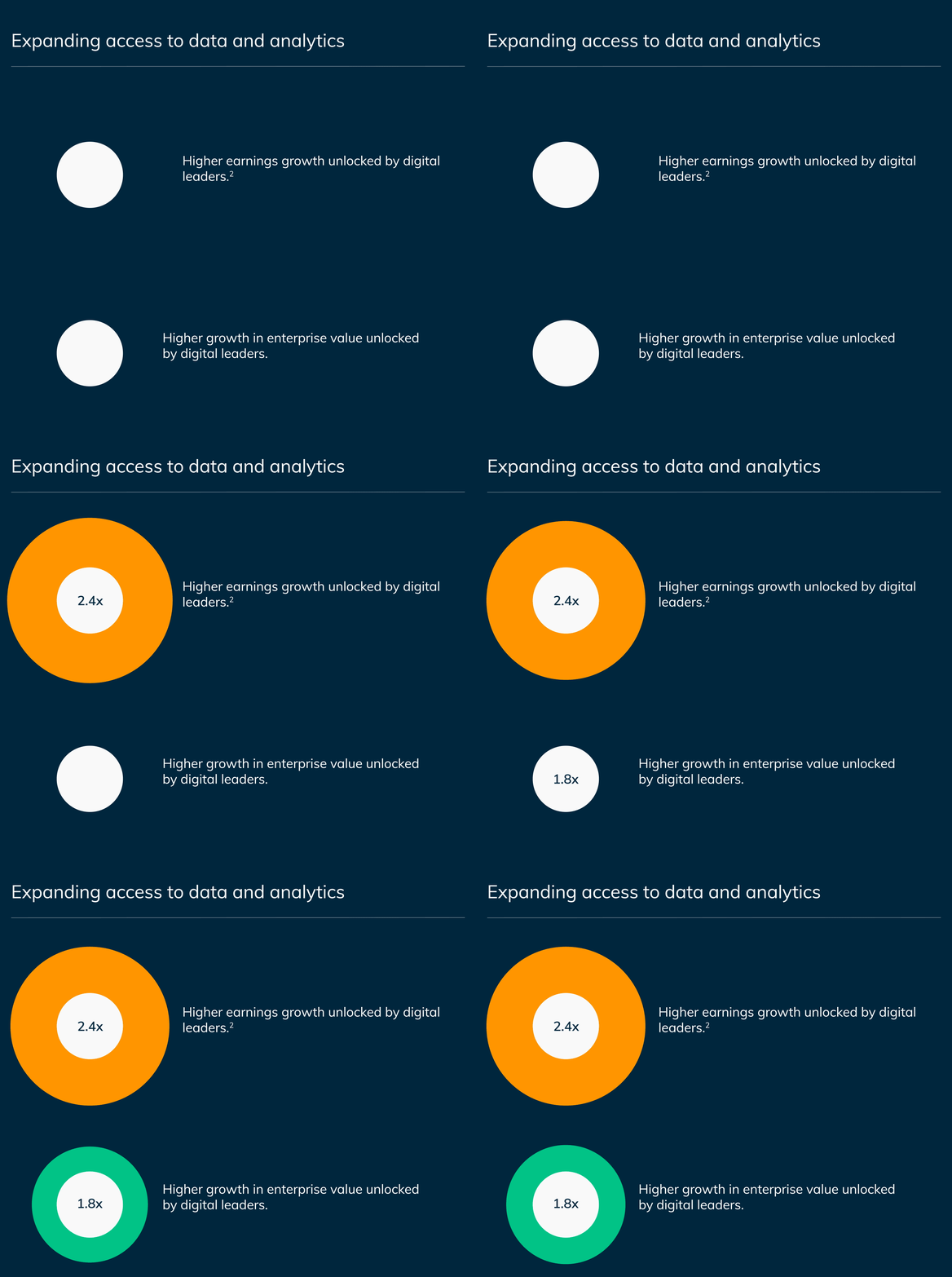
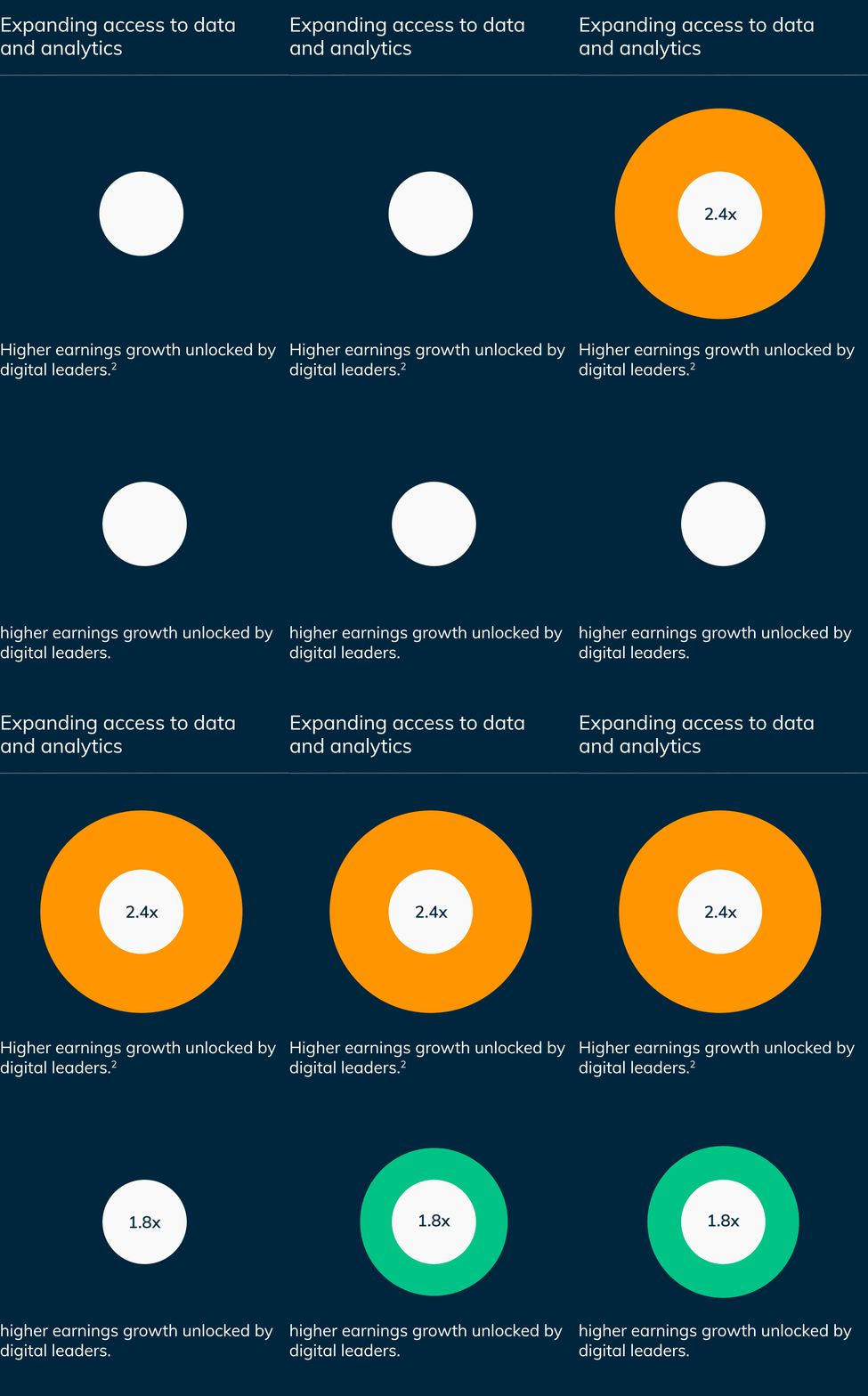
2https://www.bcg.com/publications/2020/is-technology-ready-new-digital-reality-post-covid19
Performance resilience
The 2008 recession birthed a new era of innovation and disruption in which technology morphed from a cost center to a business driver. Today, organizations that implement the best processes for analytics and automation have a competitive advantage. According to McKinsey Global Institute, data-driven organizations are 23 times more likely to acquire customers, six times more likely to retain customers and 19 times more likely to be profitable3.
Organizations that use a variety of data sources and data types generate higher ROI from their analytics investments. According to IDC, 90% of organizations with improved customer acquisition, retention and experience are good or great at using all data sources, compared with only 67% of those without positive ROI4.
3https://www.mckinsey.com/capabilities/growth-marketing-and-sales/our-insights/five-facts-how-customer-analytics-boosts-corporate-performance
4IDC Infobrief sponsored by Alteryx, “4 Ways to Unlock Transformative Business Outcomes from Analytics Investments,” US49458122, August 2022
Paula Hansen, President and Chief Revenue Officer at Alteryx, advises companies to start their analytics journey by focusing on the business outcomes that matter most to the company. “Today’s ever-changing macro environment requires analytics technology to help organizations derive the insights for significant competitive and operational advantage in areas like customer acquisition, customer retention and customer experience," she says. All these elements working in unison can result in positive outcomes in any company—and for nearly any economic context.

“We believe that resilience comes from squeezing every ounce of strategic and operational insight from your data. This is how companies can effectively respond to customer needs and operate most competitively—in any economic environment.”

—Paula Hansen, President and Chief Revenue Officer, Alteryx
Prioritize cross-departmental investments
Data analysis and analytics automation no longer exist in the walled realm of the data scientist. As the value of analytics becomes broadly acknowledged and leveraged, new opportunities for optimization continue to present themselves.
Working across business operations to apply analytics technologies can increase efficiency across the value chain, says Steve Brodrick, Chief Transformation Officer at Alteryx. “An analytics transformation has to be led by technology and data, but,” he cautions, “it also requires change management and process development. Leaders need to engage their teams and guide them to apply analytics technologies cross-functionally, in ways that improve integrated decision-making as part of their daily lives.”
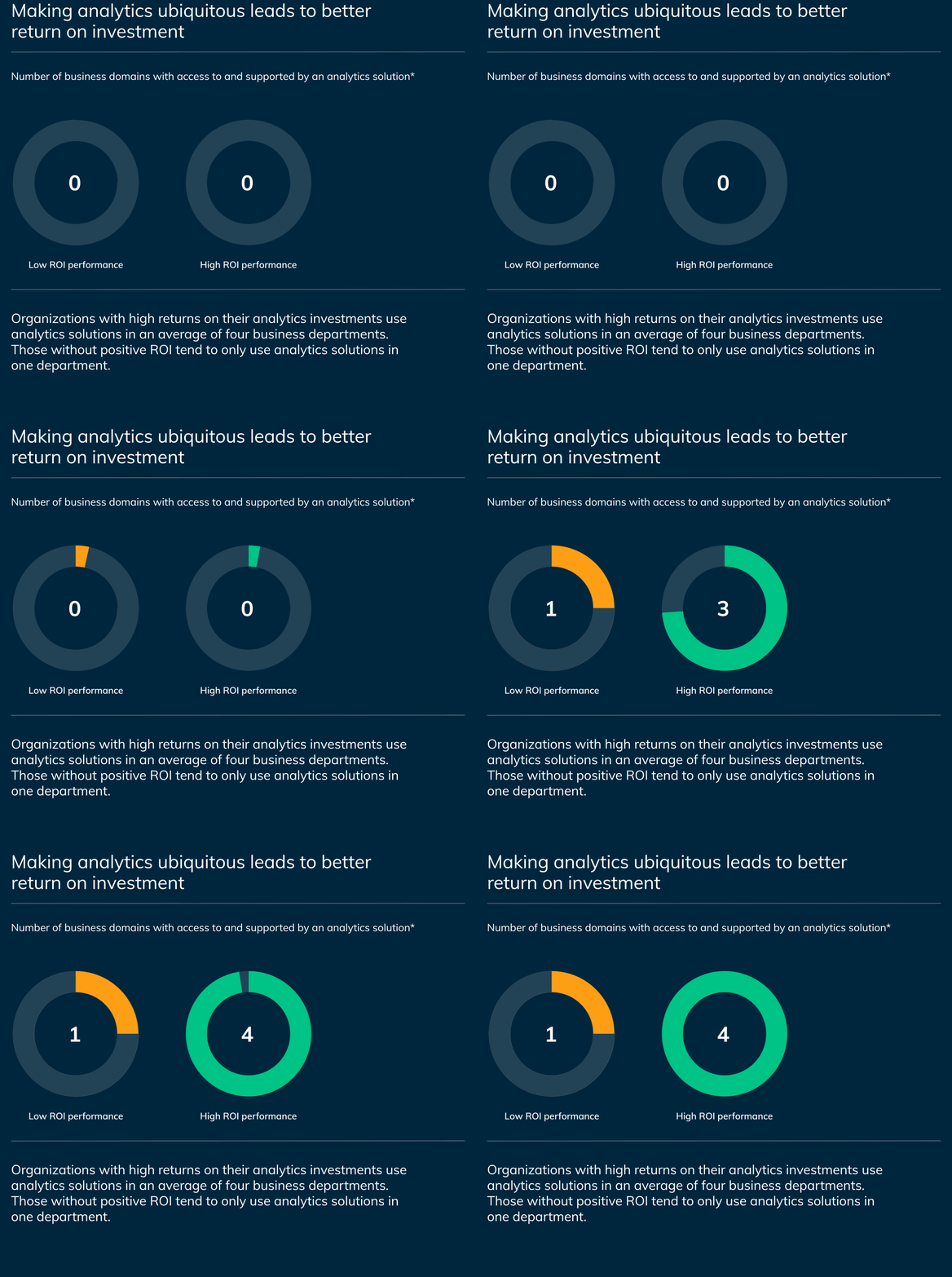
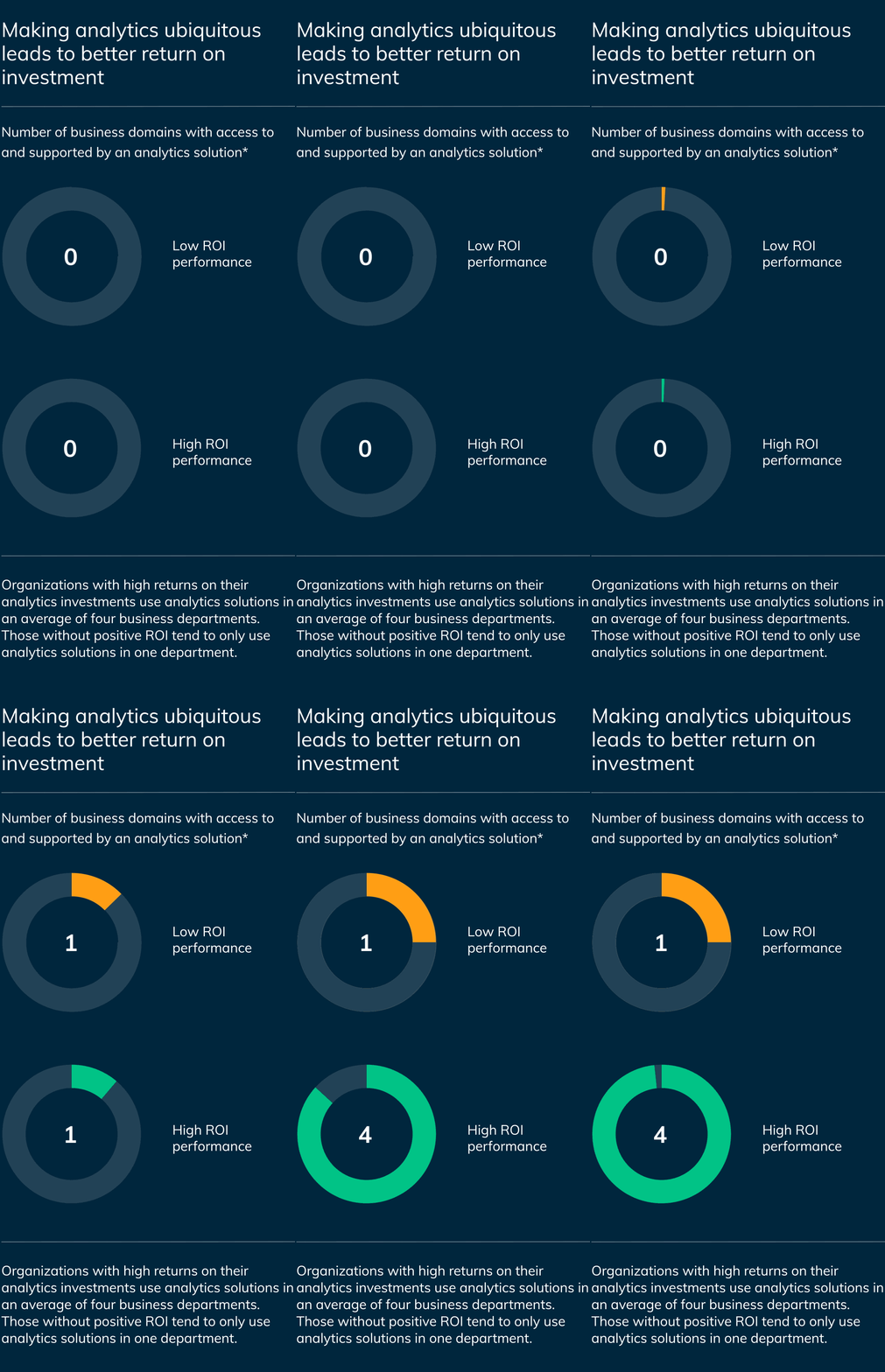
- *Source: IDC Infobrief, sponsored by Alteryx, “4 Ways to Unlock Transformative Business Outcomes from Analytics Investments,” US49458122, August 2022
Case study: Optimizing supply chains at MillerKnoll
US furniture design firm MillerKnoll, whose origins date to 1905, bears the name of iconic designer Herman Miller. The company is known for its 1968 invention of the office cubicle, its Eames lounge chair and for revolutionizing how people interact with living and working spaces. For MillerKnoll, staying relevant in the 21st century requires harnessing production data to optimize supply chains and inventories.
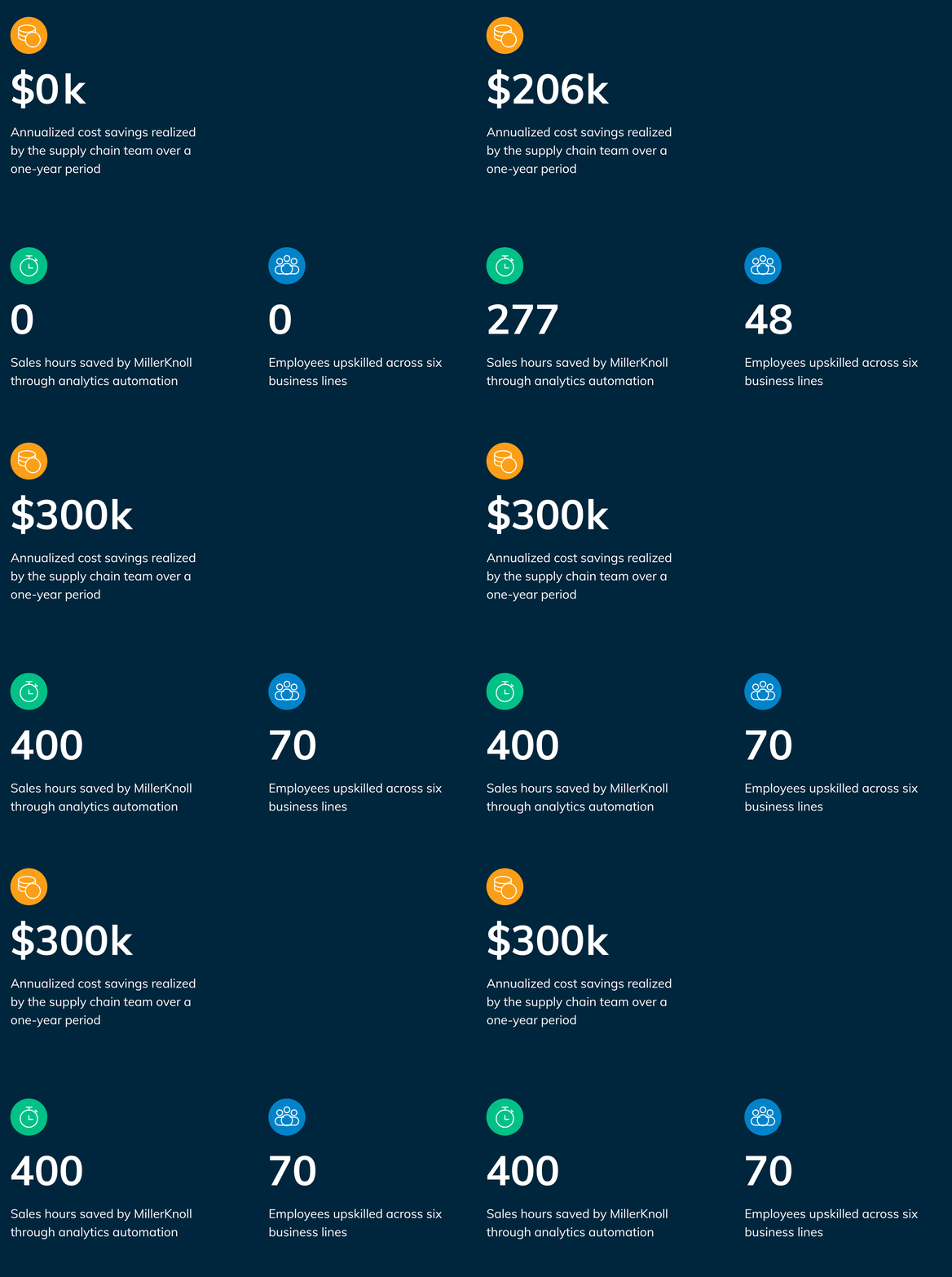
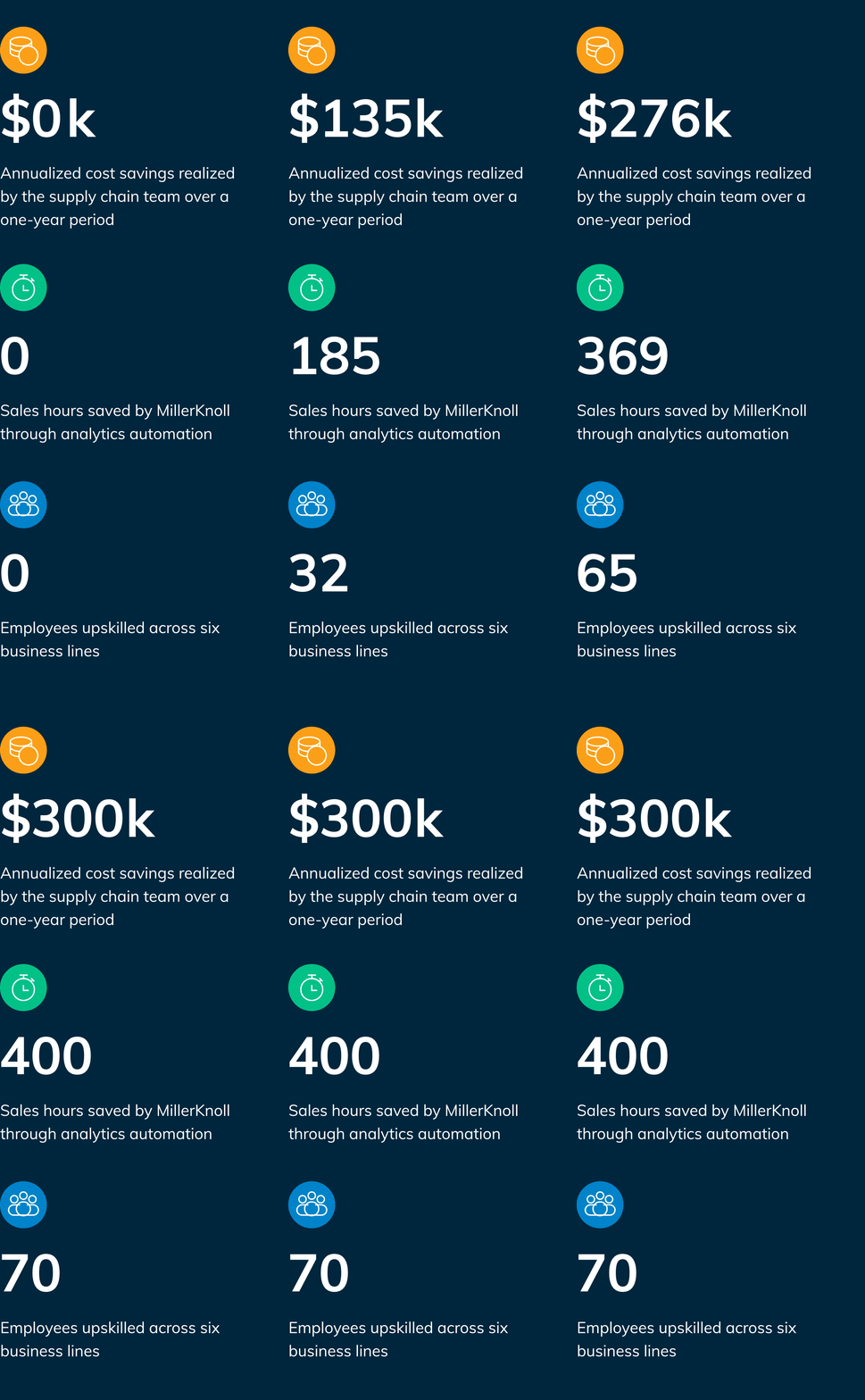
Using Alteryx, the company centralized gathering, cleansing, merging and analyzing data across multiple previously siloed sources and business functions. Extracting and analyzing key data from its products, MillerKnoll improved manufacturing efficiency, material flow and warehouse use in a three-month pilot project that engaged 70 employees in multiple teams. Within a year, MillerKnoll realized cost savings of over $300,000 as it used analytics to identify opportunities to optimize inventory, sales and marketing.
- Source: MillerKnoll Alteryx customer case study.
https://www.alteryx.com/customer-center/from-problem-solving-designs-to-problem-solving-analytics-at-millerknoll
Democratize with data analytics
The practice of expanding data literacy within organizations and empowering the workforce to apply analytics technologies increases business impact exponentially and but the upskilling and reskilling of the workforce shows commitment to the growth of an organization’s employees. Combined with analytics automation, these solutions free up the workforce from spending time on basic or repetitive tasks, allowing employees to focus on strategic work that keeps them engaged and productive—and adds more financial value. To realize these benefits, organizations need to build a culture in which decisions and strategies are grounded in data, and employees at all levels become evangelists for this approach.
“Technology can enable change, yes. But it’s actually people who drive and sustain that change in any company.”
—Steve Brodrick, Chief Transformation Officer, Alteryx

Case study: Scaling analytics at UBS
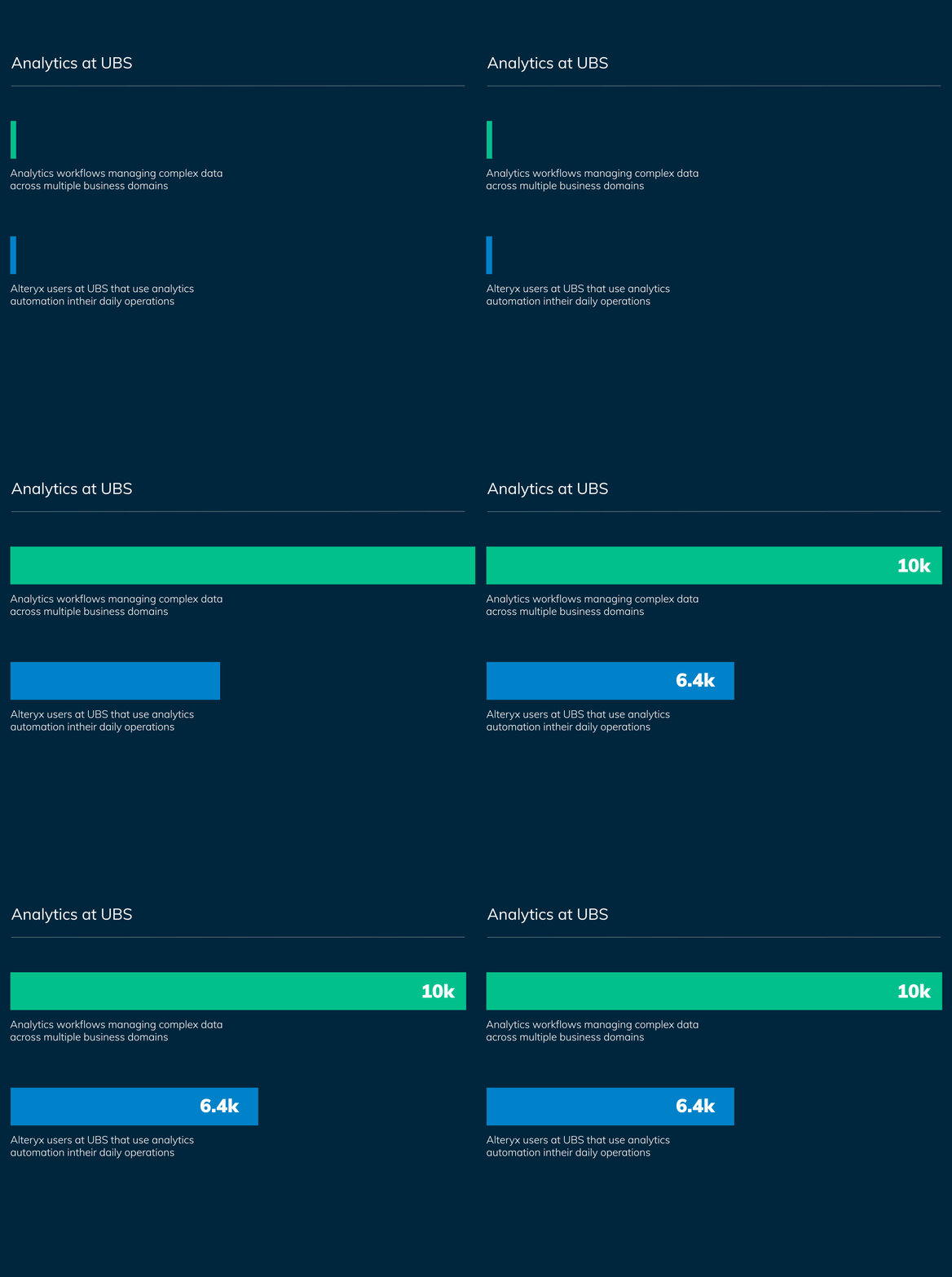
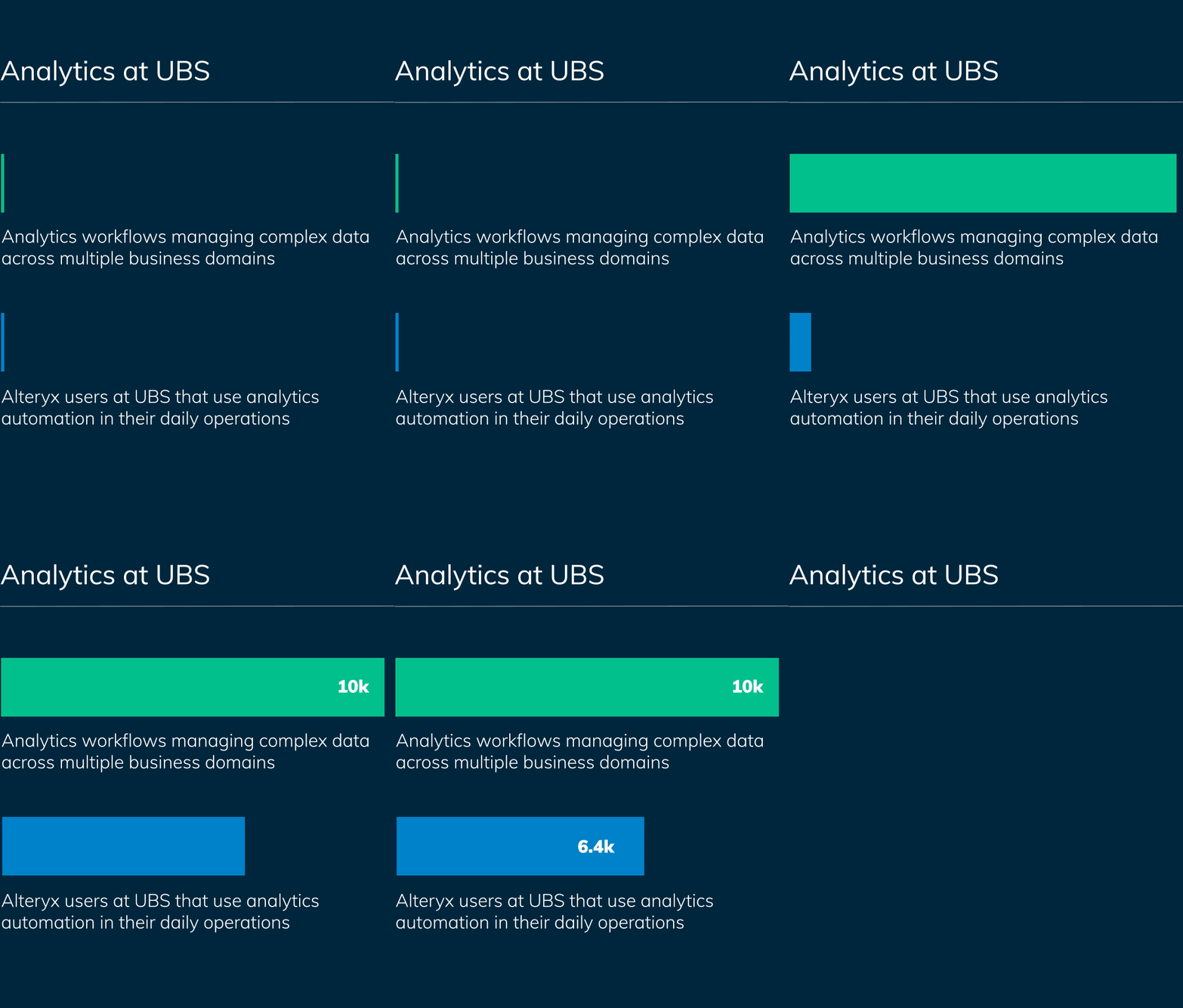
Multinational bank UBS has scaled the use of analytics within the organization by supporting 6,400 Alteryx users across 3,300 workstations globally. The goal for the bank is to educate and empower staff to think analytically and maintain high levels of governance through data-led decision-making. Through this process, UBS has seen cross-pollination of ideas throughout the organization as employees break out of siloed thinking and connect the dots for wider business efficiencies.
- Source: UBS AG Alteryx customer case study.
https://www.alteryx.com/customer-center/ubs-ag-on-governance-of-models-and-workflows-in-a-regulated-environment
"Even in a recessionary environment, there are opportunities for companies to double down on analytics automation as a way to hyper-optimize the most critical strategic functions of the business. It’s actually the best time to invest in the productivity of your workforce."
—Steve Brodrick, Chief Transformation Officer, Alteryx
Digital transformation: Set up for success
The global market spend for digital transformation technology and services is expected to reach $2.8 trillion by 2025. However, a BCG study shows that 70% of projects fail to meet objectives. How can organizations set themselves up to succeed?
“In my experience, digital transformations fail for two reasons,” says Brodrick. "The first is a lack of effective leadership support and budget. The second is that there’s an underestimation of what it takes to enact, drive and sustain that change. Leaders need to pay close attention to how digital transformation affects business outcomes at the point of impact by asking, for example, how the company can better serve customer needs. By increasing access to analytics technologies, especially those that embrace the cloud, change leaders can help optimize strategic performance in the farthest reaches of the organization.”
Long-term strategies, rapid ROI
With long-term growth as the ultimate goal, realizing rapid returns from investing in analytics solutions can prime organizations to adopt analytics across every business function. High-performing organizations say their data and analytics investments have contributed 20% to earnings over the past three years, according to a McKinsey study.
Data analytics is a big part of any successful company’s strategy. Executing a data analytics pilot within one or two functional areas provides a use case for the wider company, according to Steve Brodrick, CTO of Alteryx. “An approach that I’ve seen work is thinking big but starting small in an area that you think is positioned to drive quantifiable benefit. Then, act fast so that adoption follows as people see the success that’s being created,” he advises.
The financial impact on the company is an important element in measuring return on investment in data analytics, but Brodrick urges organizations to ask how they can empower teams in different ways to become more efficient in what they do every day to create long-term success.
“The matchup of value creation and empowering people with data to make decisions is a very powerful combination that can truly drive sustained transformation and resilience.”
—Steve Brodrick, Chief Transformation Officer, Alteryx
Case study: Analytics-driven agility in a time of crisis
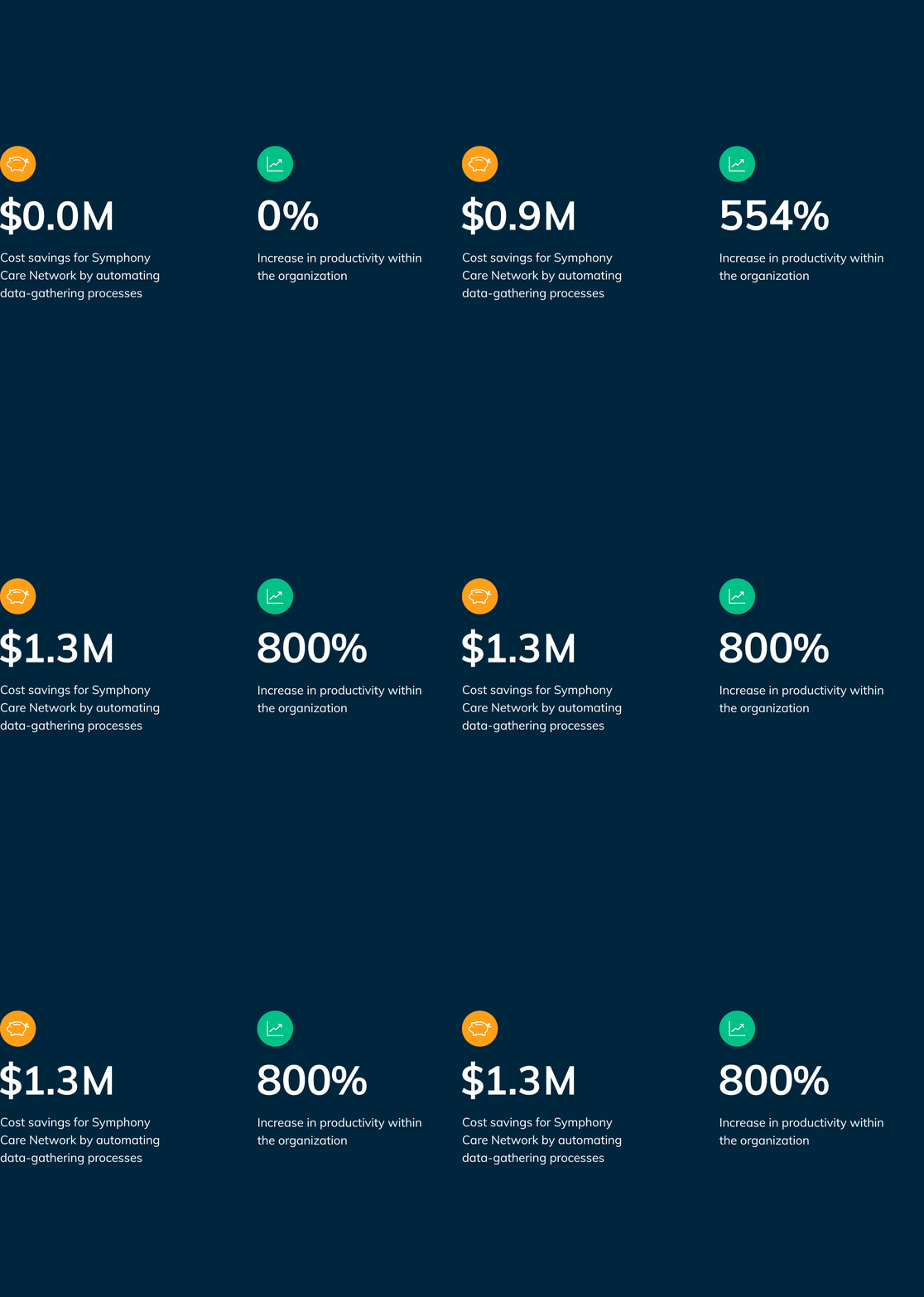
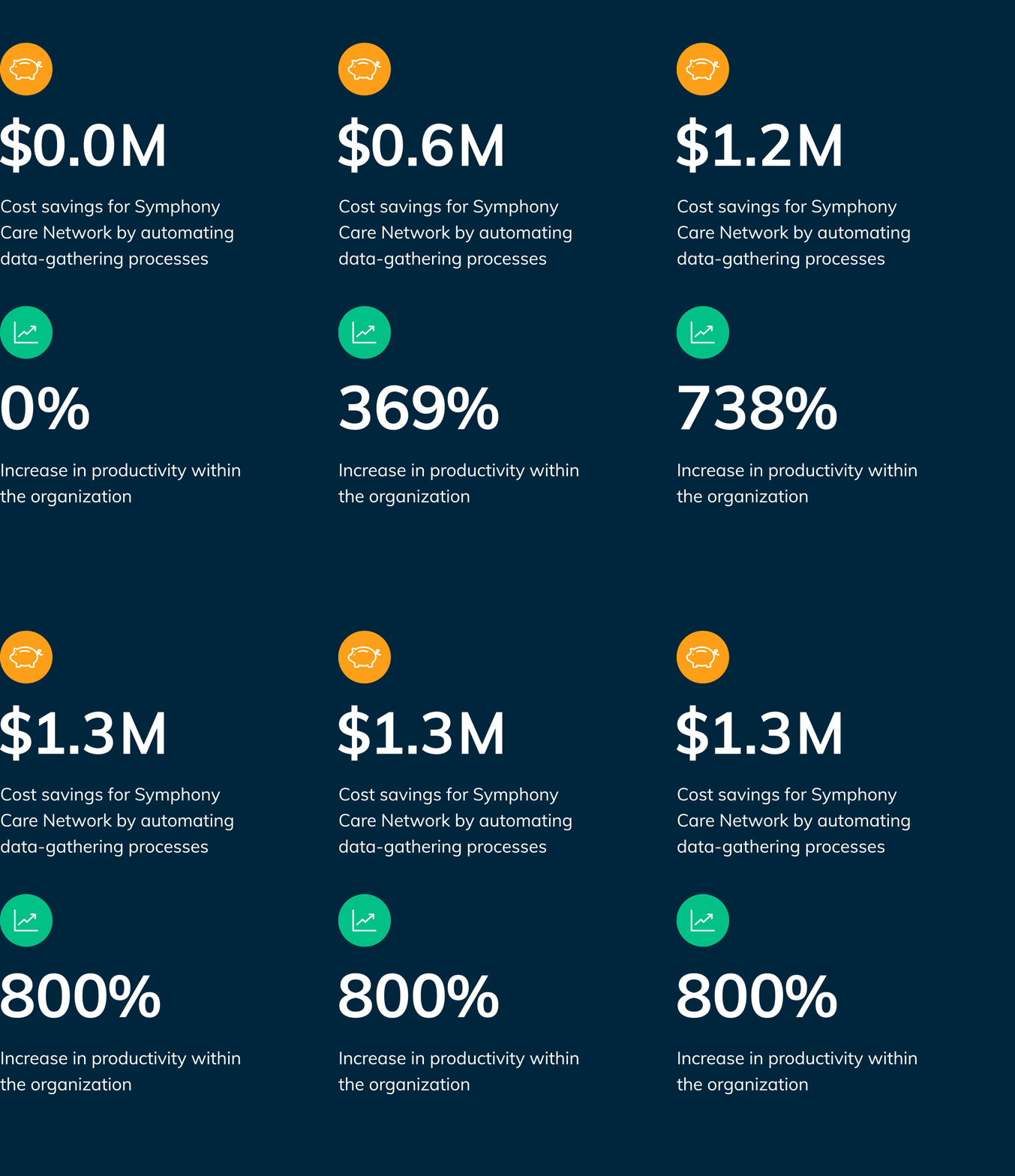
Post-acute health care provider Symphony Care sprang into action at the crucial onset of the Covid-19 pandemic. The company’s network of 34 facilities started collecting overwhelming amounts of data, with no clear way of analyzing it to take urgent action. Ditching spreadsheets in favor of Alteryx, Symphony Care continued operating through the pandemic and saved an estimated $1.3 million by automating real-time data gathering and producing easily digestible, actionable datasets.
This led to an 800% increase in productivity and provided Symphony Care with a solid use case to roll out analytics adoption to 35 new accounting and HR employees, helping them build custom reports relevant to their business needs. Following the success of its analytics strategy, the company is considering making its data externally available to its research partners to speed up efficiencies.
- Source: Symphony Care Network Alteryx customer case study.
https://www.alteryx.com/customer-center/symphony-care-network-leverages-alteryx-to-track-covid19-care-data-across-patient-facilities
Investing in long-term resilience
A note from Steve Brodrick, Chief Transformation Officer, Alteryx
It's counter-intuitive, but startlingly clear—and not only are our customers proving this, but history has as well proven it. Companies that invest in analytics democratization to achieve greater analytics maturity are proven to outperform less mature organizations over three-, five- and 10-year performance horizons. And that is what creates true, long-term resilience.
Leaders must think about resilience in multiple dimensions: There’s the financial resilience that can come from being able to adjust in an agile way to customer needs as the economic context changes. But then there’s also personal resilience. Giving employees the technology and development enables them to thrive in challenging environments, and learning analytics techniques and automating tasks allows them to focus on more strategic work. This creates employee loyalty, which generally delivers better customer experience. It’s the smartest closed-loop business strategy there is.