

If you’re serious about scaling, that’s the statistic that should keep you up at night, not the next model release.
AI will generate trillions of dollars in value across global industries by 2030. The disruption will reshape cost structures, accelerate product development, sharpen decision-making and more.
Some enterprises are embedding AI into core operations while others are just starting. The gap between those that are ready and those that are not is growing. Many companies risk getting left behind.

The numbers make clear what is at stake.
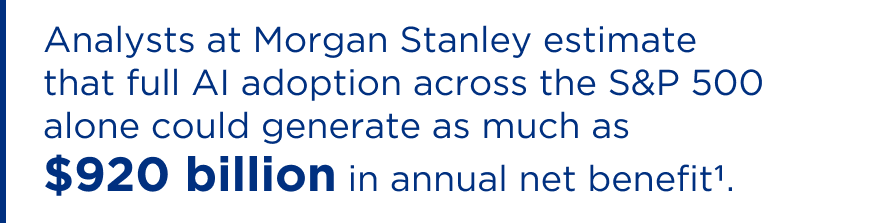
Over time, that could translate into $13 trillion to $16 trillion in additional market capitalization, roughly a quarter of the index’s current value.
The opportunity extends beyond the technology sector to everything from financial services and media to pharmaceuticals, autos and industrials. Realizing the value of AI requires change inside operating models.
¹ Source: Morgan Stanley



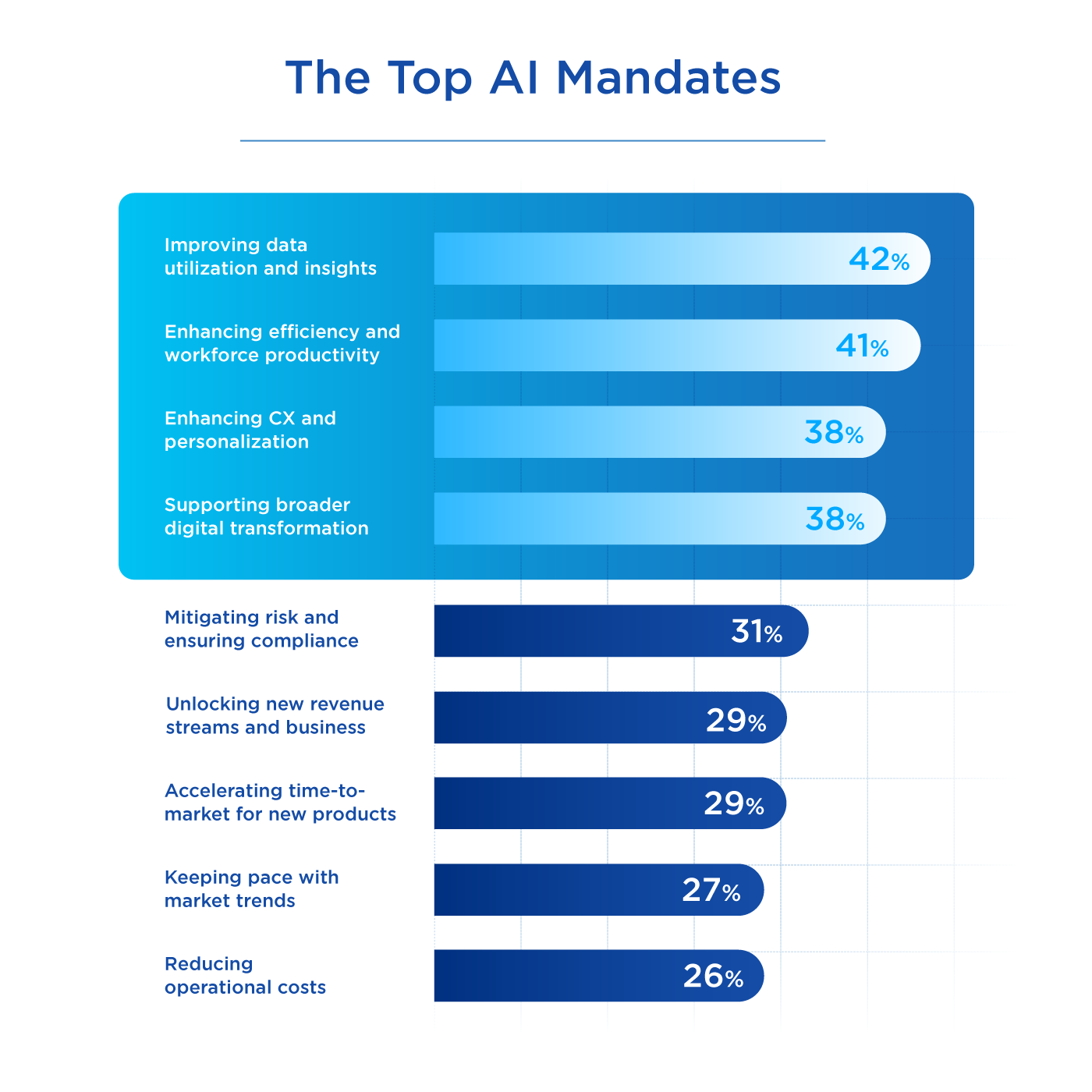
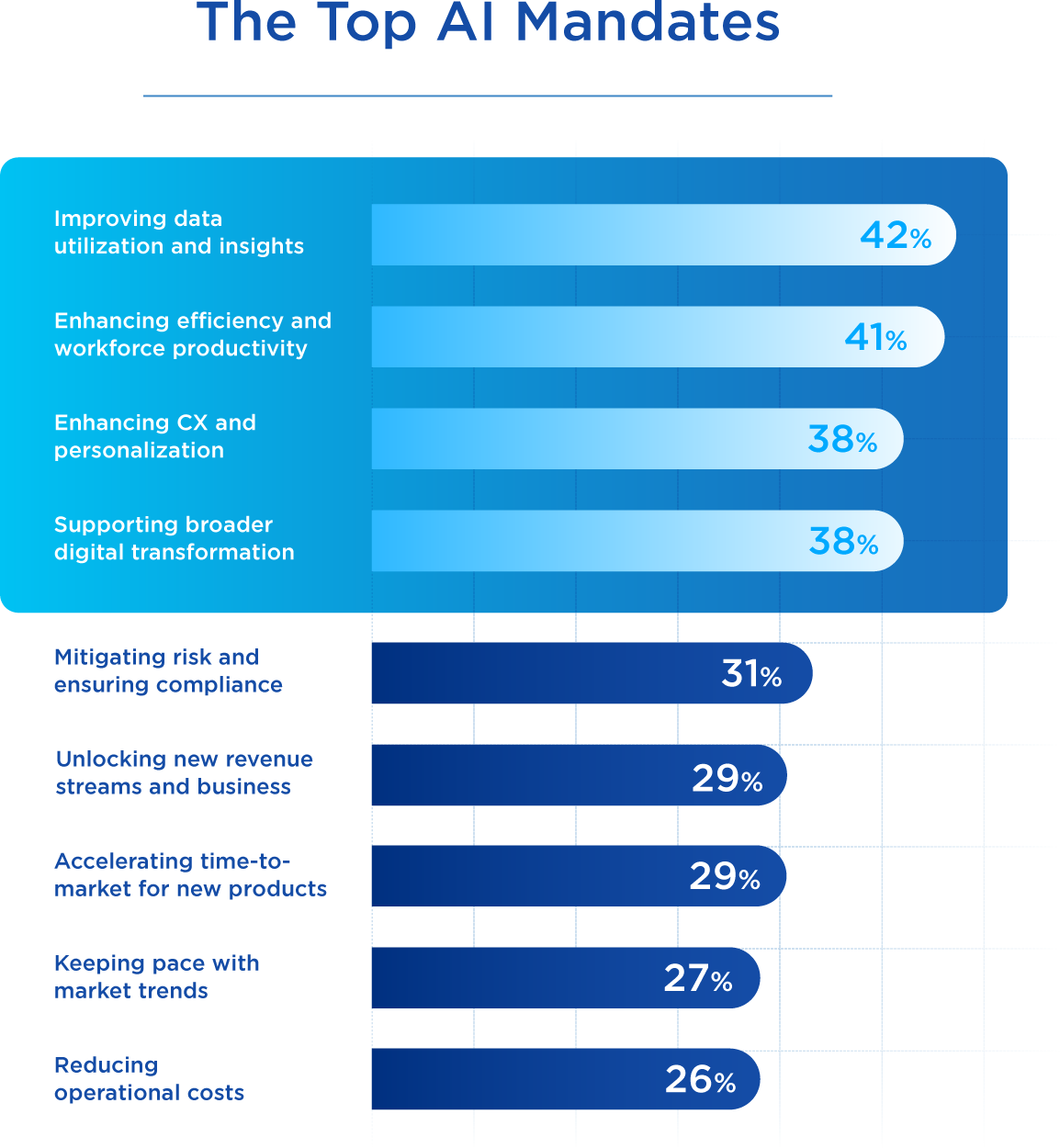
Across industries, leaders expect AI to drive measurable improvements in how their organizations function day to day.
Improving data utilization and insight generation ranks highest, cited by 42% of enterprises. Productivity gains sit close behind. Customer experience, digital transformation and revenue expansion cluster within a narrow range, suggesting that AI is expected to lift performance across multiple fronts.

Enterprises understand what is at stake.

To find out, Tata Communications commissioned a global study of 501 senior executives across North America, Europe, Asia and India. All respondents were VP-level or above and directly involved in telecom infrastructure and procurement decisions at enterprises with annual revenues exceeding $500M.
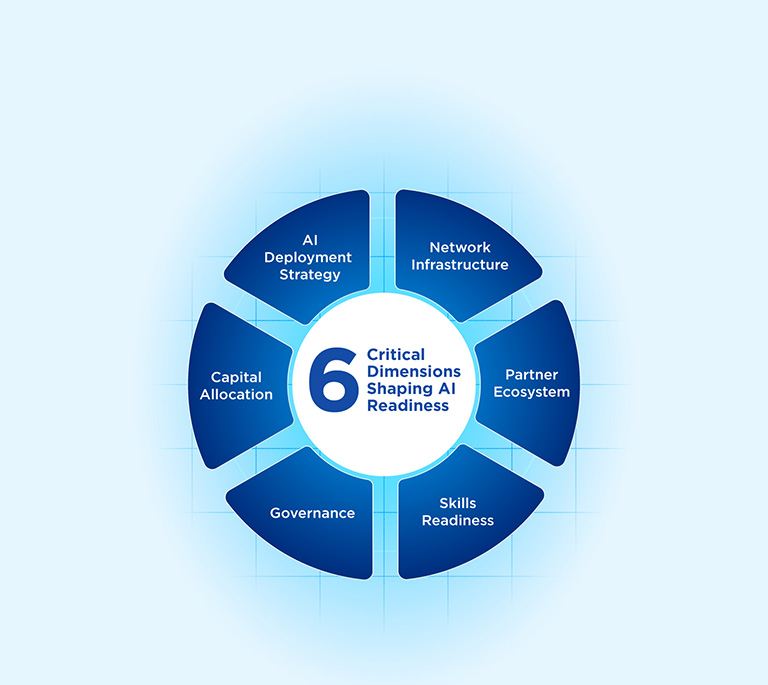
The research examined six critical dimensions shaping AI readiness. What follows explores the structural constraints shaping enterprise AI execution and the conditions that influence scale.
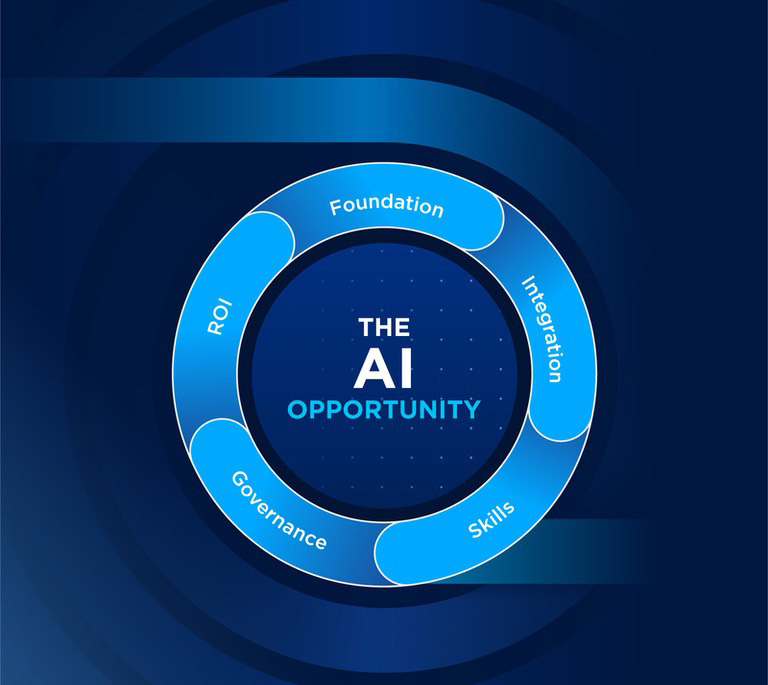

Our research identified five reinforcing loops that shape enterprise AI execution. Together, they form a flywheel that determines whether AI investment compounds or plateaus.
The loops span infrastructure, governance, integration, ROI and skills, offering a simple way to judge the choices enterprises make as they scale. AI can generate isolated gains even when one loop is under strain, but lasting performance depends on alignment across all five.
When one stalls, constraints spread and momentum weakens. When they reinforce one another, progress accelerates and advantage compounds.

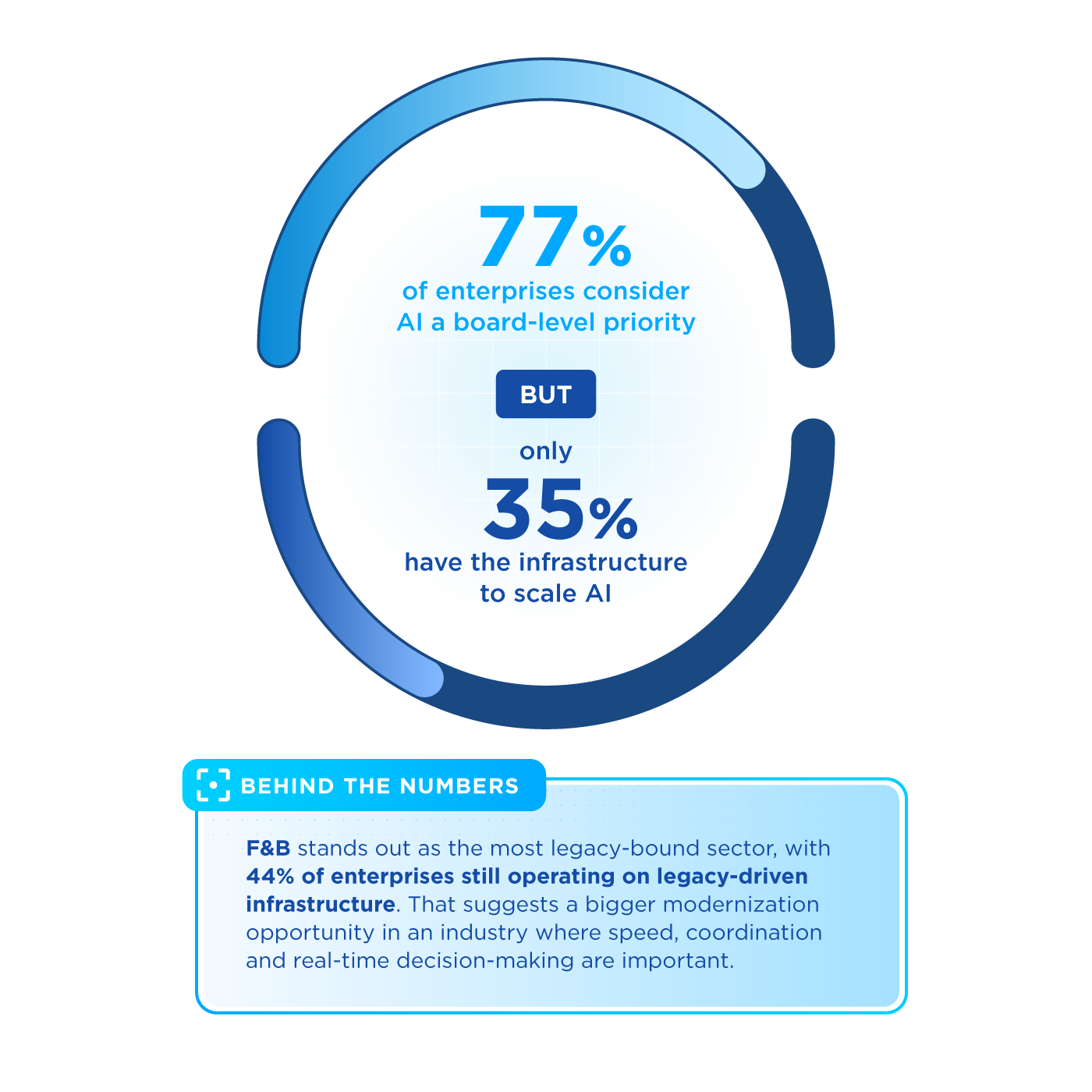
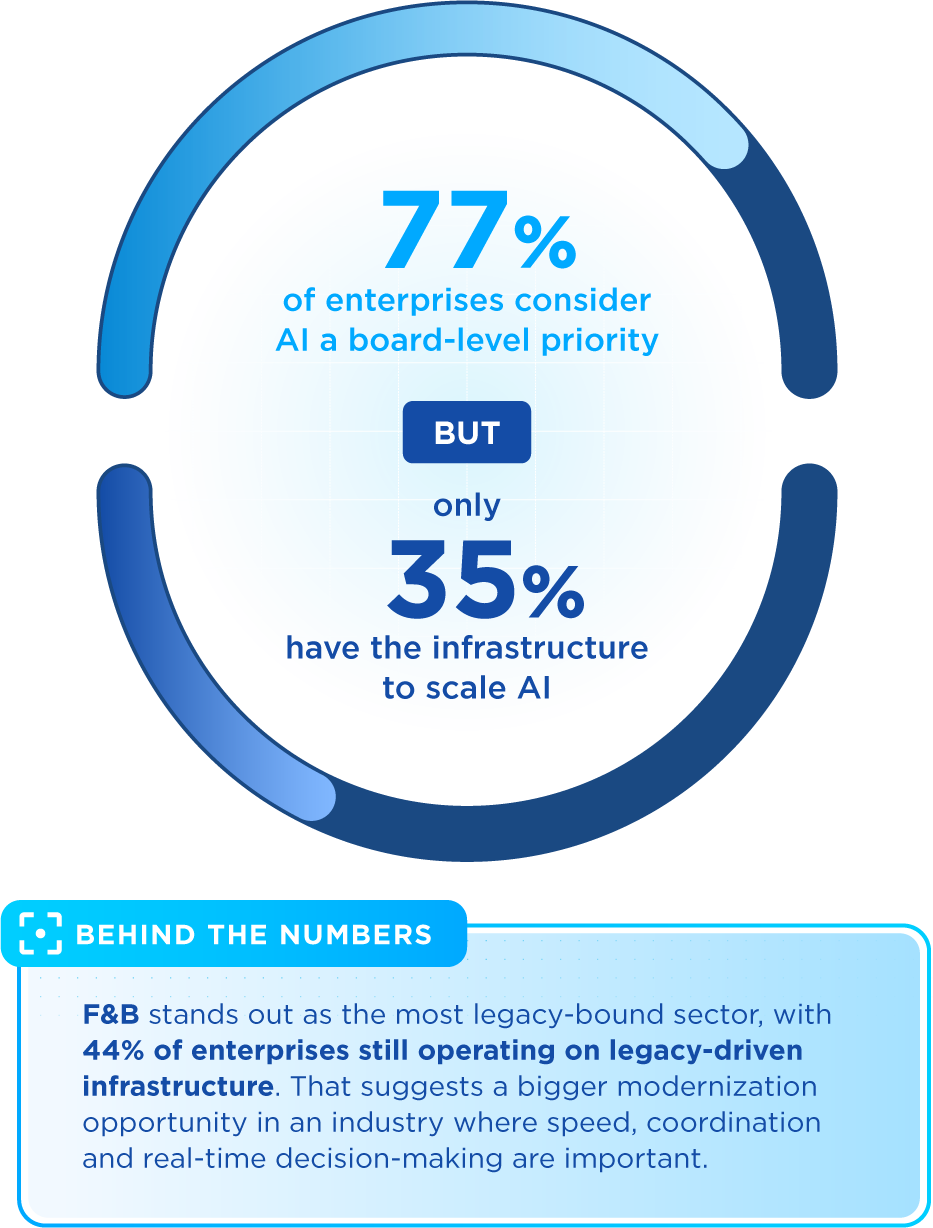
AI has become a board-level priority for 77% of enterprises surveyed. However, infrastructure readiness varies. Only 35% of enterprises are currently on advanced infrastructure, while 65% still operate on legacy systems not designed for the data intensity and integration demands of enterprise AI.
Modernized networking, cloud and hybrid environments, secure data flows, compute capacity and orchestration layers allow intelligence to move reliably across the enterprise.
These capabilities sit beneath every application and use case. They determine whether AI initiatives remain episodic or become embedded over time.

Modernization is not a binary state. Across core infrastructure components, readiness remains uneven, even as AI places growing pressure on enterprises to scale compute, data movement and connectivity on demand.
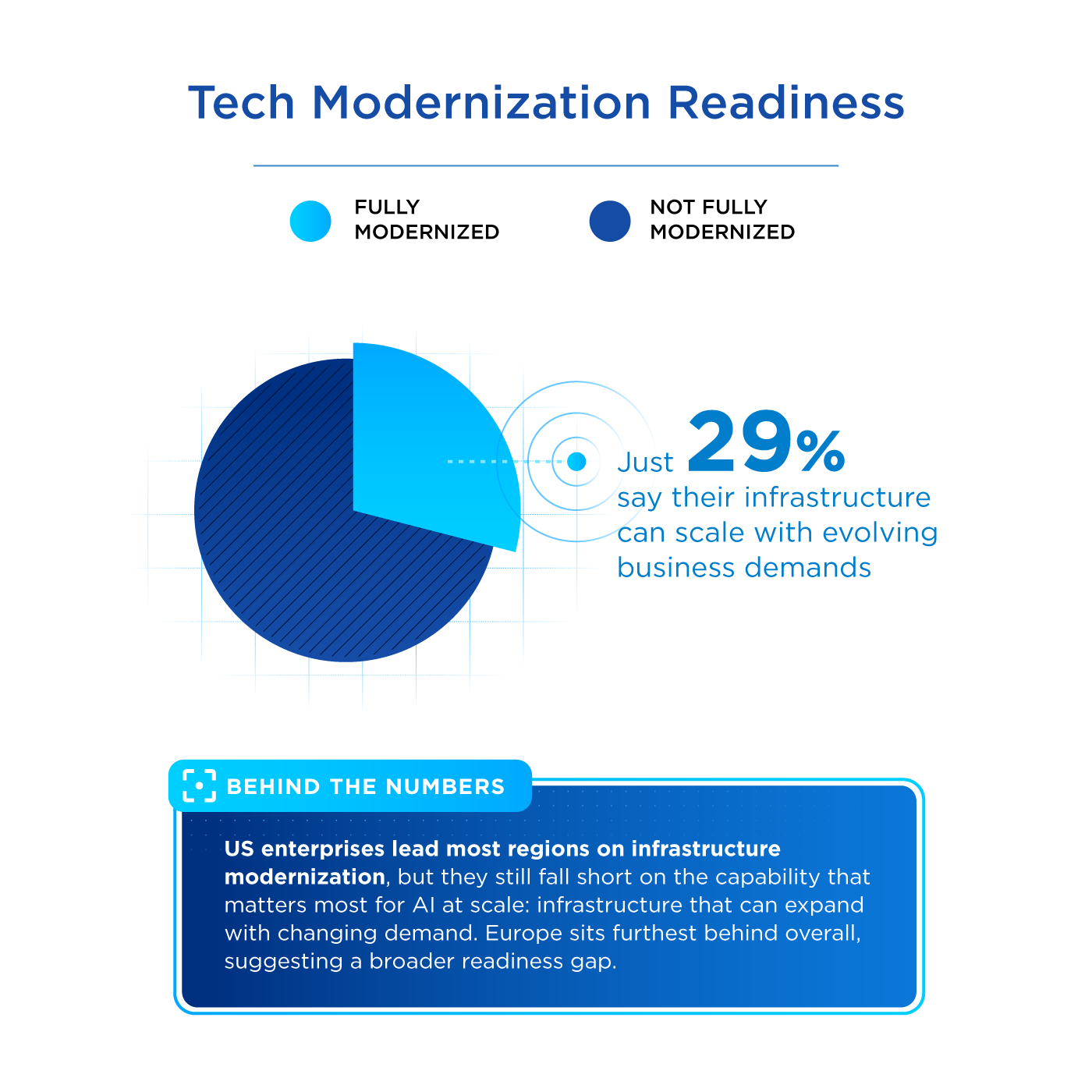
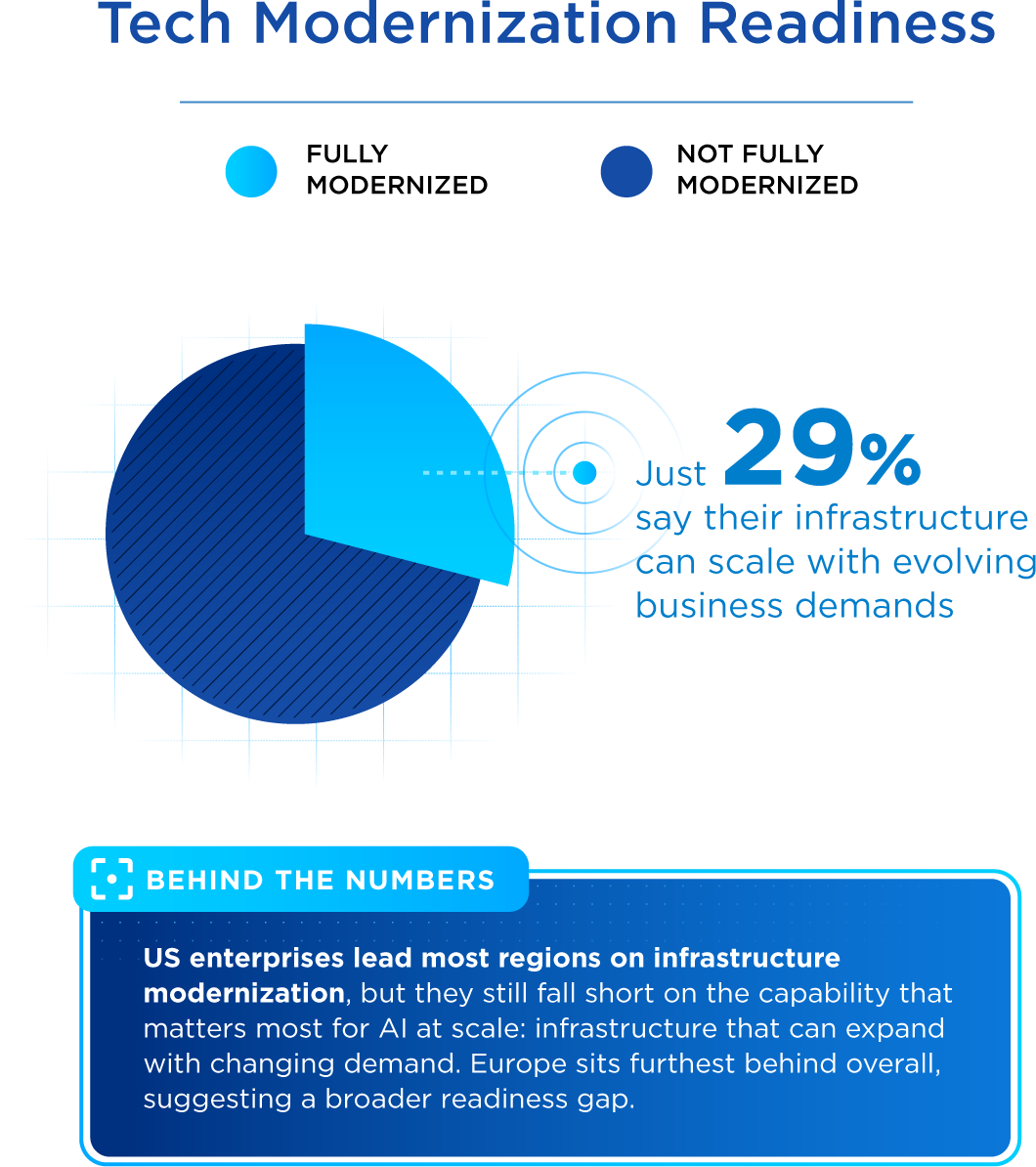
Fewer than half of enterprises report fully modernized network connectivity, hybrid deployment flexibility or data architecture. Just 29% say their infrastructure can scale with evolving business demands, which matters because AI workloads do not rise in a smooth, predictable line. They surge, expand and shift across environments.
Improvement is happening, but it is uneven. Capabilities advance in pockets rather than as an integrated system, and that makes on-demand scale harder to sustain when AI moves from pilot to enterprise-wide adoption.
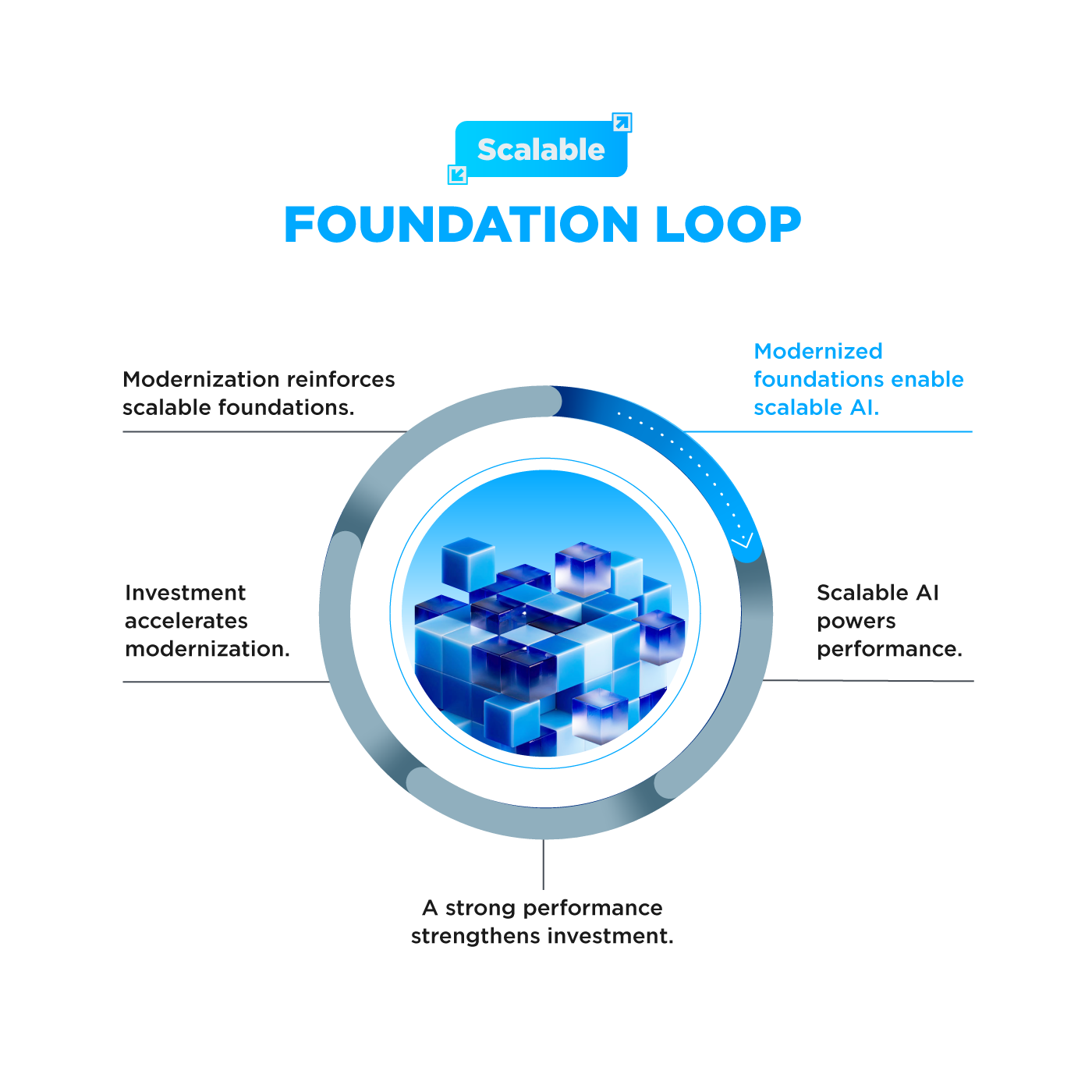
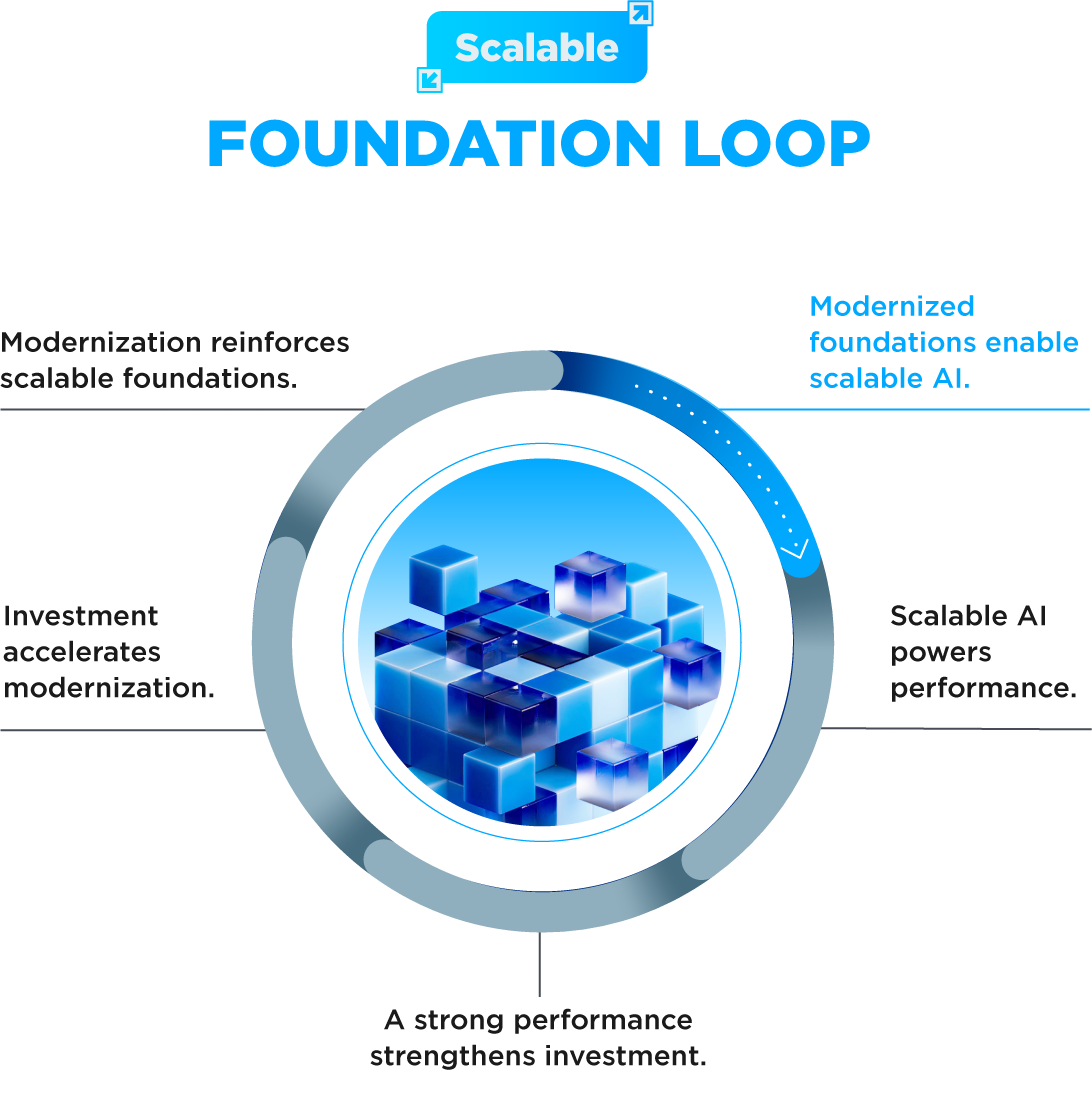
When enterprises pursue AI on legacy foundations, deployment stays confined to pockets of the business. Proof of value exists, but it is difficult to extend. Performance varies, returns weaken and modernization gets deferred.
When enterprises modernize the infrastructure beneath AI, that cycle reverses. AI moves further into operational workflows, performance stabilizes across the business and investment starts to reinforce growth.
That shift has measurable consequences:
 :
:

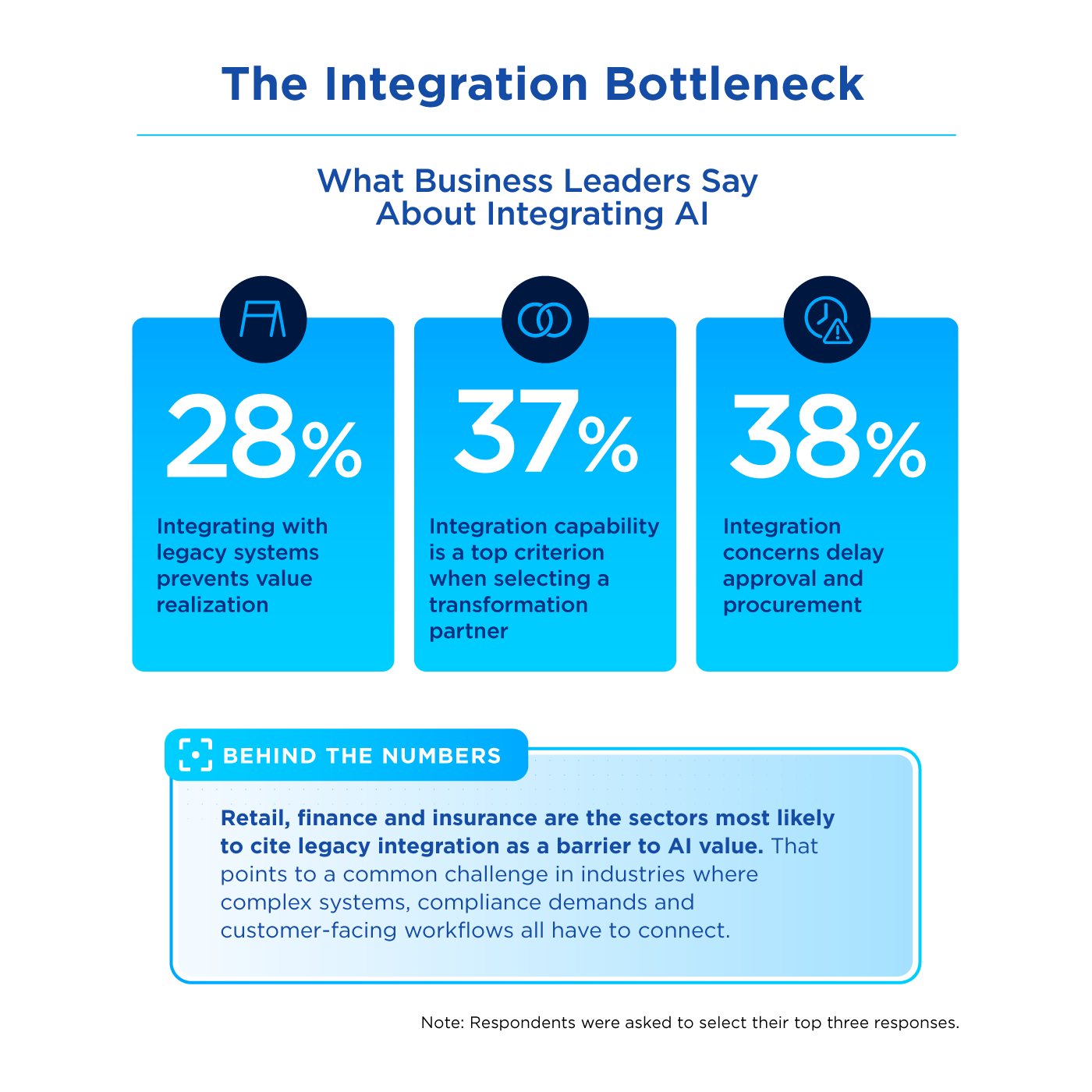
Integrating AI across legacy platforms, cloud environments, daily workflows, and customer channels is now a major business priority. Executives increasingly select partners based on their ability to deliver seamless enterprise-wide AI integration.
Yet fragmented platforms and siloed data environments often confine AI to isolated pilots. Efforts to bridge systems introduce additional approval cycles, coordination complexity and procurement friction.
The constraint appears as uneven deployment and delayed scaling.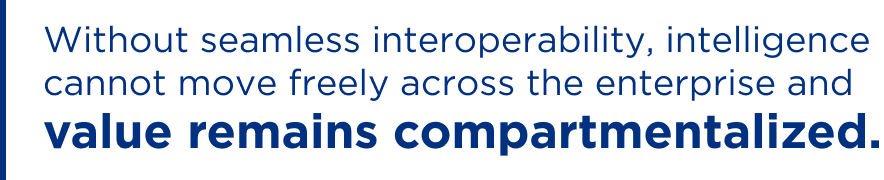
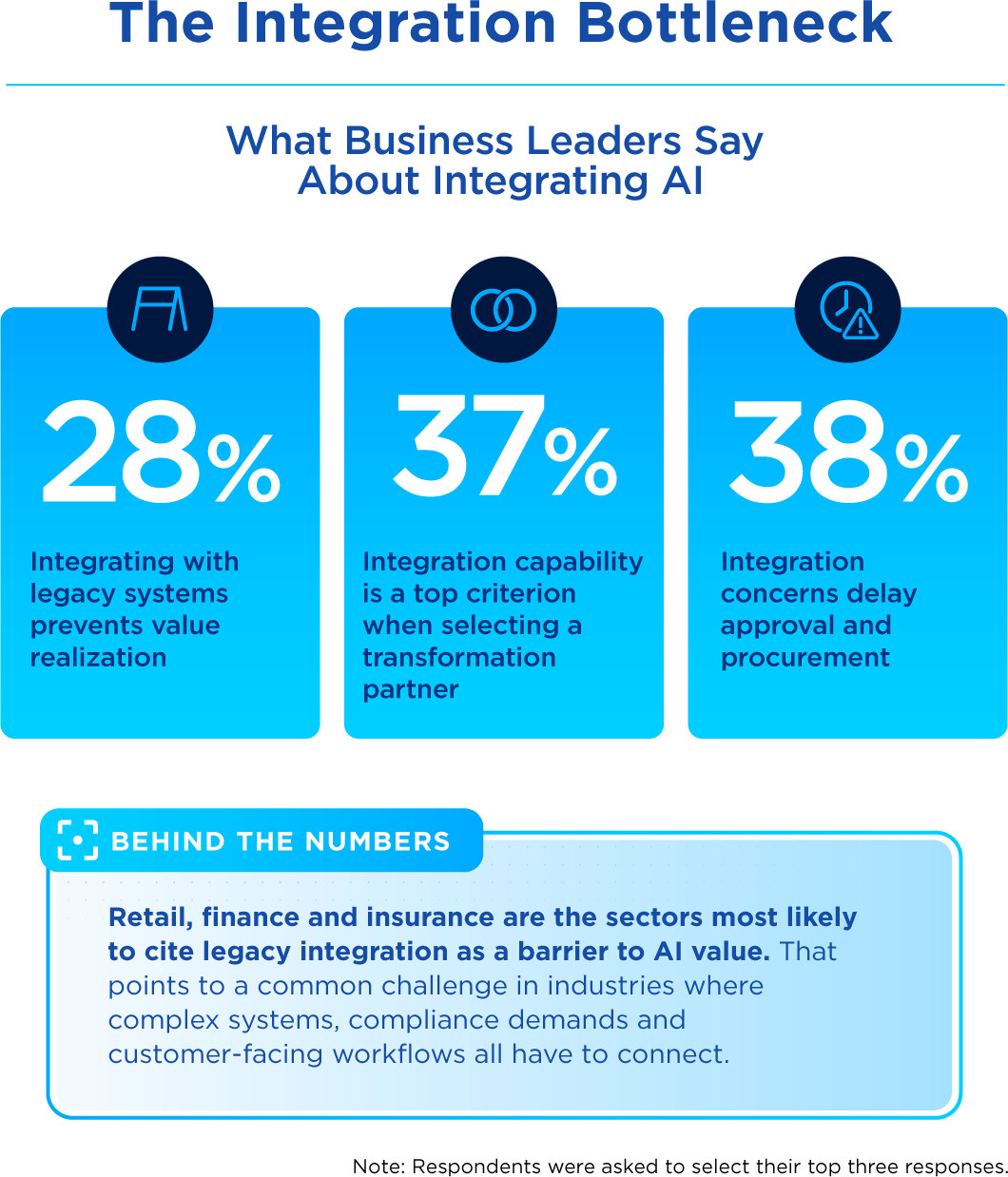

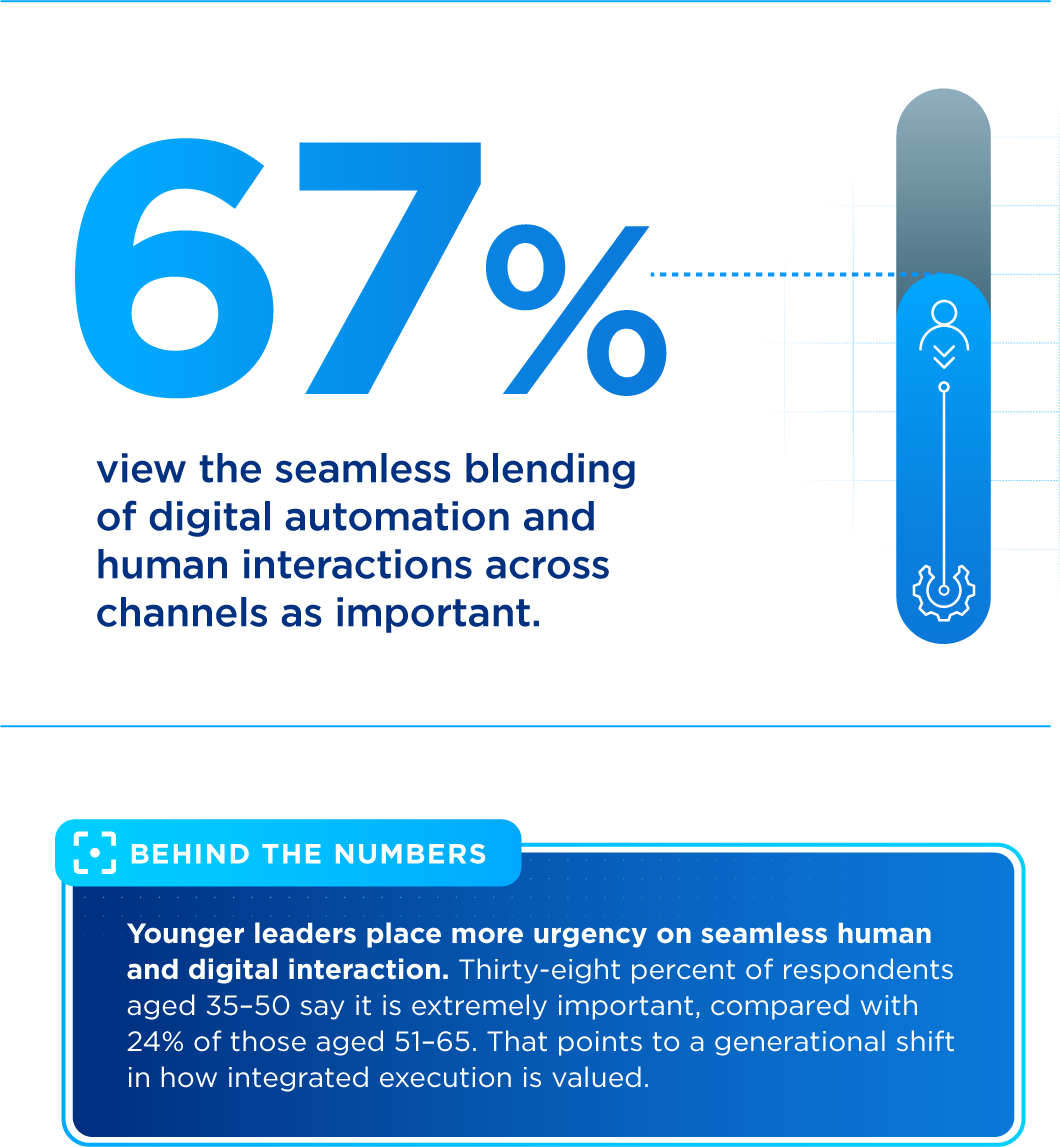
Two-thirds of leaders say the seamless blending of digital automation and human interaction in a company’s ecosystem is important.
AI is judged by how well intelligence moves between customer touchpoints, operational systems and decision workflows. A recommendation engine, a service interaction and a supply chain decision are no longer discrete events. They are expected to operate as part of a continuous system.
Intelligence must travel without friction across legacy platforms, cloud environments and frontline tools. AI only feels embedded when it does.
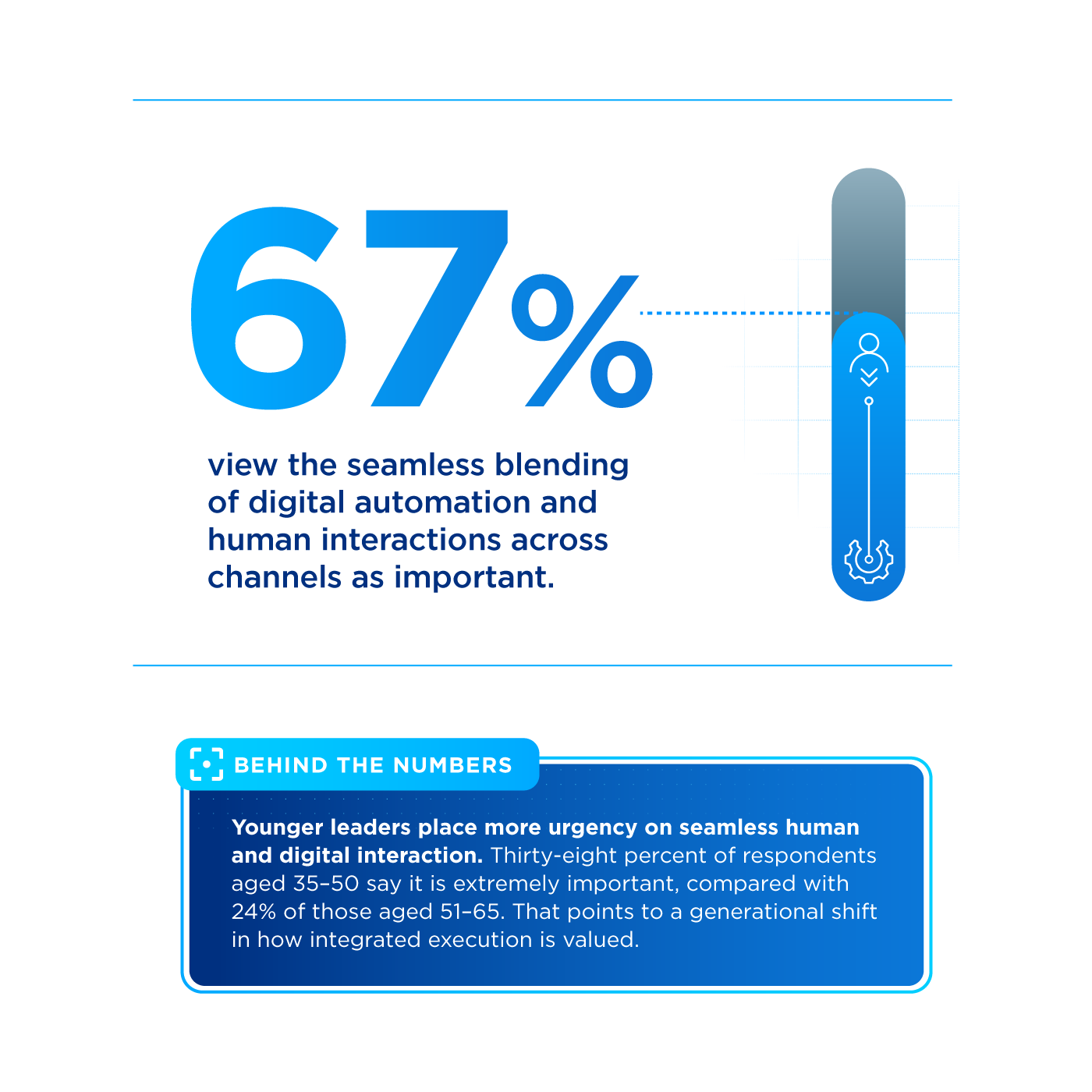
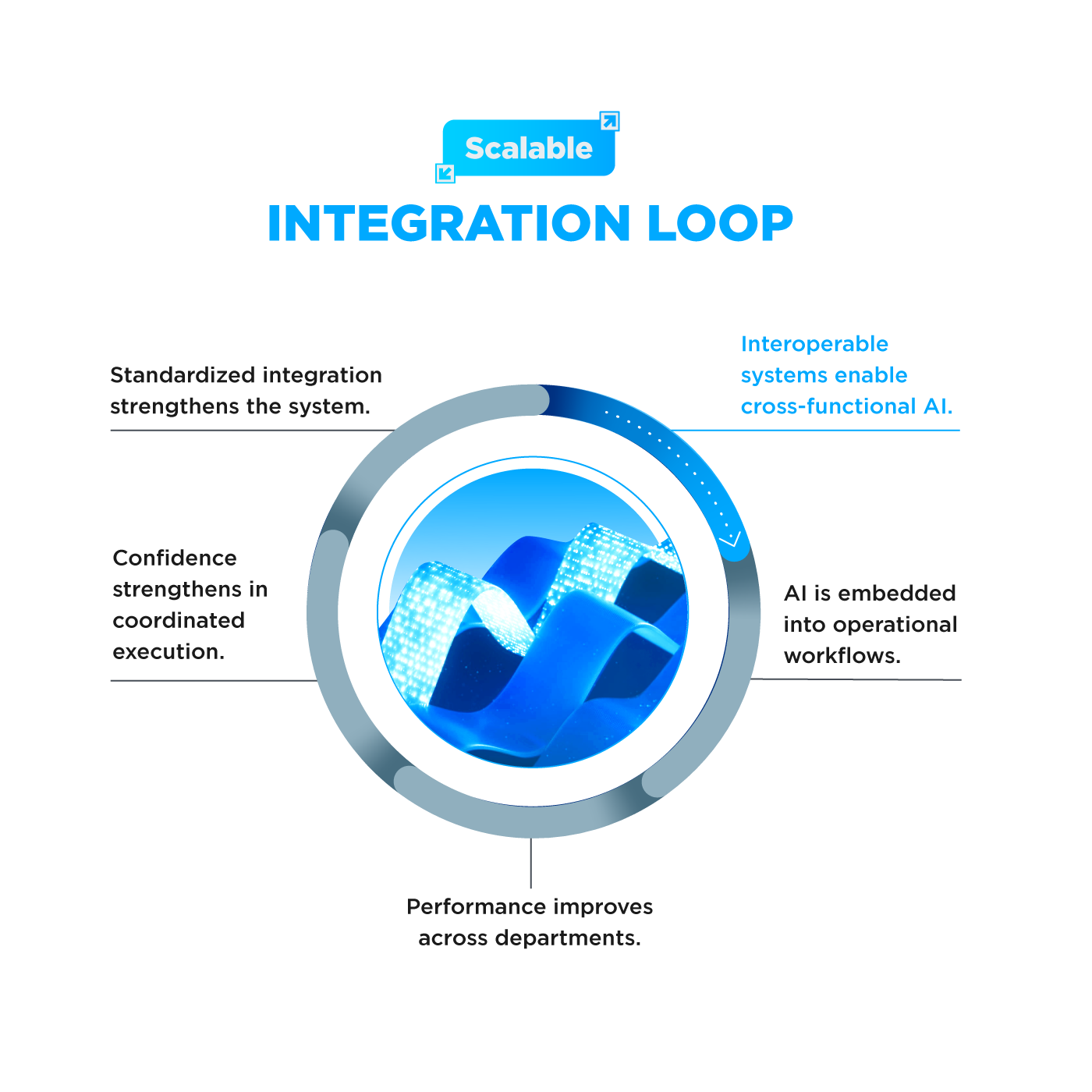
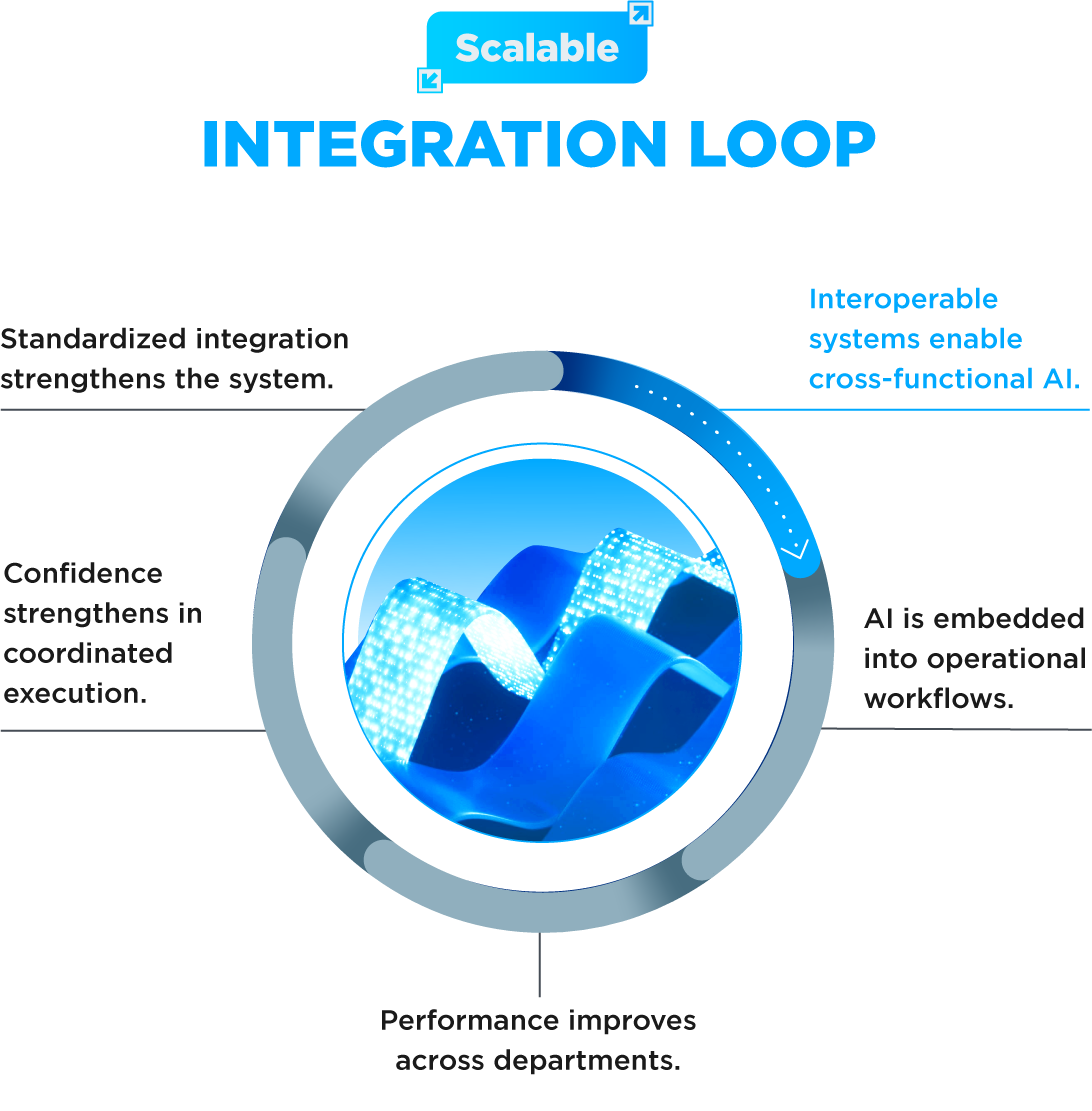
Integration challenges often appear later, when enterprises try to extend AI across legacy systems, data environments and operational workflows. What worked within one team becomes harder to scale across the business. Twenty-eight percent of leaders cite difficulty integrating AI with legacy systems as a primary roadblock to realizing value.
When enterprises treat interoperability as a strategic priority, that cycle begins to reverse. Systems are modernized with compatibility in mind, data standards are aligned, and intelligence moves more freely across functions.
That is what turns integration from a source of friction into a source of scale.

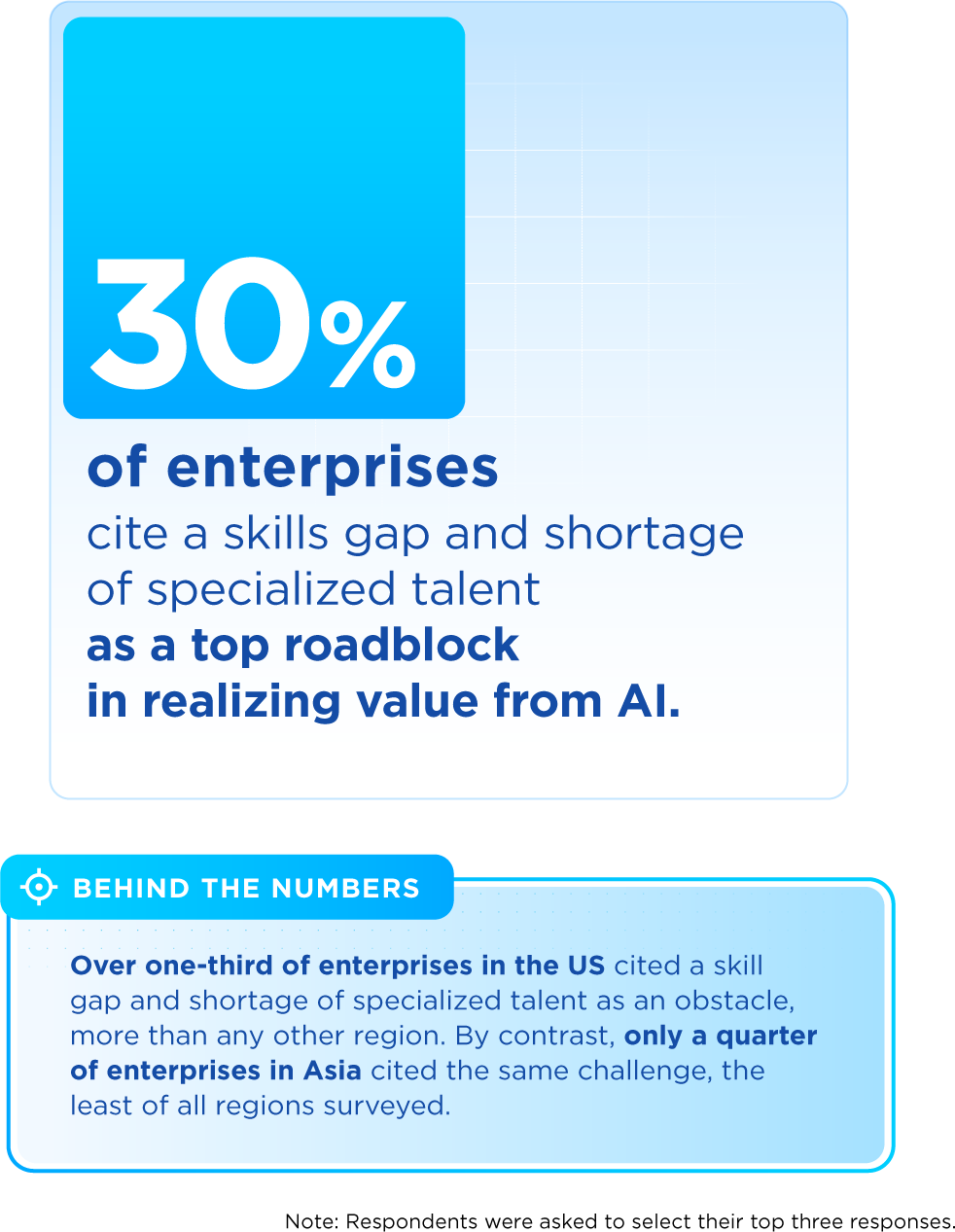
Nearly one-third of leaders say skill gaps and a shortage of specialized talent are major barriers to getting value from AI.
No single roadblock stands out as the dominant barrier, which shows how complex AI scaling can be. But skills are central because they affect every part of execution, from technology readiness and risk management to governance and integration.
As AI adoption grows, demand for new expertise will grow with it. Enterprises that cannot attract, develop, or reorganize talent around AI risk slowing their own transformation.
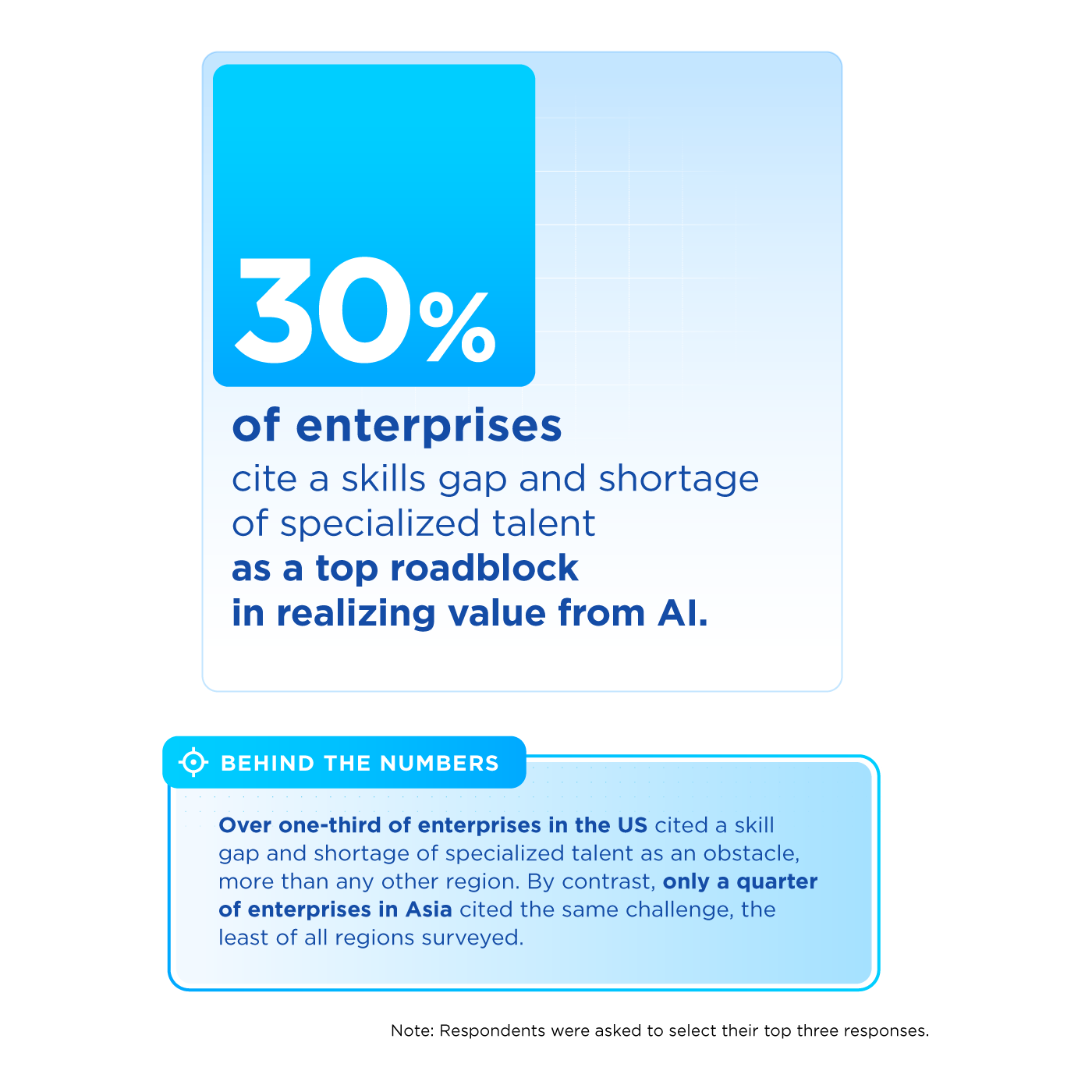

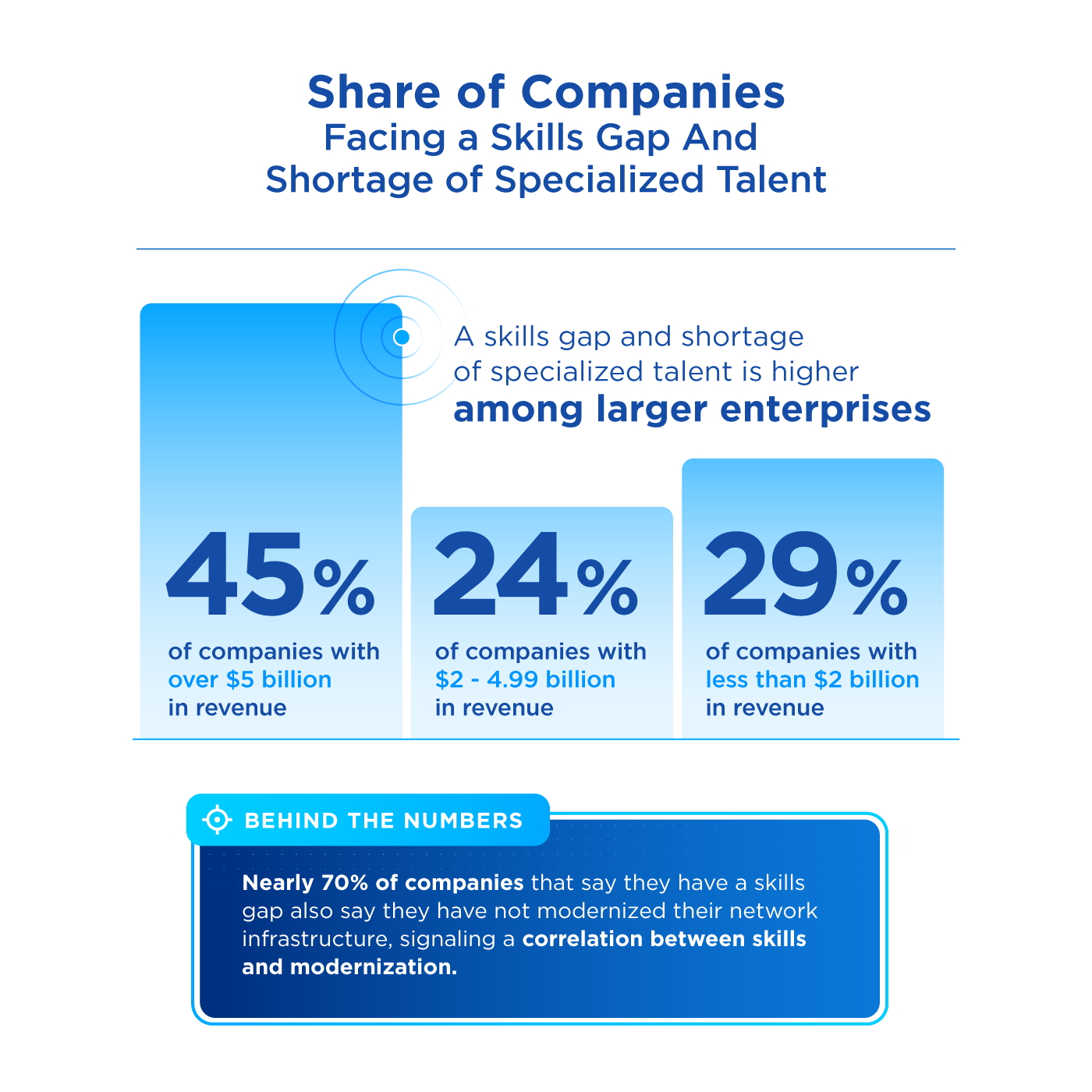
The skills gap becomes more acute as enterprises get larger. Among companies with revenue above $5 billion, 45% cite a shortage of specialized talent as a barrier to realizing AI value, well above the study average.
Scale makes AI harder to spread. Bigger organizations have more functions, more systems and more teams that need to work differently. It is no longer just a question of hiring technical specialists. Enterprises need broader capability across the business to apply AI, redesign workflows and govern change with confidence.
The pattern is clear: the larger the organization, the harder it becomes to build and distribute the skills AI requires.
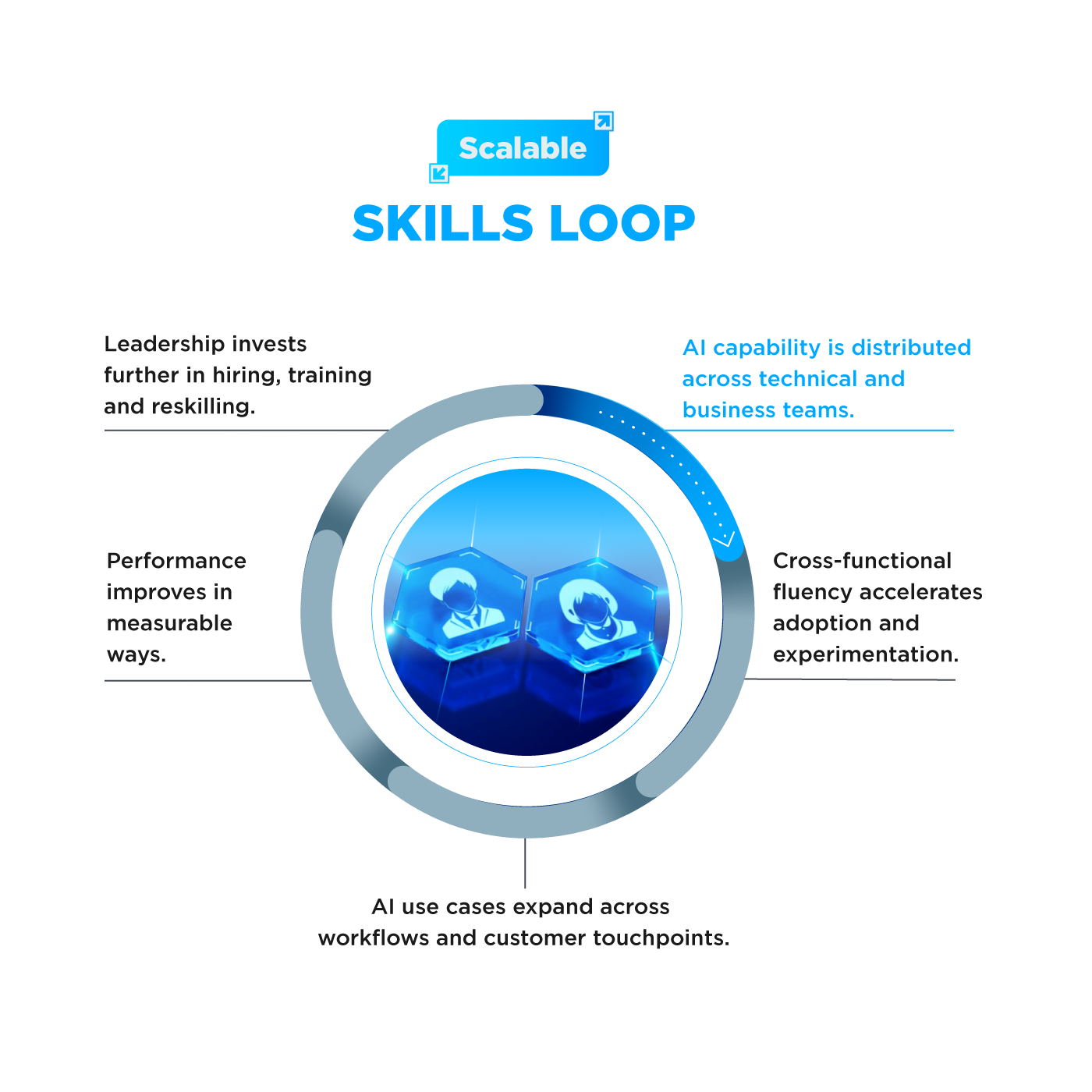
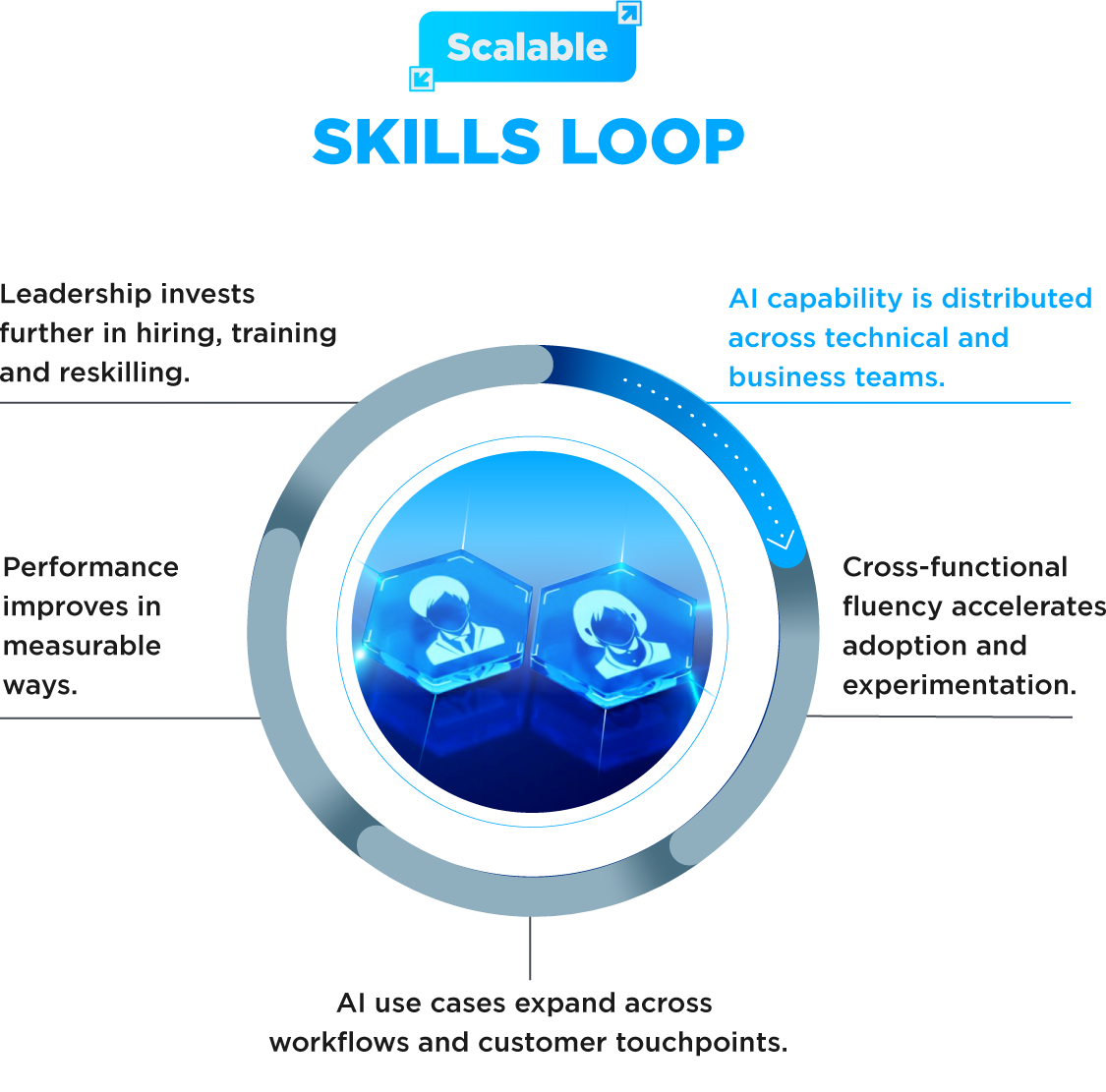
In many enterprises, AI expertise remains concentrated within small technical teams. Business units depend on a handful of specialists to translate potential into practice. Momentum builds in pockets, not across the enterprise, and gains remain incremental.
AI moves closer to day-to-day operations, integration improves and deployment becomes more consistent across the enterprise. Over time, performance steadies because AI is operating within the systems that generate value.

Governance shapes the conditions for scale. It determines how data is classified, how risk is assessed, how compliance is reviewed and how control is maintained across increasingly complex environments.
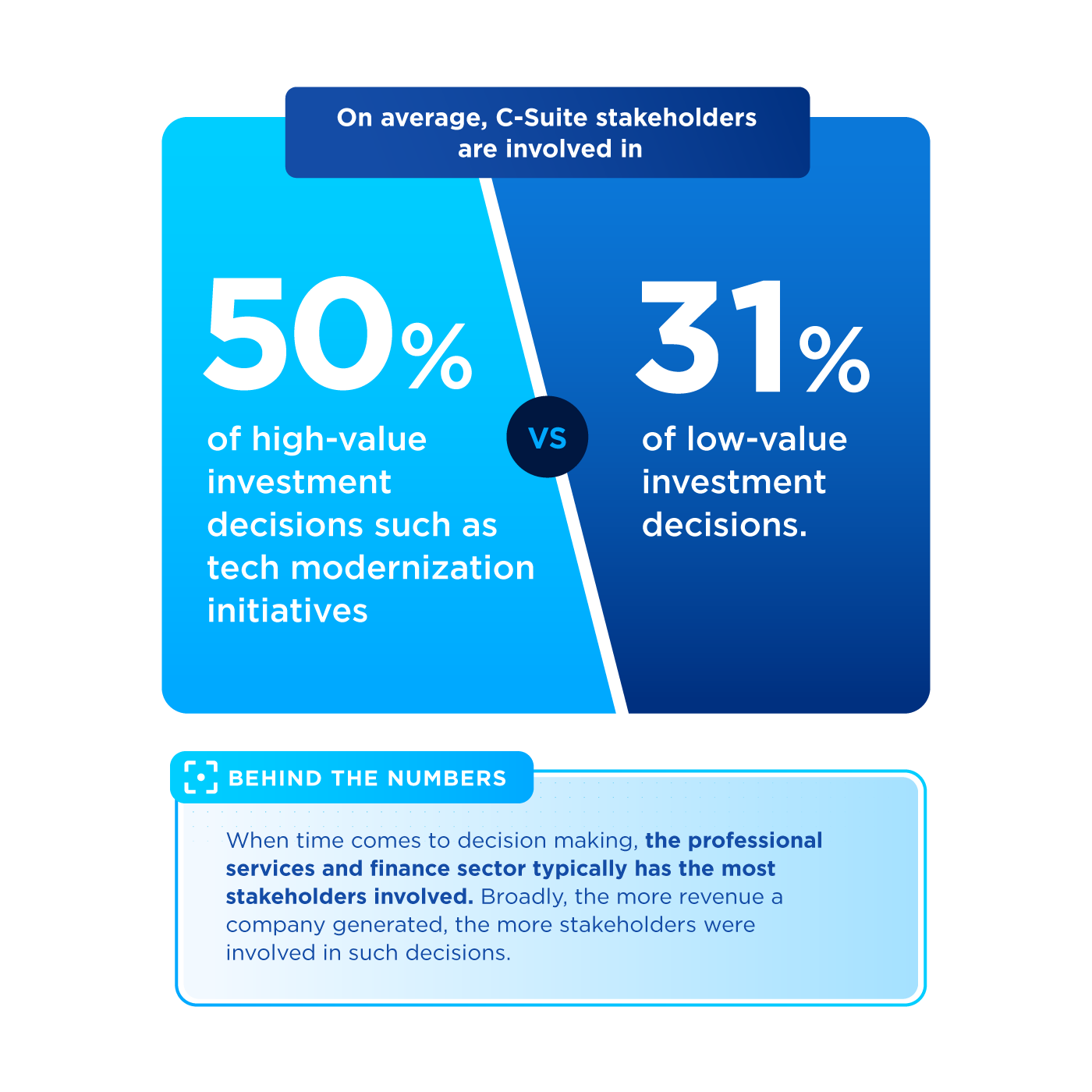
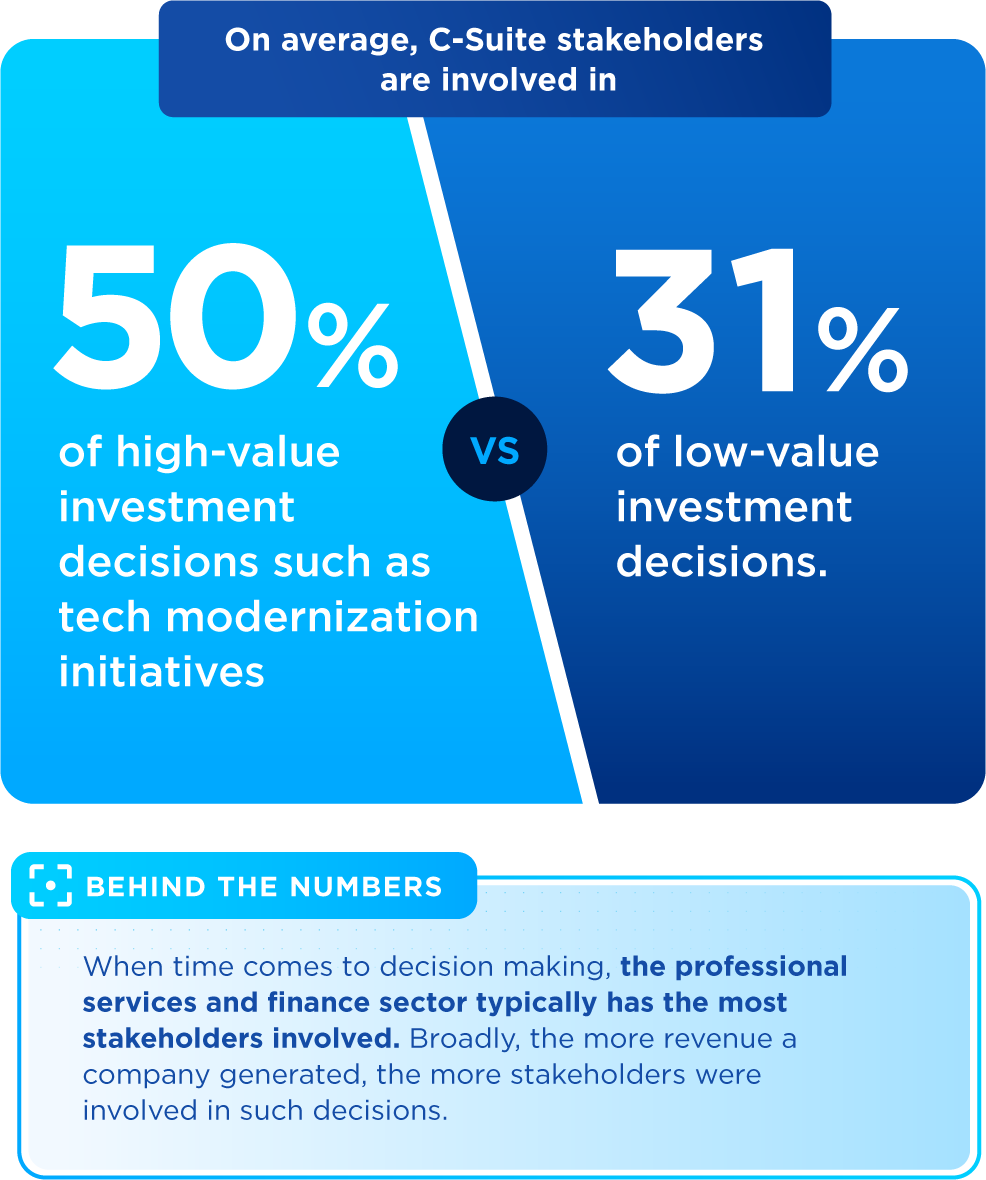
As AI and infrastructure decisions become more strategic, more stakeholders enter the process. High-value investments bring in larger decision committees and heavier executive involvement, extending governance beyond a single function or approval.
That changes the nature of execution. The work becomes cross-functional, with finance, security, technology and senior leadership all needing confidence in the same decision.

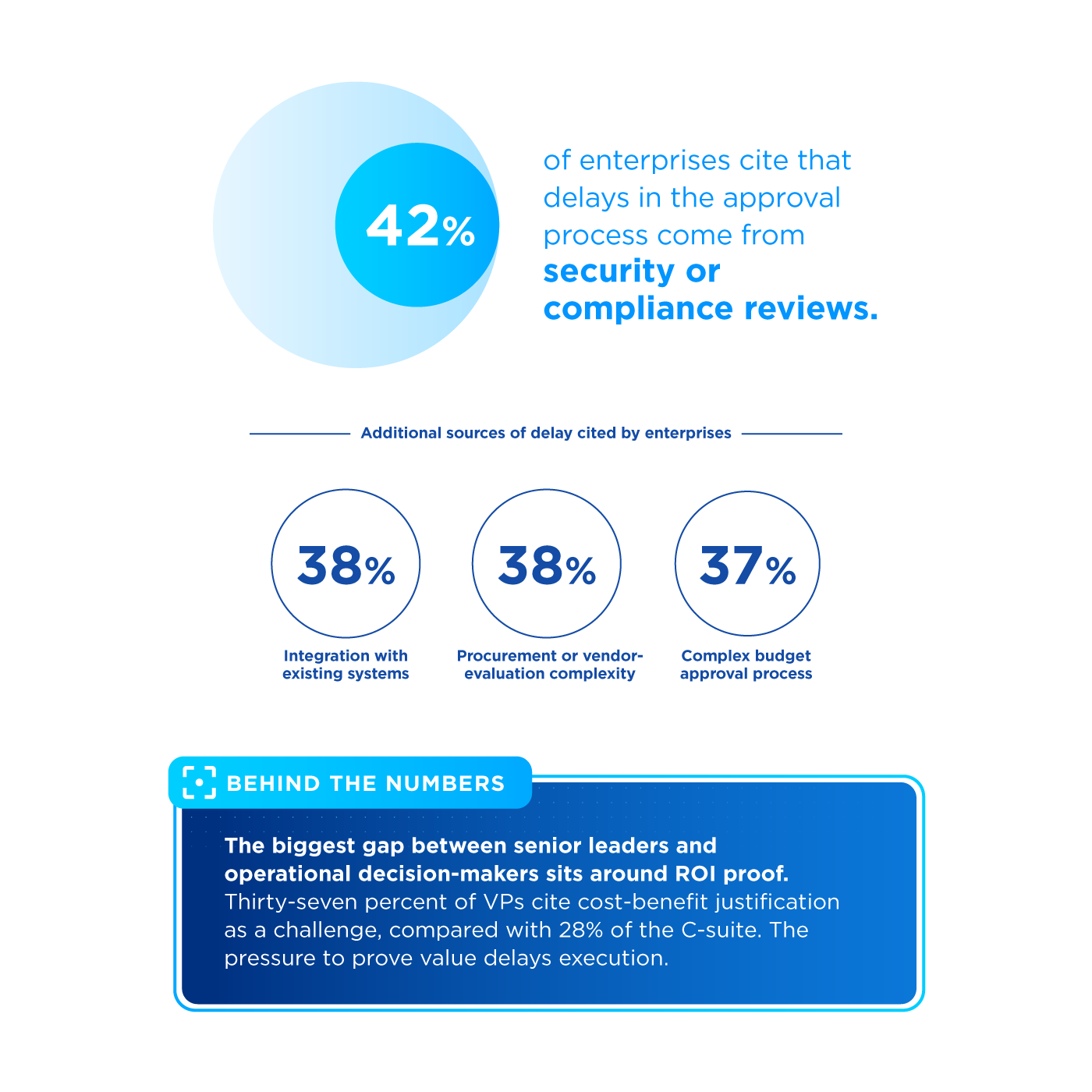
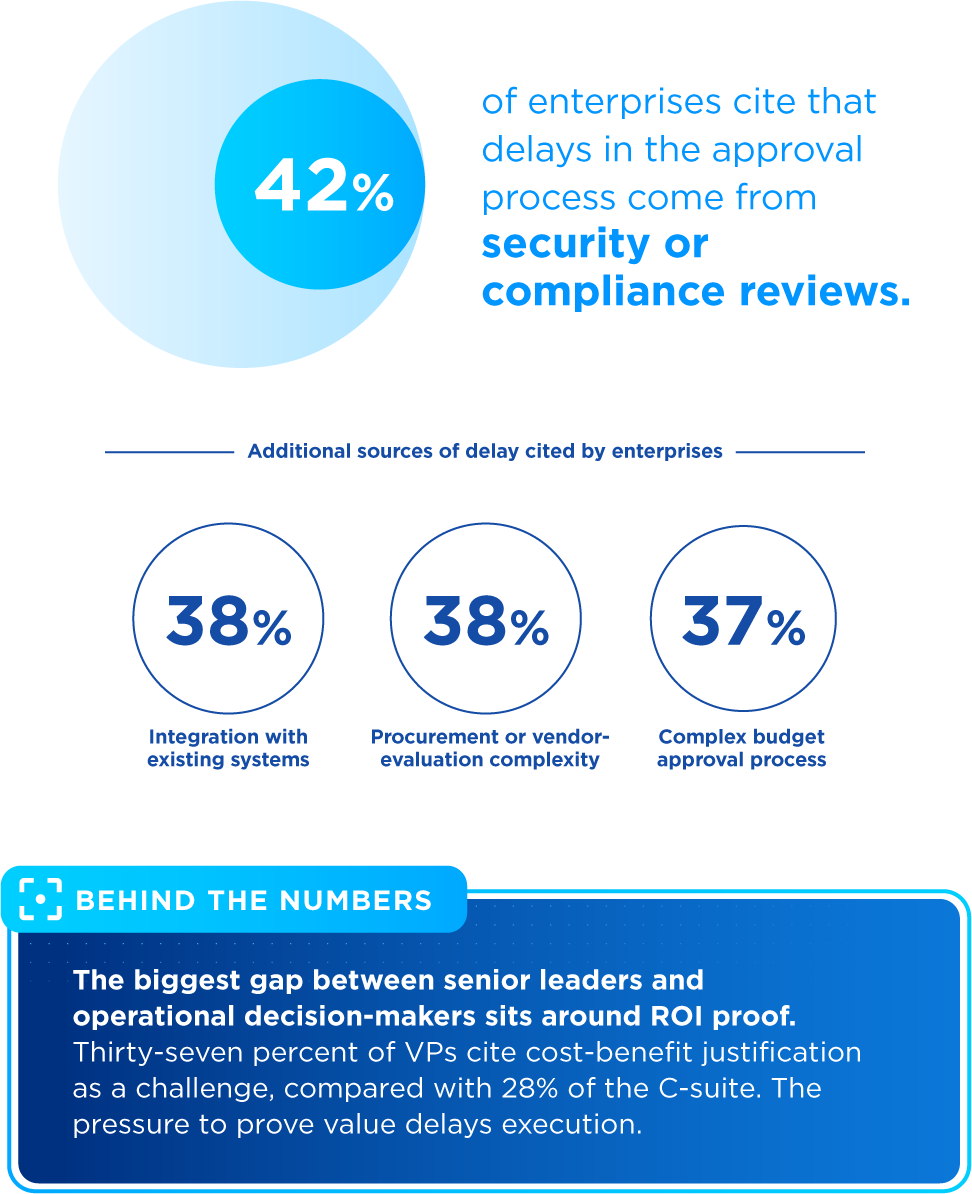
Governance friction gathers in a few predictable places. The biggest delays appear where enterprises need to verify trust, control and operational fit before they can move forward.
Security and compliance sit at the center of that pressure, with 42% of enterprises saying so. Integration and procurement follow close behind. Budget approvals and ROI justification add further drag once more stakeholders enter the process.
These delays do not operate in isolation. They stack on top of one another.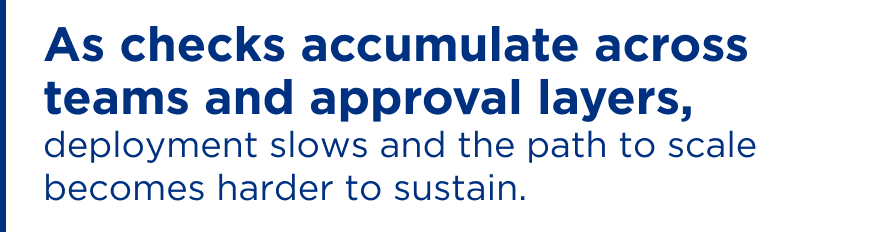
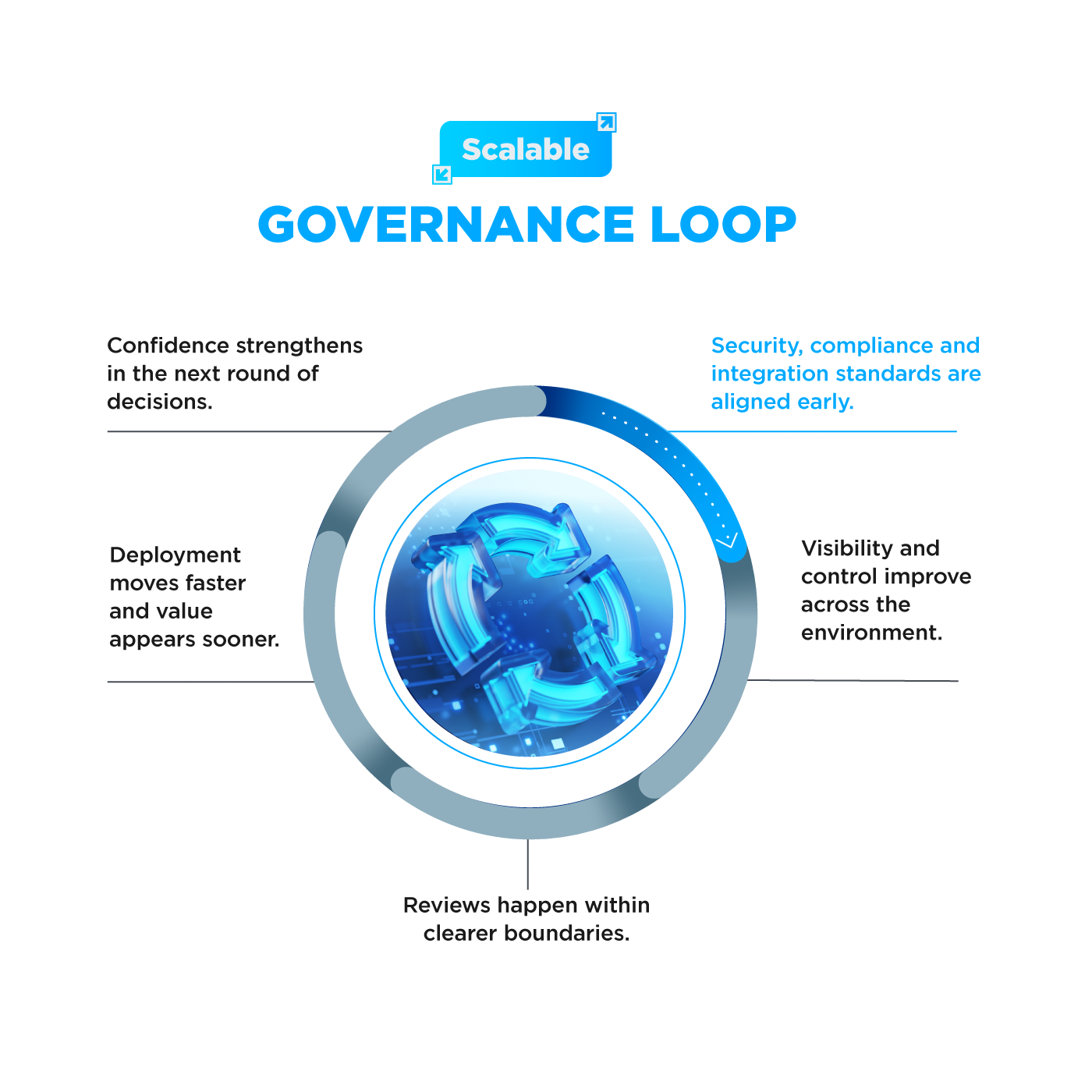
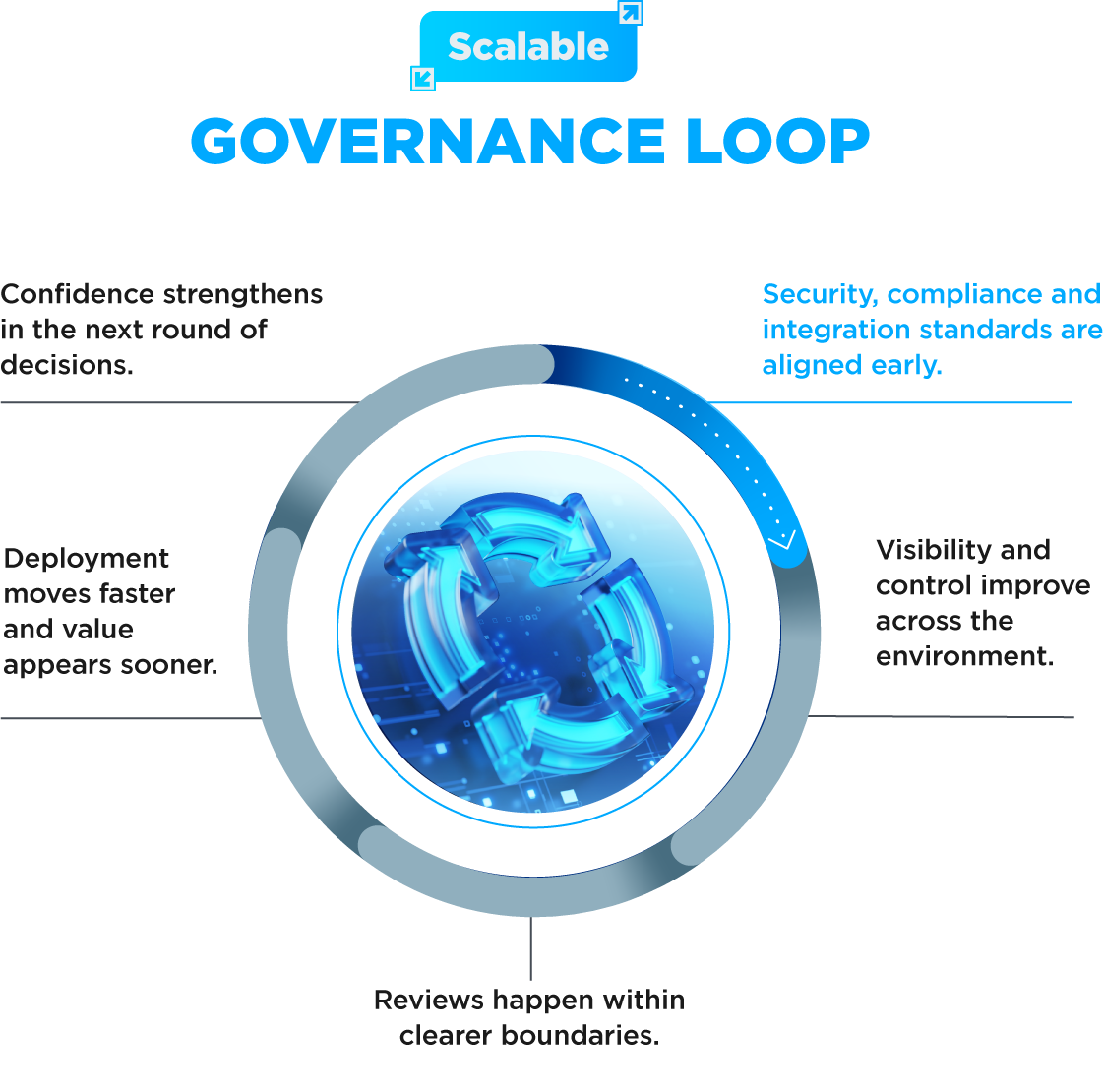

Security, compliance, procurement and finance all apply legitimate scrutiny, but that scrutiny often begins after risks have already surfaced. Reviews stretch across teams, timelines lengthen and decisions become harder to sustain.
When control is established early and applied consistently, that cycle begins to reverse. Standards are aligned before deployment widens, reviews happen within clearer boundaries and stakeholders work from a shared view of risk and readiness.
That is what turns governance from a source of delay into a source of stability and scale.

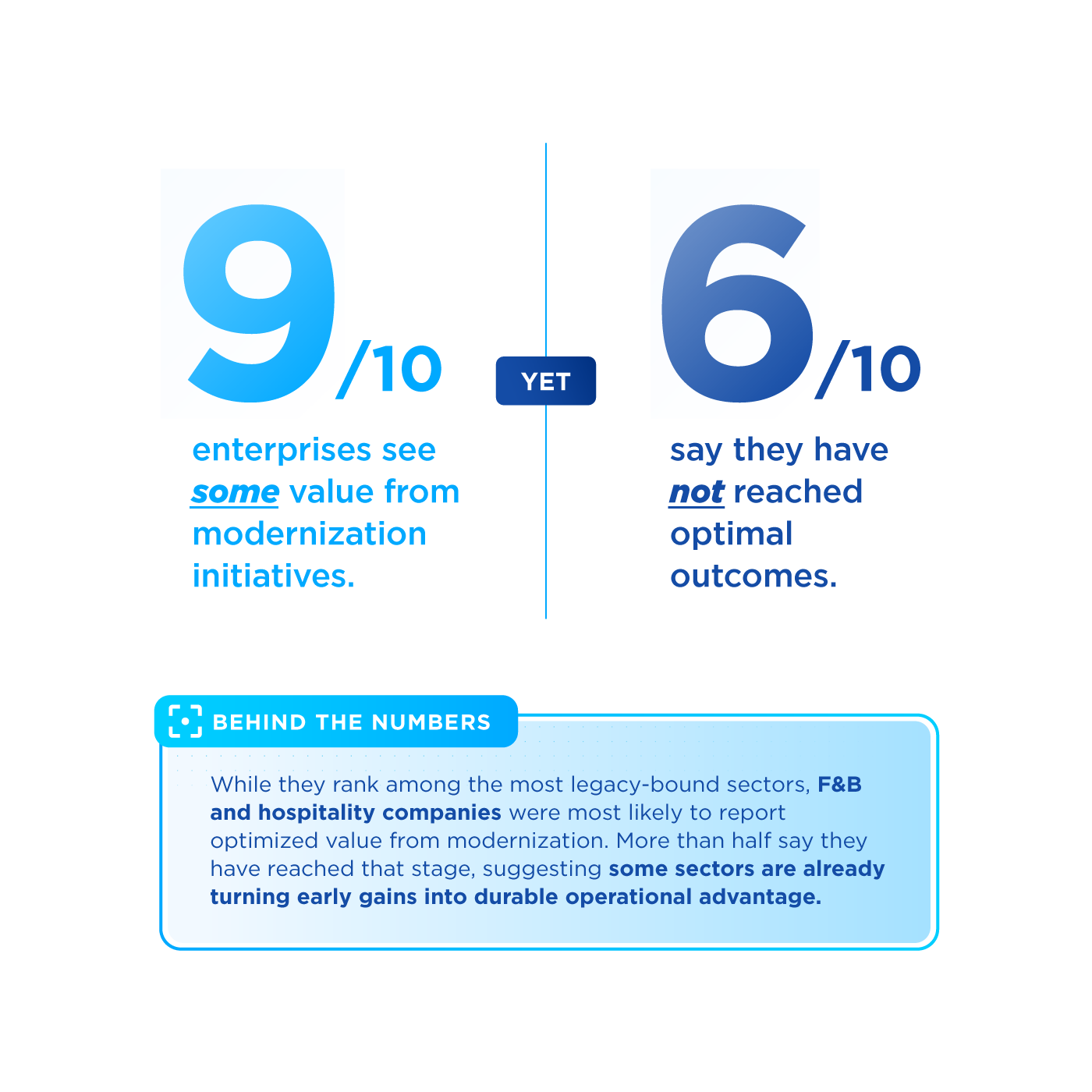
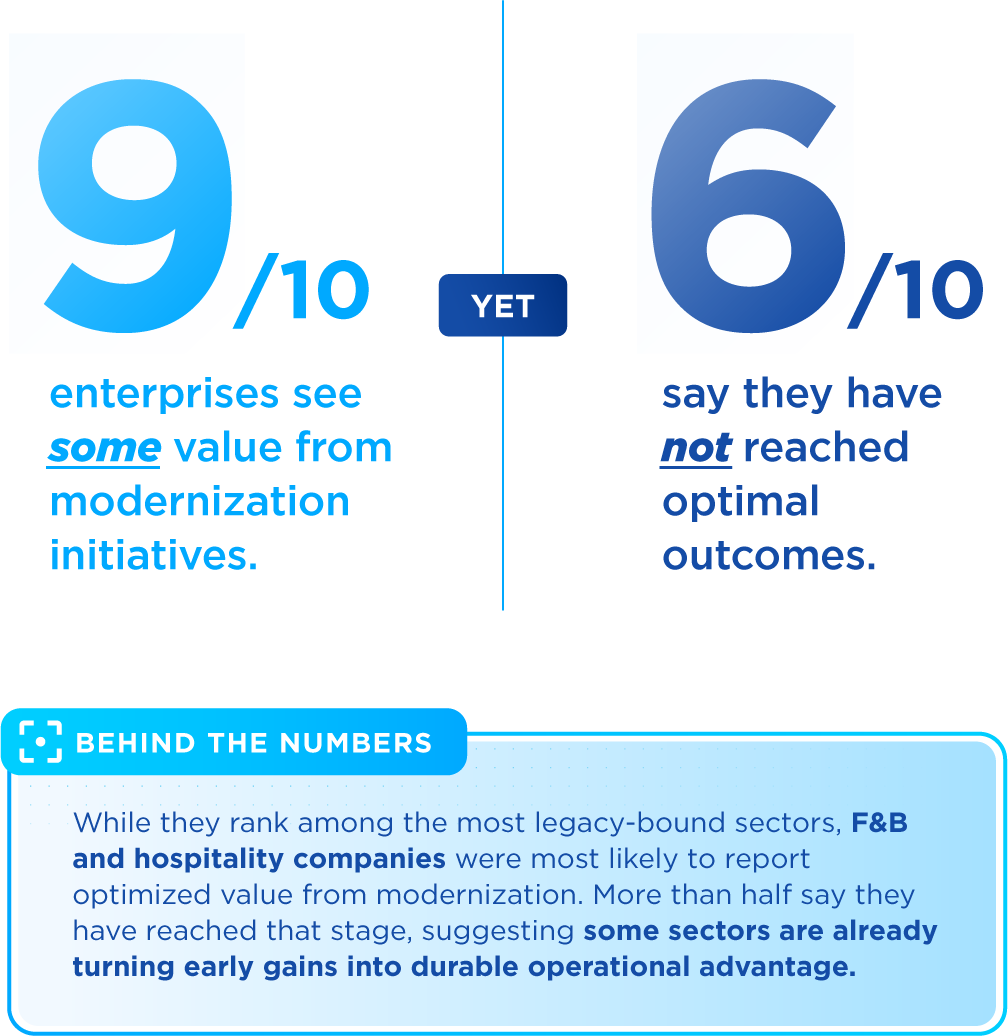
Nine in ten enterprises report seeing some value from modernization initiatives, yet more than six in ten say they have not reached optimal outcomes. Progress is real, but uneven, and enterprise-scale value remains harder to unlock than early gains.
When value stays concentrated in one team or project, expansion tends to move cautiously. When value becomes visible across the operating model, investment gathers momentum and scale becomes easier to justify.
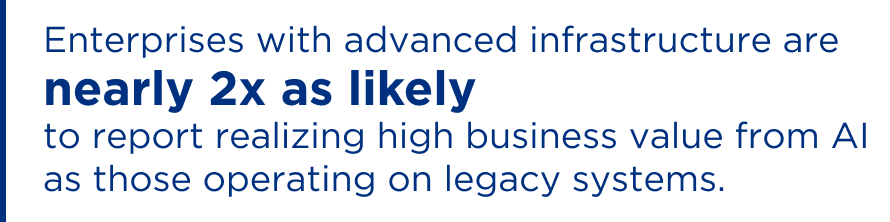
That is why enterprises with advanced infrastructure are almost twice as likely to report realizing high value. How clearly value shows up still shapes how quickly AI expands.

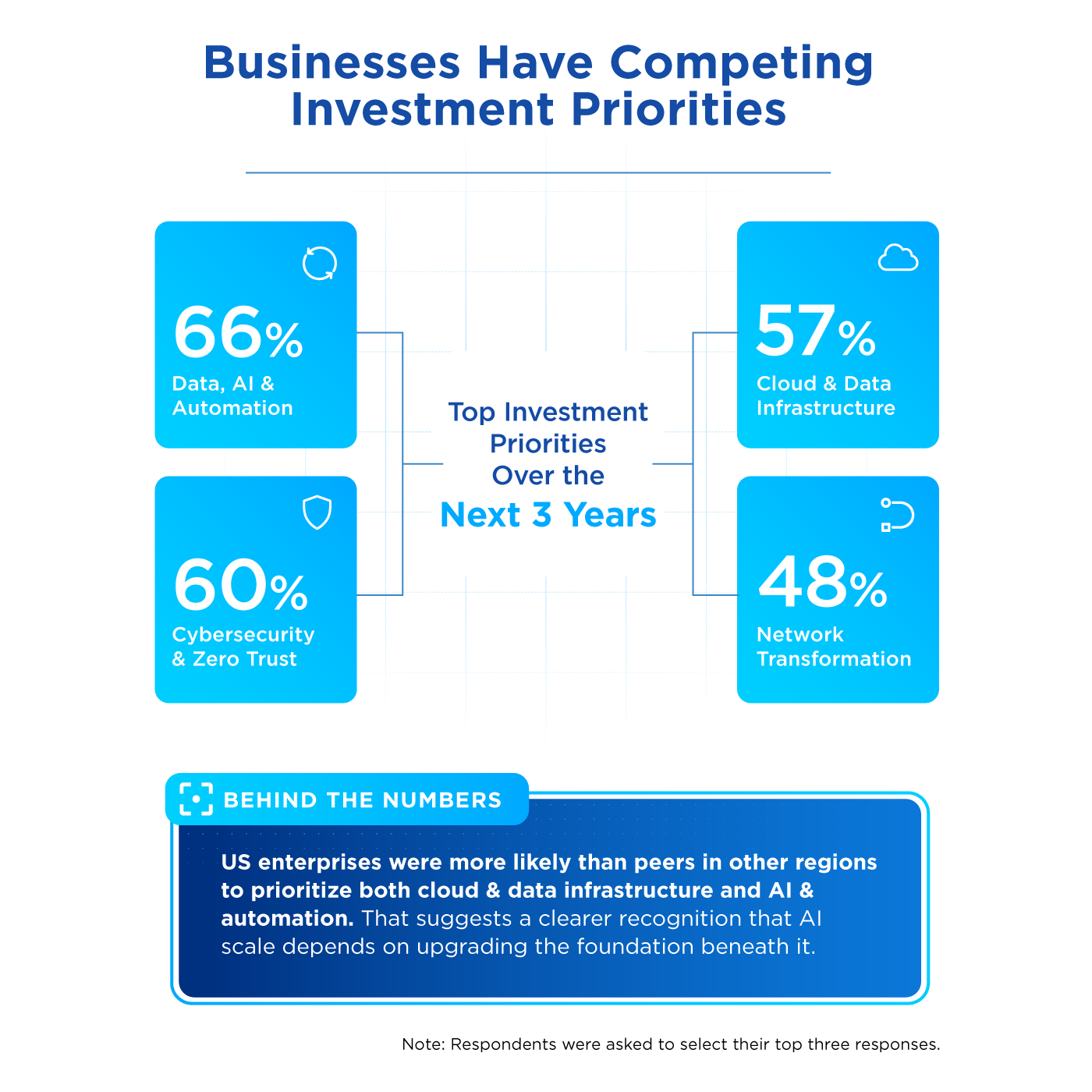
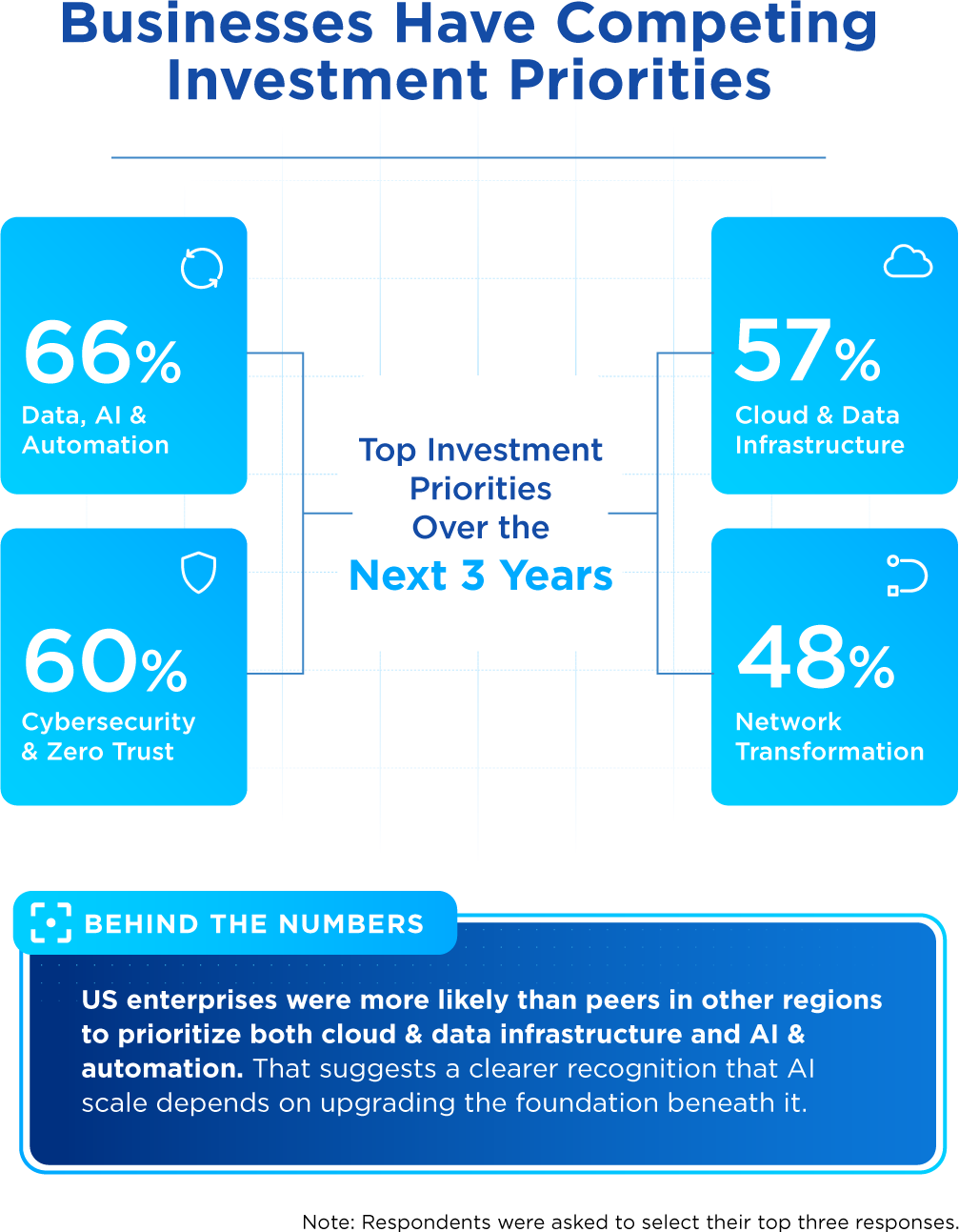
Enterprises are pursuing several transformation priorities at the same time such as AI, cybersecurity, cloud migration and network upgrades. On average, companies have 3.8 investment priorities, all pulling from the same overall budget.
AI performance is tracked inside business units. Infrastructure is measured through uptime, resilience and cost efficiency. Security is measured through risk reduction. While all of these efforts generate results, they are measured separately.
When value is evaluated inside individual programs, the broader impact across the business is harder to see.
Investment decisions reflect what leaders can clearly see.
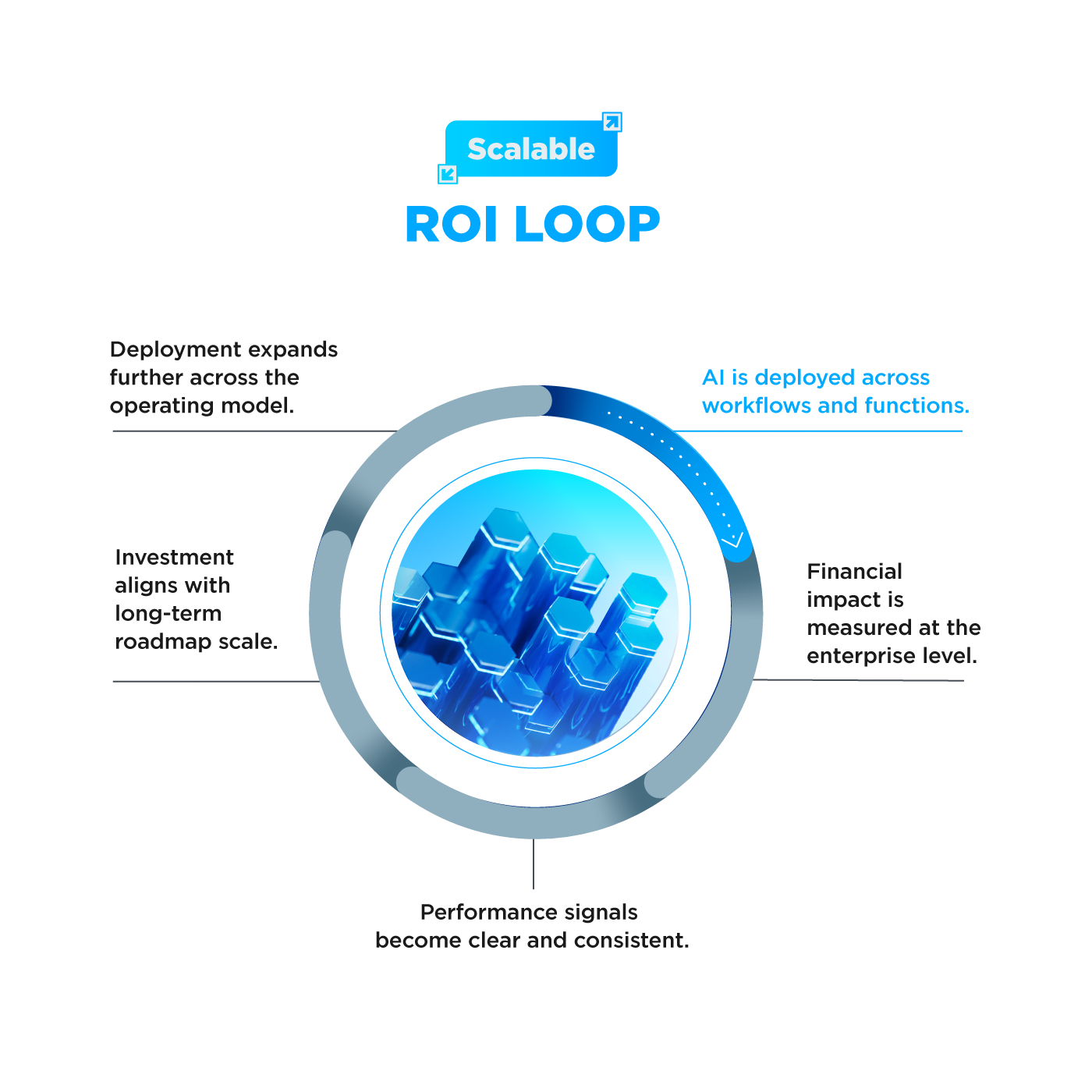
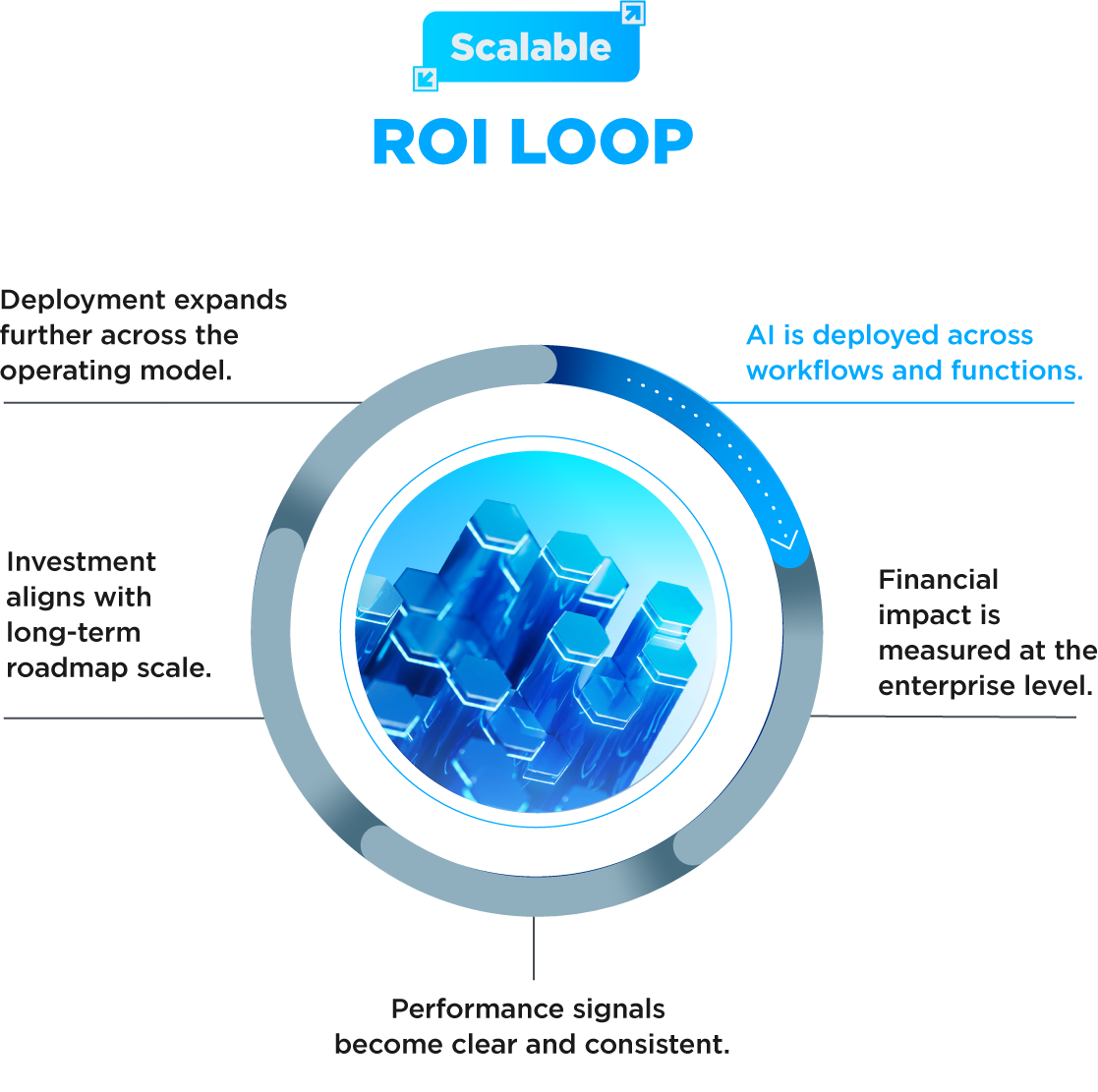
Early AI deployments often deliver tangible improvements. Processes run faster, forecasts become more accurate and customer interactions grow more responsive. But those gains often stay concentrated within a single function or workflow, so
the financial signal remains limited and expansion proceeds cautiously.
When ROI is evaluated across the enterprise, that cycle begins to reverse. Infrastructure and AI are deployed with shared intent, performance is tracked across workflows and leaders can see how value is building across the business.
That is what turns ROI from a contained proof point into a reinforcing signal for scale.