The Evolving Pursuit of Prosperity: Key Findings from the HSBC Quality of Life Report 2023
As cities around the world shake off the social and economic toll of the pandemic, how are financial decision-makers redefining their life goals and future-proofing their quality of life?
The HSBC Quality of Life Report 2023 examines what a holistic quality of life, both now and in the future, means for 2,250 individuals with investable assets of at least USD25K across nine diverse markets: mainland China, Hong Kong, India, Malaysia, Mexico, Singapore, the United Arab Emirates, the United Kingdom and the United States.
This inaugural study sheds light on the evolution of traditional milestones and financial attitudes – with surprising findings along the way.
Across the dimensions of Quality of Life, the pursuit of purpose, investing, relocation, retirement and legacy planning, we take a closer look at what’s constant and what's changed.

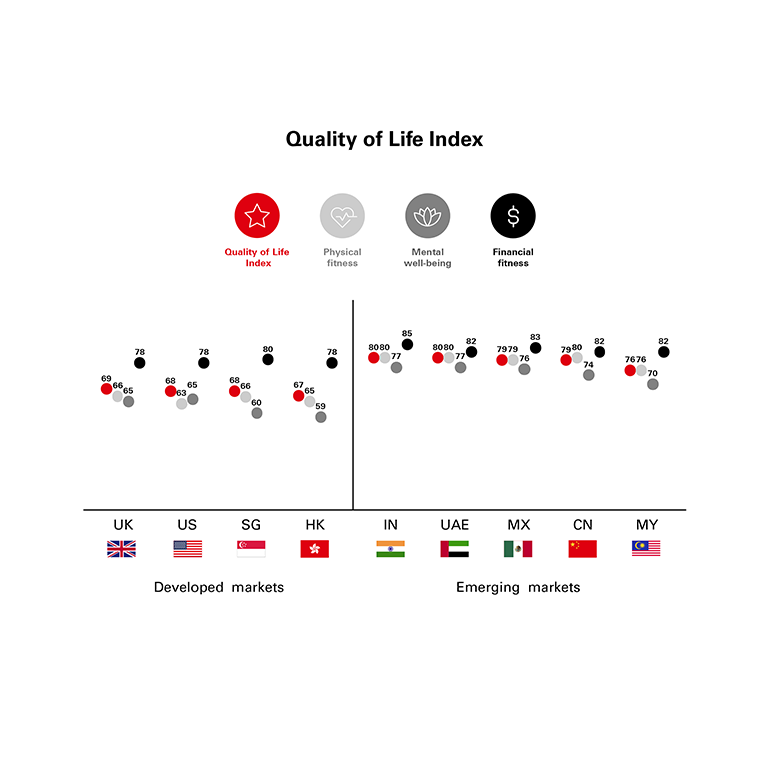
People living in emerging markets boast a better quality of life than those in developed markets.
Across all nine markets, respondents share four key priorities when defining Quality of Life: physical health, income stability, spending time with friends and family, and mental health.
While respondents were united in their pursuit of well-being, those in emerging markets boast a higher quality of life than those in developed markets, our research shows.
On average, respondents in emerging markets outperformed their developed market peers by 10 points on our Quality of Life Index.
They scored higher on all three dimensions of well-being: physical, mental and financial.
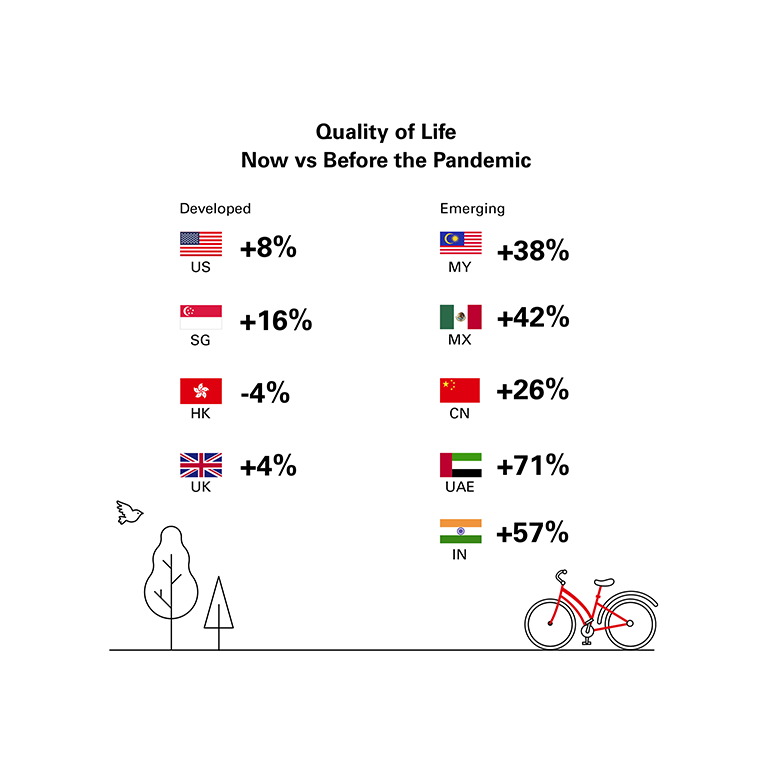
People living in emerging markets are more likely to say their quality of life has improved post-pandemic than those in developed markets.
The pandemic disrupted our lives like no other event in recent memory. Its socioeconomic consequences exacerbated health risks and strained families, communities and nations.
It also prompted a global rethink about what matters most. People thought harder about their careers. People became close to their families. Many reprioritized their lives.
Our research shows that people living in emerging markets were much more likely to say their quality of life has improved since the pandemic.
That was true for an average of 47% of respondents in emerging markets, compared with just 6% in developed markets.
Rising costs of living are the number one barrier to achieving life goals.
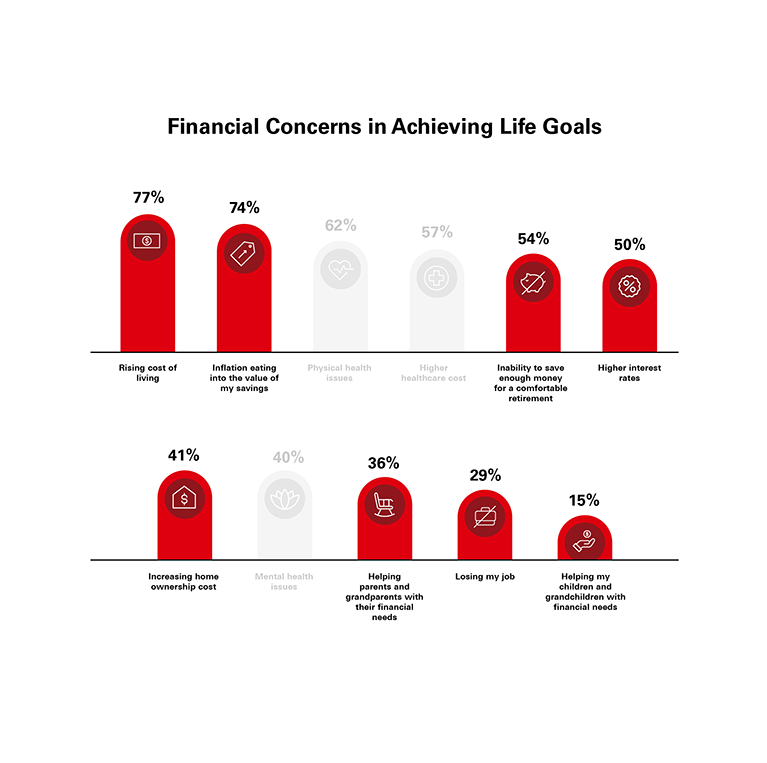
Our study reveals that across all markets, financial concerns are perceived as key barriers to achieving life goals.
Rising costs of living were the number one concern – a sentiment shared by 77% of respondents.
In Hong Kong and Singapore, this concern was particularly pronounced, with 84% of respondents in each of the two markets assigning it a top three ranking – perhaps unsurprising for two cities that took first and second place respectively in Mercer’s 2023 Cost of Living City Ranking.
Inflation followed closely as the second biggest concern – specifically, the erosion of the value of savings – at 74%. Respondents in the UK were the most likely to echo this, with 77% citing it as a top three concern.
This corresponds to the UK’s year-on-year Consumer Price Index increase of 8.7% in April 30, 2023, around the time of the study – the greatest increase among the nine markets surveyed.
Declining physical health and rising healthcare costs are other top barriers to achieving life goals.
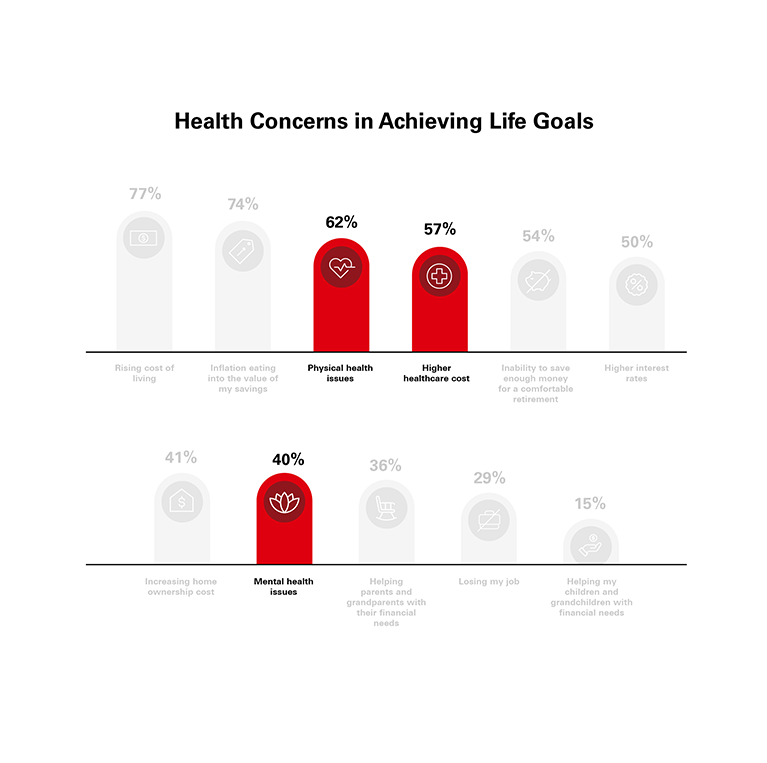
Alongside financial concerns, health concerns emerged as another key theme.
After rising costs of living and inflation, declining physical health took third place as a top concern among 62% of respondents, further pointing to the indivisibility of health and wealth.
Higher healthcare costs were the next most-cited concern, shared by 57% of respondents. In Malaysia and India, this was especially salient, reported among 69% and 62% of respondents respectively.
In these markets, households’ out-of-pocket expenditure as a percentage of total current health expenditure is high, and hovers above 35% and 50% respectively, according to the World Bank’s most recent estimate in 2020. The pandemic is likely to have thrown healthcare spending into even sharper focus.
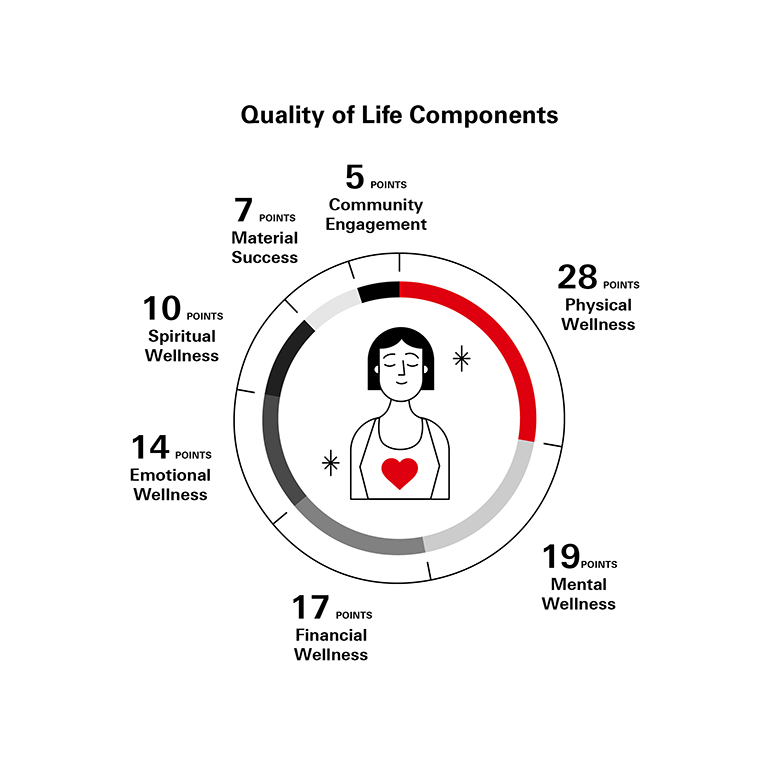
Mental wellness is an integral Quality of Life component – and strongly correlated with physical fitness.
Along with physical and financial wellness, respondents across all markets believe a good quality of life is driven by mental well-being.
These common pursuits reinforce the inseparability of mental, financial and physical well-being, with the strongest correlation observed between respondents’ physical fitness and mental wellness.
This is a well-established dependency: a recent study found that physical activity is more beneficial for conditions such as anxiety and depression than standard psychotherapy or medications (British Journal of Sports Medicine).
The findings echo the results from HSBC Life’s +Factor Study, validating that financial fitness, mental well-being and physical fitness share strong correlations.
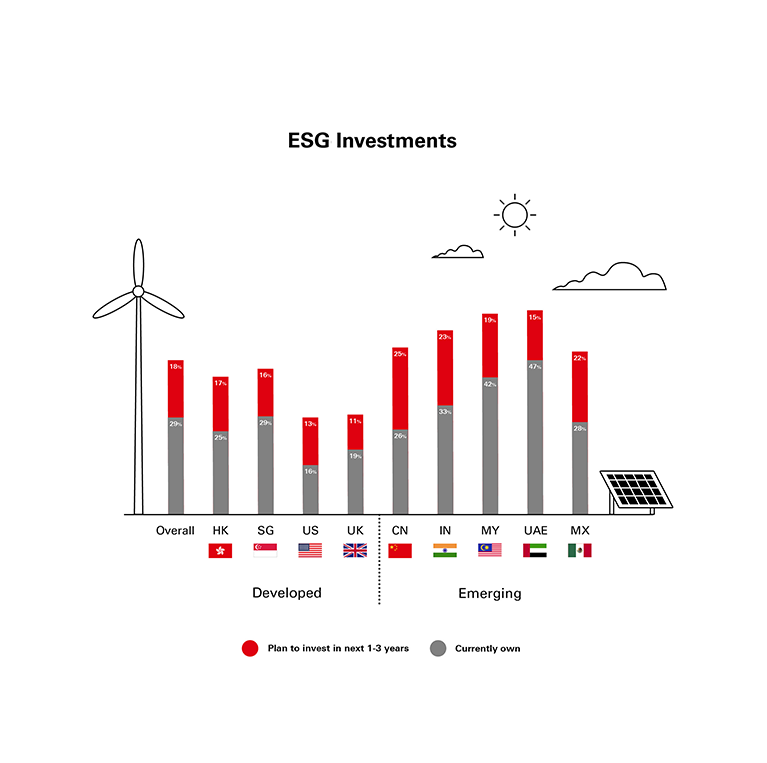
The pursuit of purpose is driving investment decisions – and associated with better mental wellness.
The pursuit of purpose is influencing investment decisions, even against a turbulent economic backdrop.
Across all nine markets, at least one in three respondents either plans to invest in ESG products in the next 1-3 years, or already owns them. Bloomberg Intelligence estimates that ESG assets will exceed USD50 trillion by 2025, representing more than a third of projected total assets under management worldwide.
Not only is the pursuit of purpose influencing investment decisions – it’s also associated with better mental wellness.
ESG investors scored higher on every indicator of mental well-being in our Quality of Life index. They reported feeling more relaxed and cheerful, feeling closer to other people, having more energy to spare, and being more interested in other people and new things, leading their non-ESG-investor peers by 10-13% in these areas.
People living in emerging markets are setting more ambitious financial goals than those in developed markets.
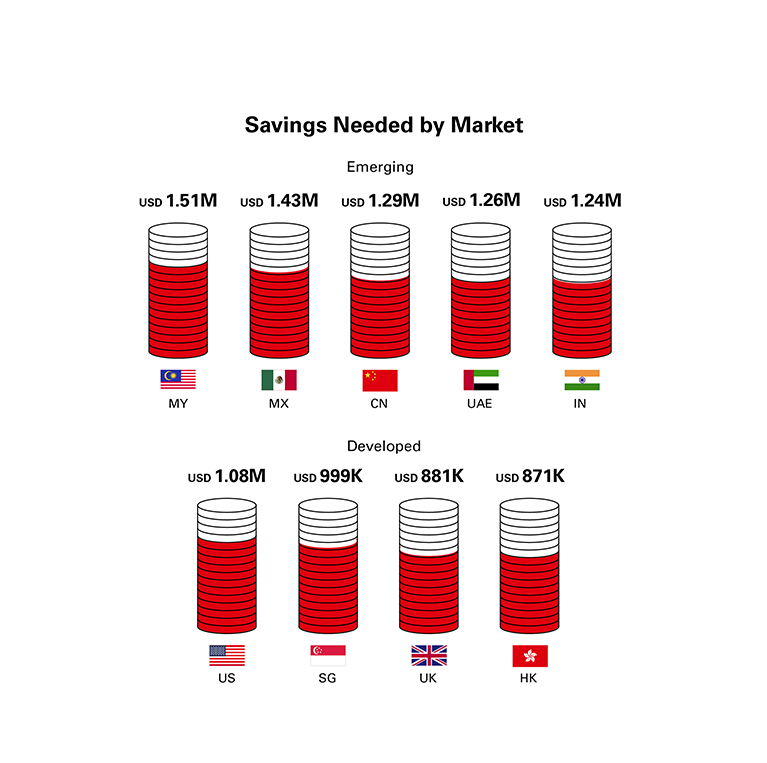
People living in emerging markets are more aggressive in their financial goals than those in developing markets, our study suggests.
To achieve a good quality of life, respondents in emerging markets say they need an average of USD1.35 million.
This is 40% more than the average savings needed by those in developed markets (USD960K), and suggests greater financial ambition in emerging markets, where levels of entrepreneurship are markedly higher (27% and 15% of respondents from emerging markets report income from personal businesses and self-employment, compared to 16% and 6% in developed markets).
These findings echo the observation that the level of entrepreneurial activity is higher in emerging markets than developed economies, driven by high levels of necessity entry and less daunting entry barriers, especially in the informal sector (The Oxford Handbook of Management in Emerging Markets).
People are investing in a greater variety of financial products, including alternative investments.
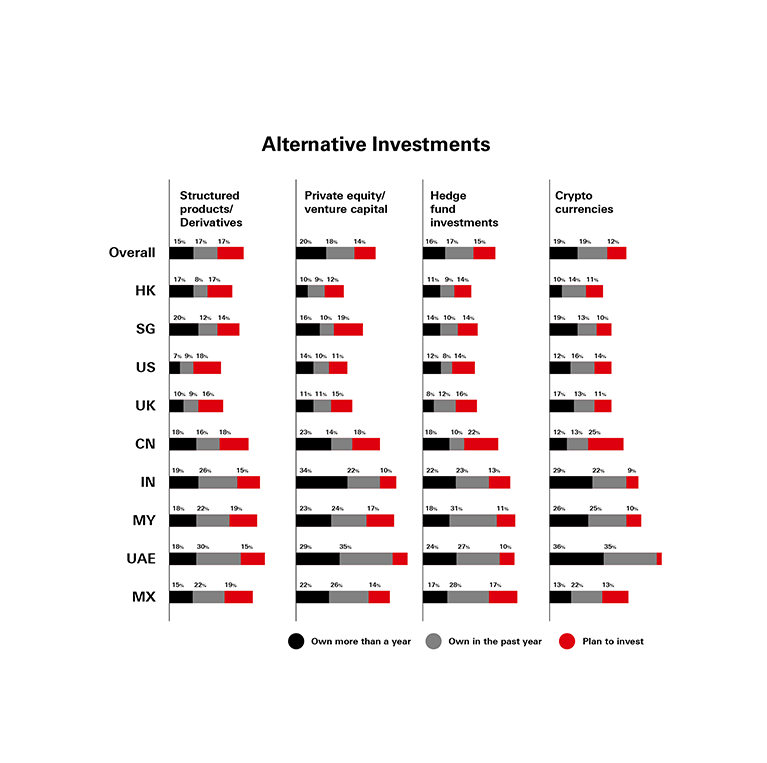
Our study revealed greater openness to newer forms of income generation, with respondents across all nine markets showing interest in or already investing in alternative investments as part of their overall wealth portfolio, beyond traditional investment mainstays like ETFs, forex, real estate, and bullion.
Structured products/derivates, private equity/venture capital, hedge funds, and cryptocurrencies are the top four most popular alternative investments among respondents, reflecting a combination of conventional and newer alternatives.
The UAE’s investment appetite leads the nine markets – perhaps unsurprising for a market that attracted the highest net inflow of millionaires in 2022, according to Henley & Partners.
More than 1 in 2 people feel financially unprepared for retirement.
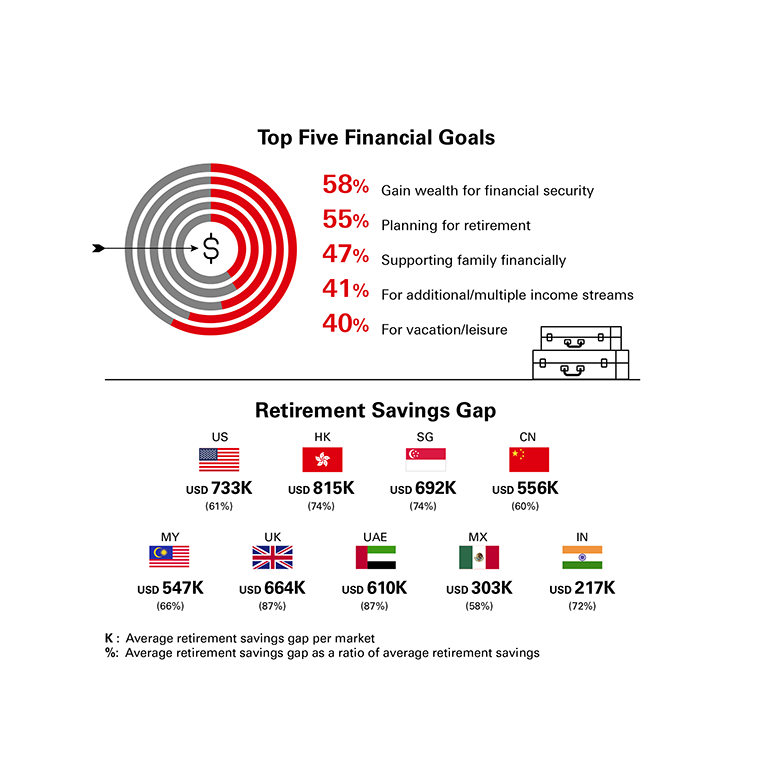
Across the nine markets, respondents’ top five financial goals are varied, spanning material considerations like accumulating wealth for financial security, and qualitative experiences like leisure.
Planning for retirement took second place as a top financial goal, in tandem with the lack of retirement preparedness reported across all markets.
Among the 57% of respondents who feel unprepared to meet their retirement goals, our study found an average gap of 71% between retirement savings needed to lead a comfortable retirement lifestyle and actual retirement savings.
The large gap could be exacerbated by significant sandwich generation populations across the nine markets. In the US, for example, an estimated one in five middle-aged adults is concurrently caring for growing children and ageing parents (Pew Research). In mainland China, one in four families faces this double pressure (Nikkei).
People are rewriting the rules of retirement – and hoping to retire earlier.
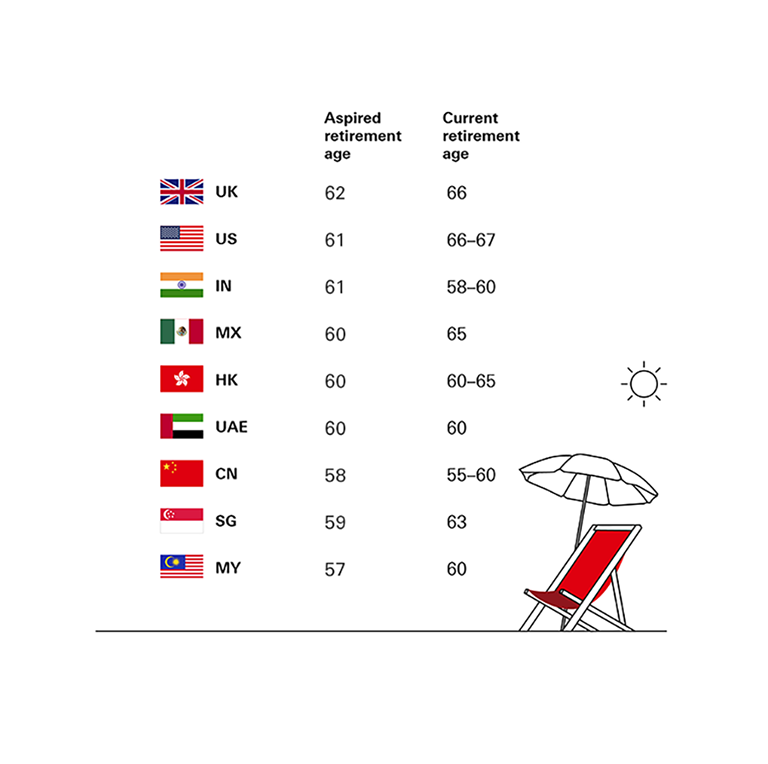
Respondents across nearly all markets aspire to retire earlier than the formal retirement age.
Our study shows that 60 years is the average aspirational retirement age.
This is several years earlier than the official retirement age in most markets, with the exception of mainland China and Malaysia, which have some of the world’s youngest retirement ages.
More than 1 in 2 people do not rule out working after retirement – challenging its very definition.
Retirement no longer spells the end of work.
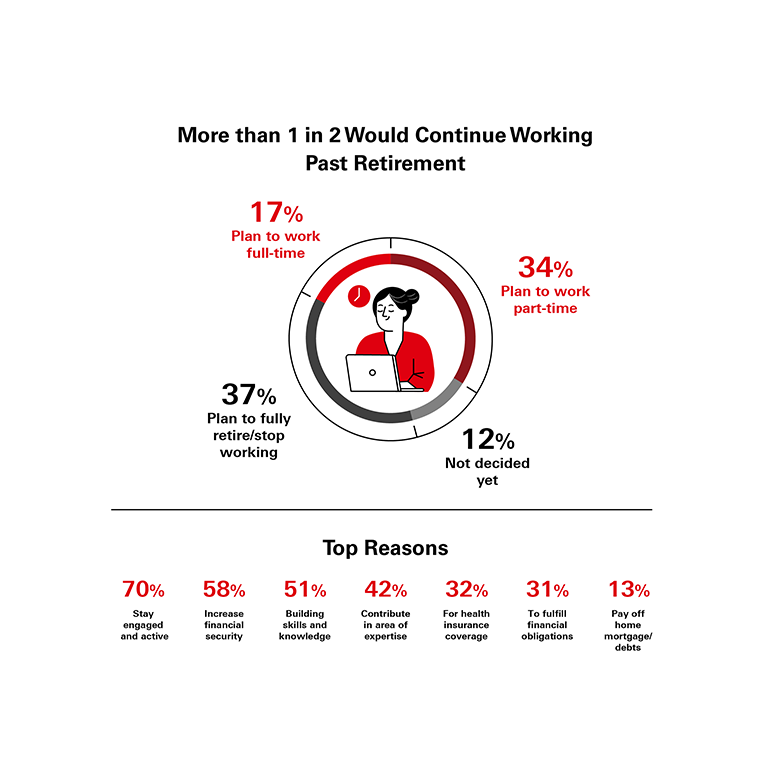
In fact, it could just be the beginning of a new stage of informal work, with our study finding that 51% of respondents do not exclude the possibility of taking on some form of work post-retirement.
The increasingly open-ended nature of retirement points to the blurring of work, leisure and purpose, especially as global life expectancy rises.
Among those who want to continue working, 85% are driven by financial reasons, such as covering the costs of health insurance, paying off mortgages, and improving financial security.
Meanwhile, 7 in 10 are driven by wanting to stay active and engaged. Other top non-financial motivations include building skills and knowledge, and contributing expertise – again reflecting the pursuit of purpose as a life goal among respondents.
Sources of retirement income are wide-ranging, led by personal savings and investments.
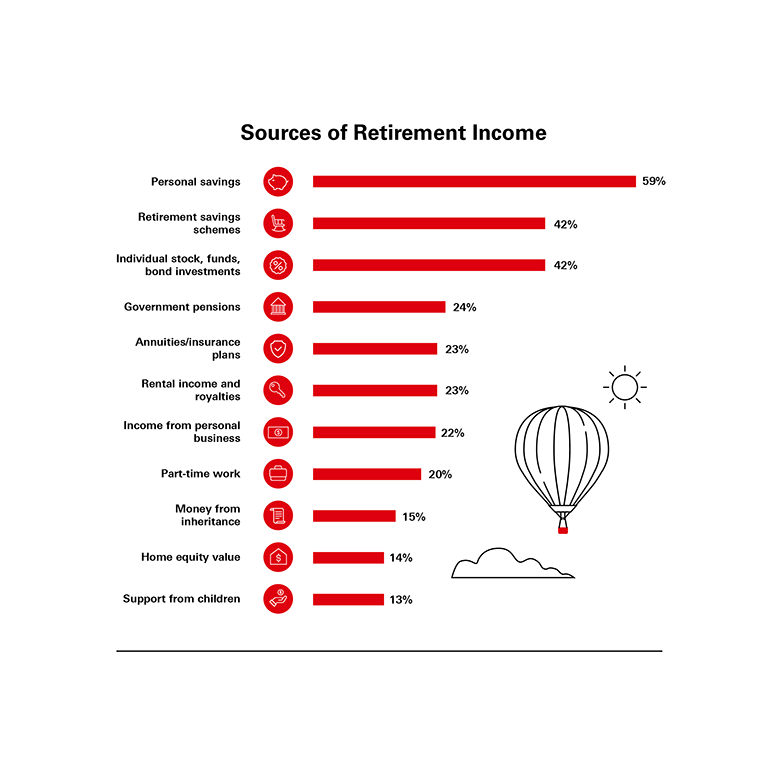
Across all markets, personal savings, retirement schemes and investments are the main sources of retirement income.
Meanwhile, secondary sources of retirement income, including rental and business income, as well as part-time work, are gaining ground.
The desire to maintain a strong degree of financial self-sufficiency could be contributing to an increasingly fluid definition of retirement – and a growing preference for working beyond the official age.
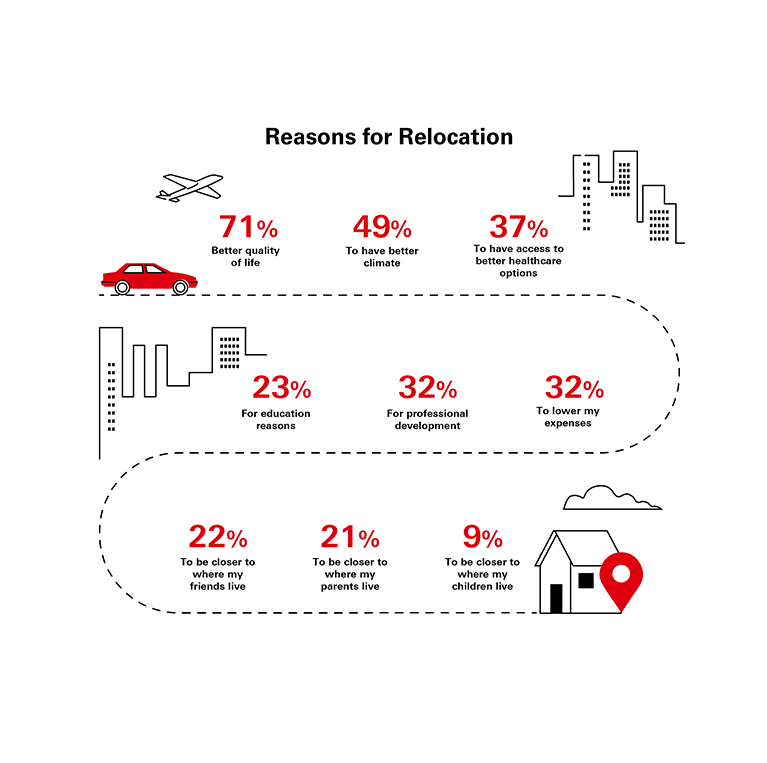
More than 1 in 2 people are seeking greener pastures abroad, but relocation may be unattainable for most.
Half of all respondents are thinking about relocation. One quarter already plan to relocate at some point to achieve a better quality of life, while another quarter are contemplating it.
This is significantly higher than the estimate of 281 million international migrants in 2020, which suggests only 3.6%, or around 1 in 30, of the global population have relocated (United Nations).
Practical barriers to relocation include language, culture, finances, employment, housing and migration policy – suggesting a gulf between intention and implementation when it comes to relocation.
Creating lasting social impact is emerging as a new focus in legacy-building.
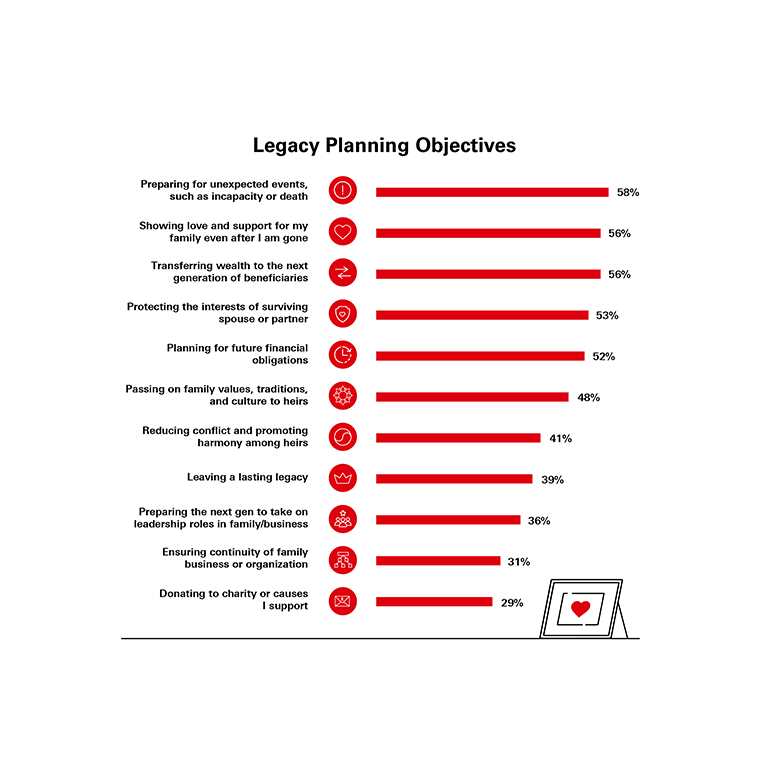
While legacy-building is historically rooted in the intergenerational transfer of material wealth, creating social impact for future generations and causes is emerging as a new focus.
Nearly 1 in 3 respondents cited charitable donations as the key objective of their estate/legacy planning, led by Millennials. Boomers are more likely to donate than Gen X.
While there is a correlation between how much investable assets someone owns and how likely they are to donate, the difference between wealth tiers isn’t large (it’s underwhelming). The share of those willing to donate was only six percentage points higher at the USD1M+ wealth tier than it was for people with less than half the investable assets.
Across markets, the UK prioritizes this objective the most – a finding that mirrors the rise of legacy giving by 43% in the UK over the past decade (Remember a Charity).
Discover in Detail
For more insights on the evolving pursuit of prosperity, discover the HSBC Quality of Life Report 2023 in full.