






For decades, artificial general intelligence (AGI) — characterised by human-level reasoning, learning, and adaptation — was just a theory. Now, breakthroughs such as reasoning models, agentic AI, and multimodal systems are turning that future into a fast-approaching reality.
As machines increase their versatility in task execution and computing costs continue to fall, AGI seems to be stepping out of the future and into the present. Sustaining this momentum requires a tighter return on investment loop with measurable results so companies remain confident pursuing large-scale infrastructure investments. The ripple effects of these investments could reshape the wider tech stack, unlock generational investment opportunities across both AI infrastructure and applications, and set the stage for far-reaching technological disruptions.1
The Trillion-Dollar Infrastructure Race Setting the Stage for AGI
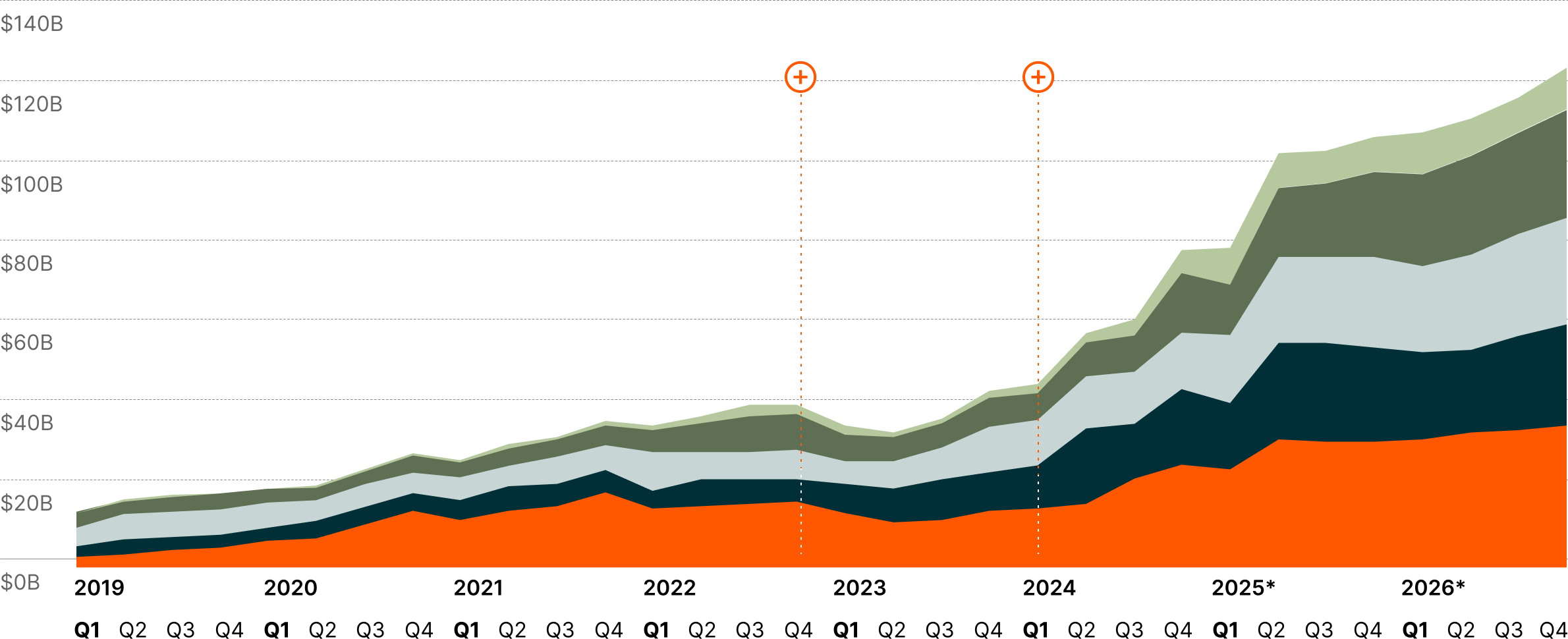
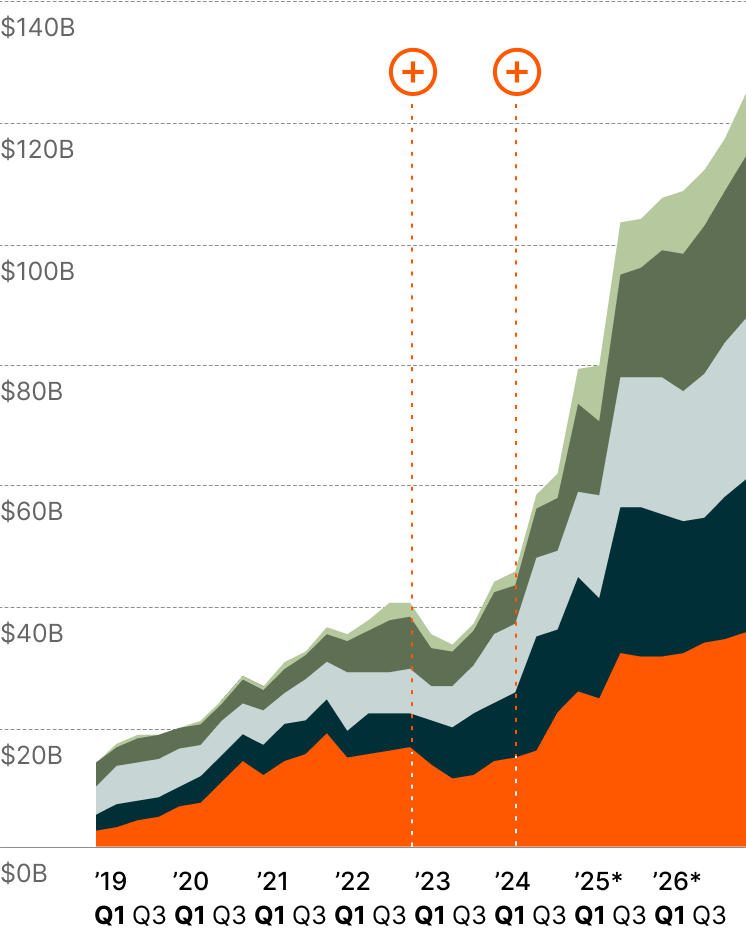
Three years after ChatGPT's groundbreaking debut, the AI transformation remains in its early stages and still requires trillions in investment. Hyperscalers expect to spend nearly half a trillion dollars on AI infrastructure in 2025 alone to accelerate their push into next-gen capabilities.2
Major initiatives reflect this momentum, such as the Stargate Project, which targets $500 billion in spending over the next four years.3 The scale of capital deployment could signal a shift in how tech giants are approaching competitive differentiation in the AI era, and underscores the growing importance of advanced infrastructure to support next-gen models and training.
Top 5 Hyperscaler CapEx Spend4
There is no guarantee that any trends observed in this material will continue. Any views / opinions are based on current market conditions and are subject to change.
Is the AI Data Centre Buildout Going Global?
The United States leads the global AI infrastructure buildout, accounting for 54% of total hyperscale capacity.5 But this technological transformation extends far beyond U.S. borders, as other nations increasingly recognise AI as critical to their economic and strategic competitiveness.
China, Europe, and other key regions are investing heavily to reduce reliance on foreign AI infrastructure, and to establish innovation hubs that support industrial automation, defence capabilities, and other strategic initiatives.6
Global Data Centre Power Demand7
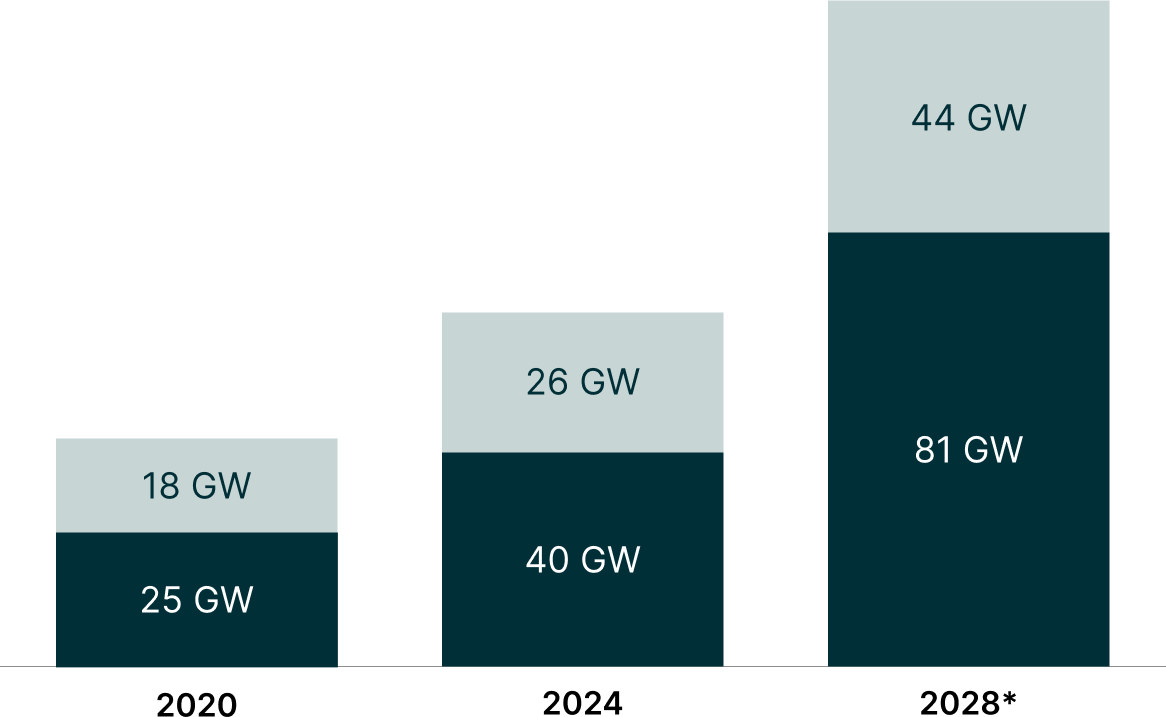
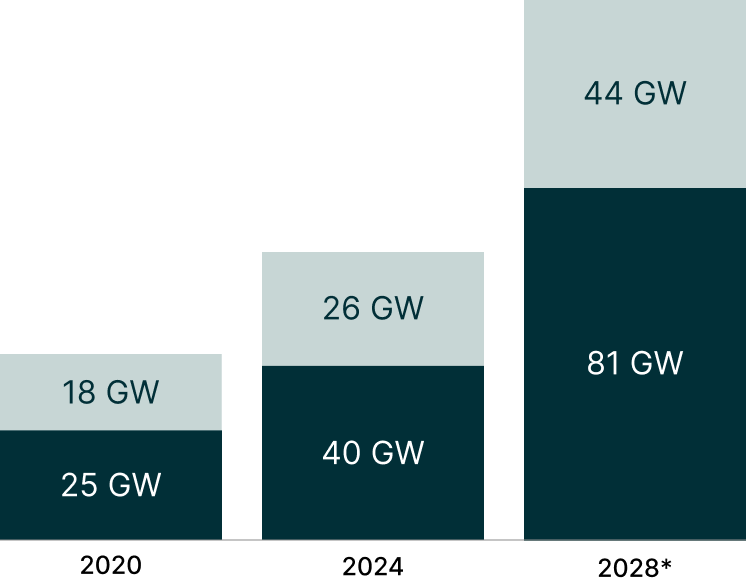






GW = Gigawatts
There is no guarantee that any trends observed in this material will continue. Any views / opinions are based on current market conditions and are subject to change.
The Future Is in the AI Application Layer
As the global AI infrastructure foundation takes shape, the question shifts to who captures the ultimate value. History shows a clear pattern: Hardware companies lead initial investment cycles, while software companies tend to capture most of the long-term value and profits.8
The most sustainable competitive advantages derive from the interface layer, where users directly interact with groundbreaking technology.9 Today’s massive AI infrastructure investments lay the foundation for the software applications that could deliver on AI’s transformative potential.