






As tensions around the world continue to escalate, nations seek to modernise their capabilities and strengthen their defence tech arsenals. Ongoing conflicts highlight the power of advanced defence systems, prompting the global defence industry to embrace rapid innovation. Cutting-edge technology increasingly shapes modern warfare, making one thing clear: The most advanced systems often determine strategic outcomes.
A sustained global defence spending boom now targets technology-driven solutions, accelerating adoption of AI, autonomous drones, and sophisticated cybersecurity across military organisations worldwide. This expansion aims to increase technological superiority, as strategic advantage shifts toward innovations that demonstrably serve as deterrents in current conflicts.
Global Conflicts Appear to Drive Military Modernisation
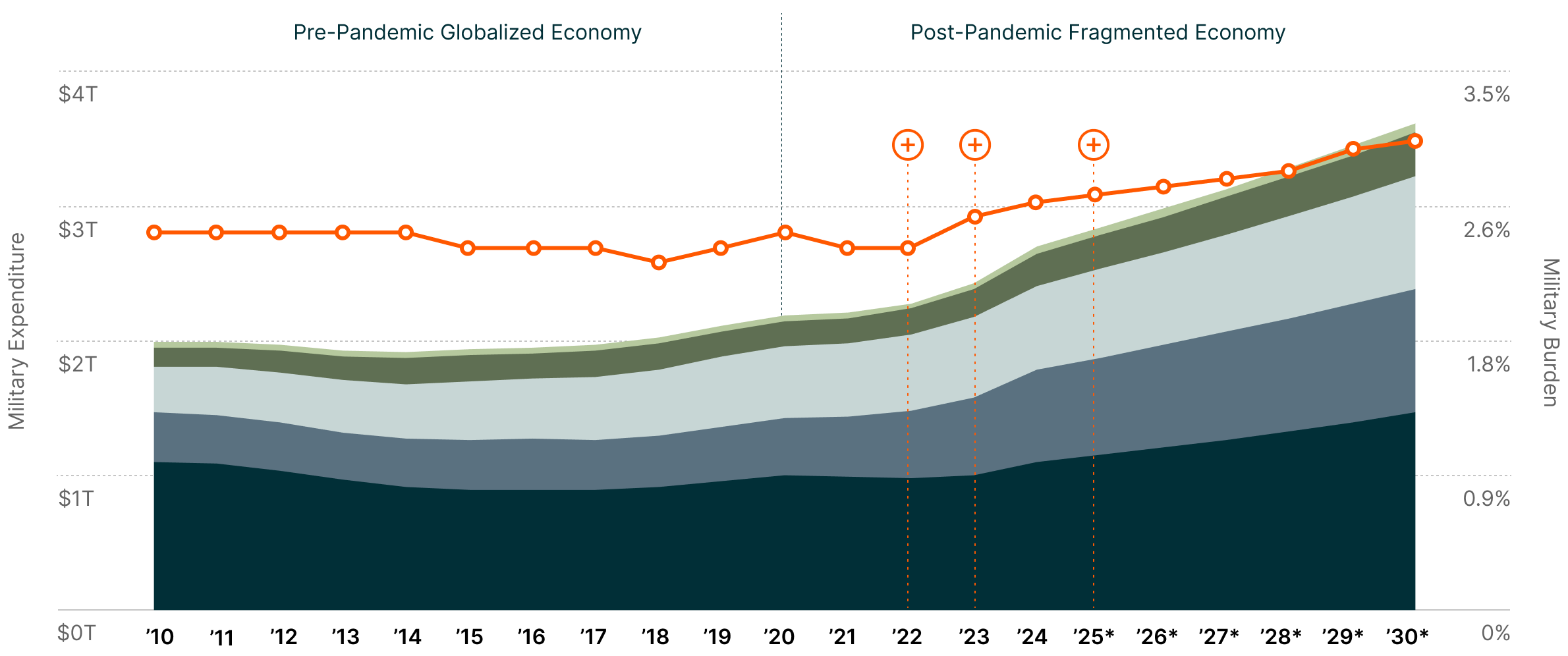
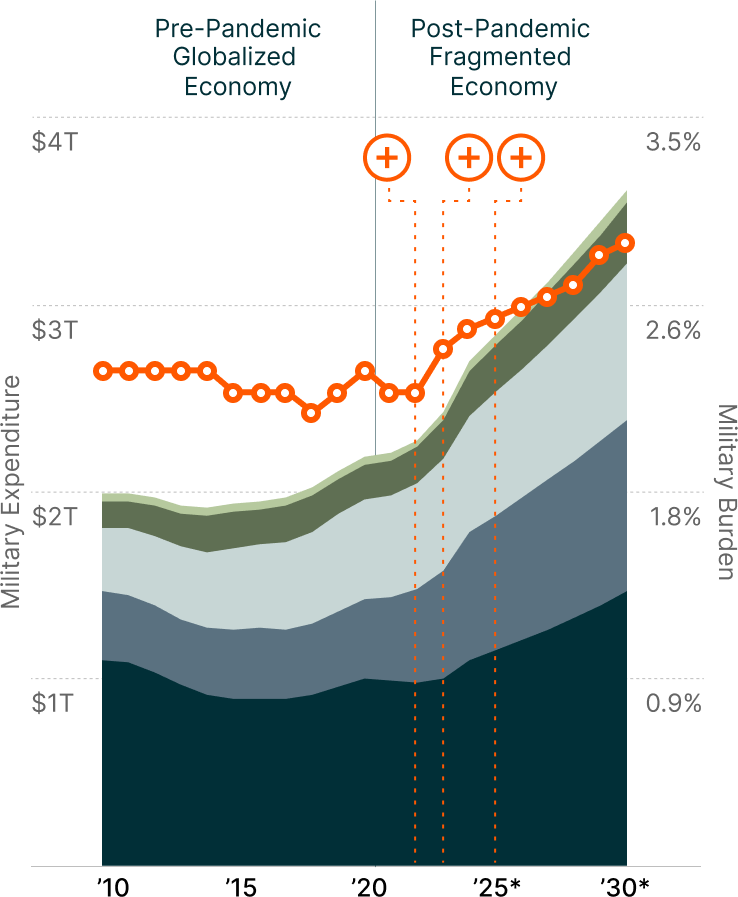
The 61 active conflicts around the world in 2024 — the highest number since World War II — have encouraged the global defence industry to continue shedding its historic resistance to commercial technology.1 Against this backdrop, global defence spending hit a record $2.7 trillion in 2024 and is projected to reach $3.6 trillion by 2030.2
This growth trajectory reflects a fundamental reassessment of security priorities amid rising geopolitical tensions. Even traditionally neutral nations are increasing their defence budgets. The spending surge extends beyond traditional military powers, with countries across Europe, Asia, and other regions modernising their armed forces in response to evolving threats.3
Military Expenditure by Region & Global Military Burden4
There is no guarantee that any trends observed in this material will continue. Any views / opinions are based on current market conditions and are subject to change.
Note: Military burden refers to the proportion of GDP allocated to military expenditures.
NATO Spending Targets New defence Tech
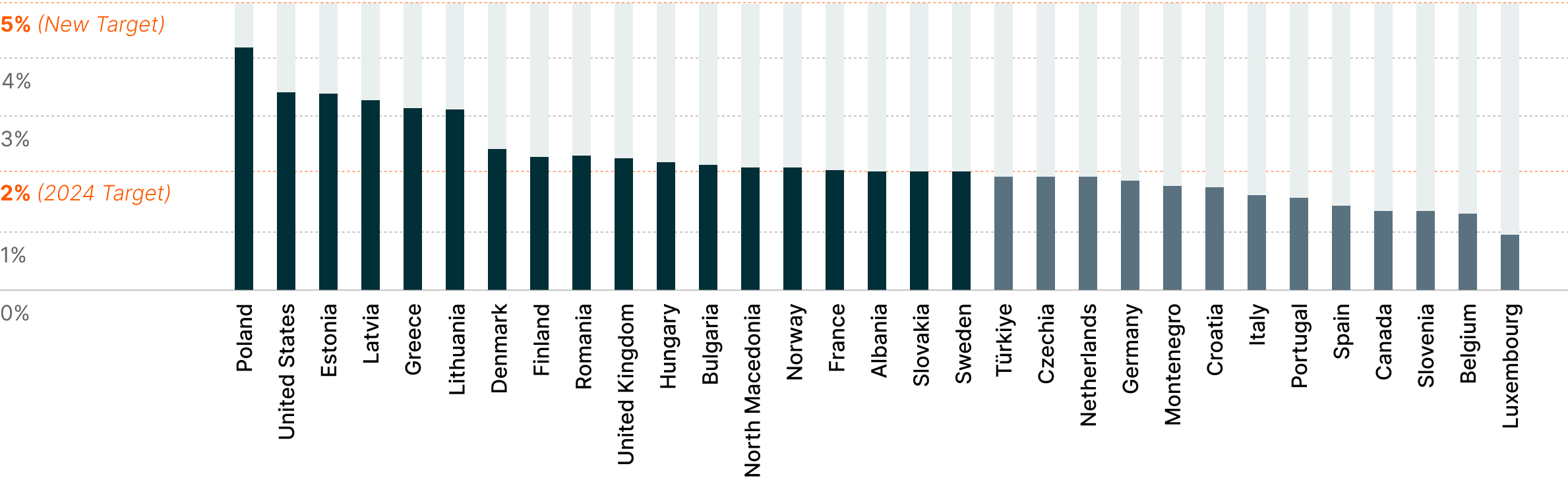
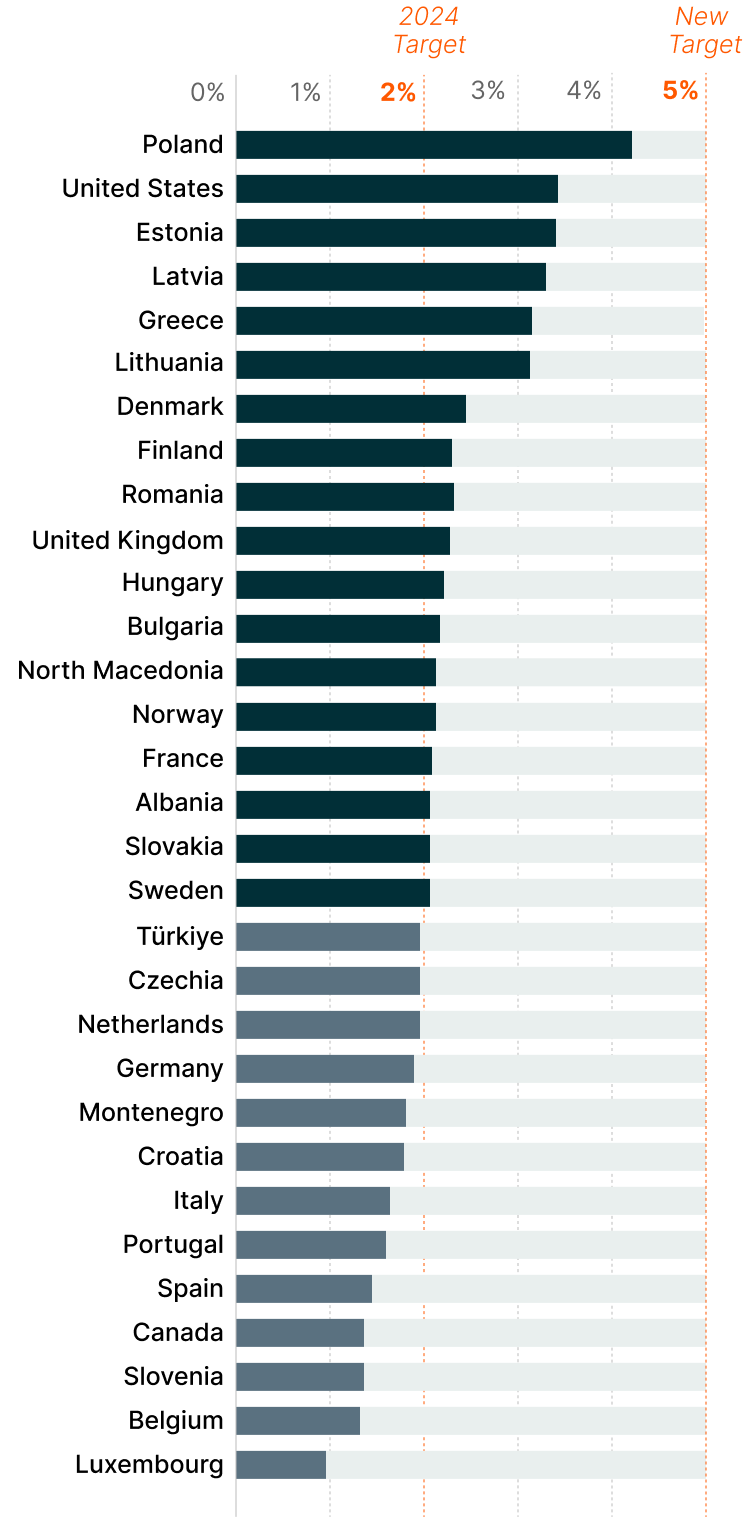
Only 18
of NATO’s 32 members met the 2% GDP defence spending target in 2024.5
NATO’s historic 2025 agreement to significantly boost military spending shows the global commitment to defence modernisation. Member nations pledged to raise their annual defence target from 2% of GDP to 5% by 2035, potentially adding hundreds of billions of dollars in annual expenditures.6
European countries account for a significant share of this increase, with EU NATO members spending €343 billion on defence in 2024 and planning for an additional €100 billion annually by 2027.7 Of the 5% NATO target, 1.5% is allocated to defence-linked critical infrastructure, addressing vulnerabilities in cybersecurity, communications networks, and other systems essential for modern military effectiveness.8
Only 18
of NATO’s 32 members met the 2% GDP defence spending target in 2024.5
2024 defence Spending and Required Increases to Meet 5% GDP Target9
Technology Solutions Could Anchor the Next Phase of Defence Investment
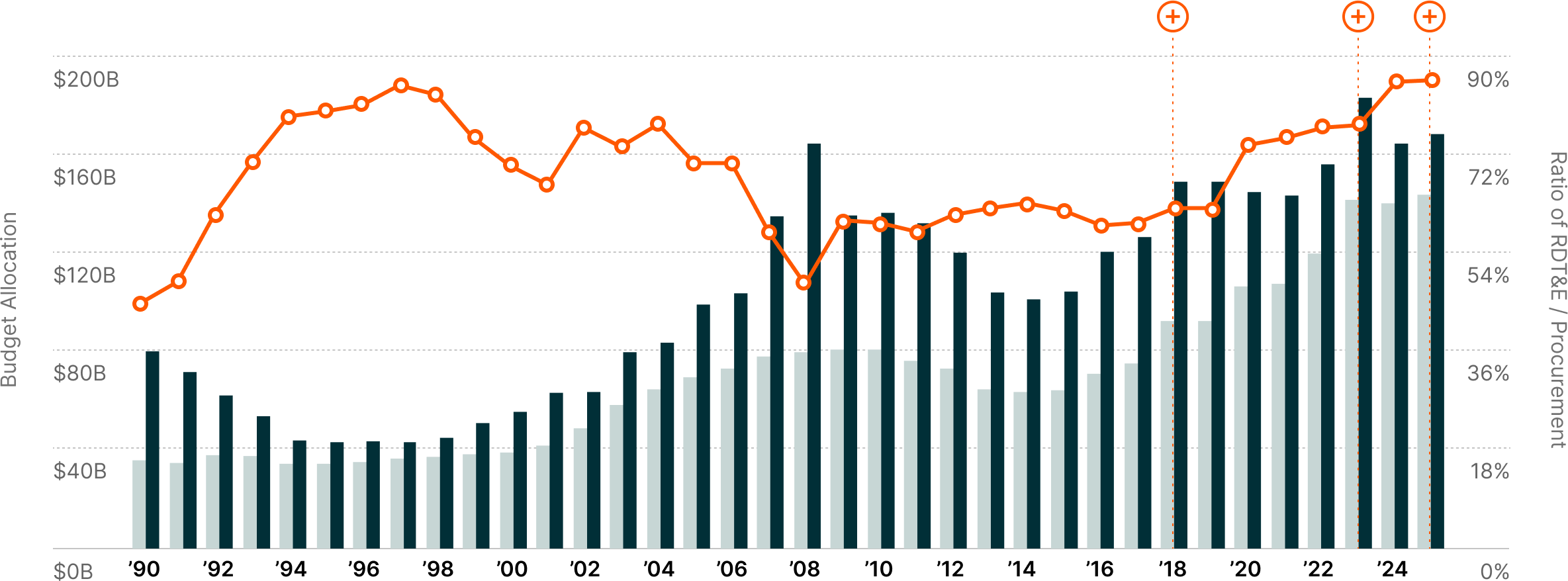
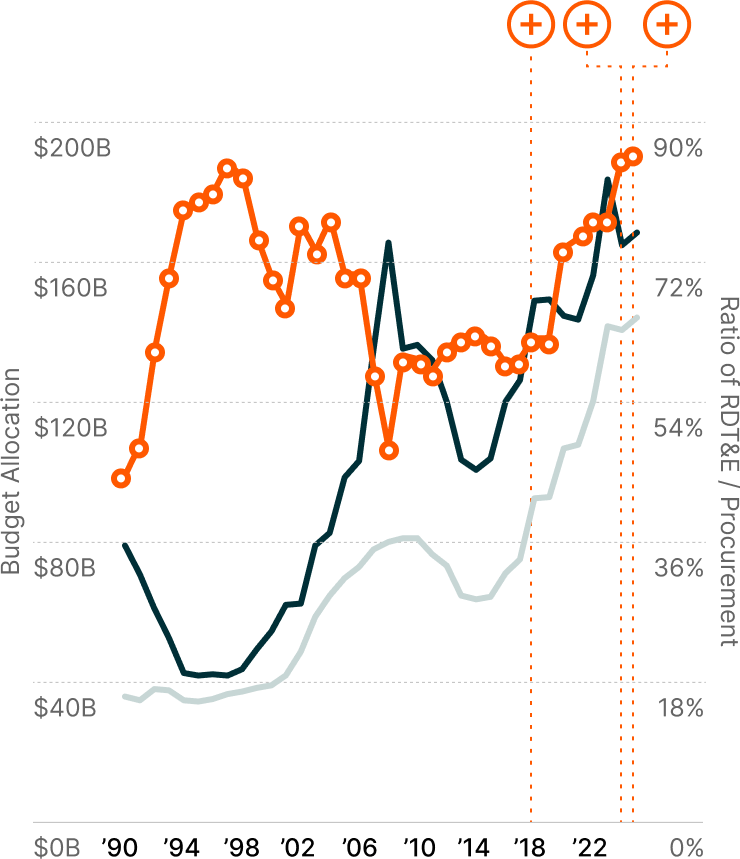
Defence budgets are evolving to incorporate digital modernisation and cutting-edge technologies alongside investments in personnel and traditional equipment.13 The United States proposed $179 billion for RDT&E (Research, Development, Test, and Evaluation), as part of its 2026 defence budget request, a 27% YoY increase.10
The Pentagon’s technology integration reflects this shift. The defence Innovation Unit scaled its budget to nearly $1 billion in 2024, up from approximately $200 million in the year prior, aiming to speed prototypes into production to meet the country’s defence modernisation goals.11
U.S. defence Procurement vs. RDT&E Spending12
CASE STUDY
Unmanned surface vessels are helping the U.S. Navy expand its reach, speed and flexibility.
Unmanned surface vessels such as Sea Archer are helping the US Navy expand its reach, speed, and flexibility.